Crowdfunding Your D&D Project: A Complete Pre-Launch Checklist
Most D&D crowdfunding campaigns fail not for lack of creativity, but lack of preparation: here's the pre-launch checklist that separates funded projects from failed ones.
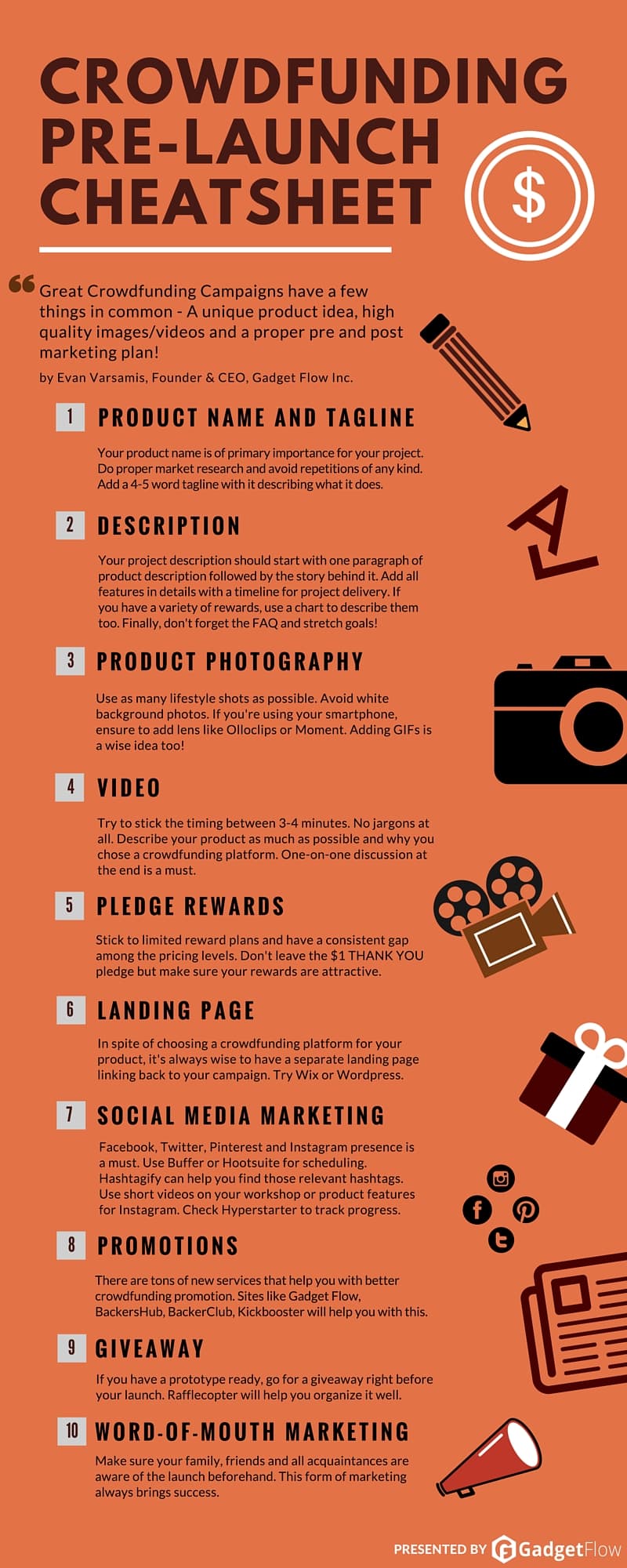
Launching a Kickstarter for your D&D supplement, setting book, or actual-play branded accessory is one of the most viable paths to getting your creative work into players' hands. With record-setting RPG projects on Kickstarter in recent memory, including the $15M+ Cosmere RPG, the tabletop crowdfunding space has never been more active. But the difference between a campaign that hits its goal on day one and one that stalls in the mid-campaign doldrums almost always comes down to what you did in the weeks and months before you clicked "launch." This checklist covers every major pre-launch decision you need to nail before your campaign goes live.
Know Your Licensing Before You Write a Single Stat Block
If your project references D&D mechanics, classes, or game systems, your first task is sorting out what you're legally allowed to use. On January 27, 2023, Wizards of the Coast announced it would release the System Reference Document 5.1 (SRD 5.1) under an irrevocable Creative Commons license (CC-BY-4.0) effective immediately, and would no longer pursue deauthorizing the OGL 1.0a. That means the core 5e chassis is open for you to build on without royalties.
The story doesn't end there. A D&D Beyond blog post confirmed that the new SRD would be "used by third-party publishers to build products using the Dungeons & Dragons ruleset, which creators can reference in their products without paying a licensing fee to Wizards of the Coast," and that it includes "foundational content from the 2024 core rules," such as the new rules glossary, weapon mastery rules, and exploration mechanics. Know which SRD version your content targets and include the correct license declaration in your campaign description and final product. Getting this wrong can get your project flagged or create legal headaches post-funding.
Validate the Concept Before You Build the Campaign
There are many different expectations in the tabletop community, and understanding your audience is key. If you're making an RPG zine, your audience will expect something small made on a low budget and costing less than a D&D rulebook. If you're making content for an existing RPG system, people will be using other products in that line as the benchmark.
Before you spend money on art or layout, run your concept past real people: post a rough description in D&D subreddits, Discord servers, or actual-play communities and watch how players respond. Look at completed campaigns in your category on Kickstarter and BackerKit; study their comment sections for what backers praised and what they complained about. If every example you show in your campaign is obviously unbalanced compared to official D&D, that speaks to pervasive problems with your project that needed to be addressed prior to launching a campaign. Playtest your mechanics. Fix the obvious breaks before a backer funds them.
Build Your Email List Months Before Launch
Kickstarter veterans advise: "Build an email list early – even a small, highly engaged list can drive strong day-one pledges." Day-one momentum often determines Kickstarter success, and email is the engine for that.
The numbers back this up. One crowdfunding agency notes that a "VIP" email list, where subscribers have signaled strong intent by placing a $1 reservation or explicitly opting in for early-bird deals, can convert 20–40% of subscribers, and for tabletop game campaigns this number "can be up to 50%." Compare that to cold social media impressions and the math is obvious. Set up a pre-launch landing page, offer something of value for signing up (a free one-shot PDF, an exclusive monster stat block, early access to art), and drive traffic to it consistently. Use your Kickstarter pre-launch page to collect followers directly on the platform too, since Kickstarter notifies those followers the moment you go live.
Build Community in D&D Spaces, Not Just a Following
There's a difference between having followers and having a community that trusts you. Shadowdark RPG by indie creator Kelsey Dionne raised $1.36 million on Kickstarter; its success was rooted in community-building and organic hype: Kelsey spent 3+ years playtesting and talking about the game in communities before launch, building a reputation. You don't need three years, but you do need genuine participation. Share rulings, post encounters, contribute to conversations about the kind of D&D your product serves.
Cross-promotions also deserve attention: exchanging shoutouts with other indie projects or getting listed in community newsletters is essentially free and can yield new backers who are already in the crowdfunding mindset. Reach out to D&D-focused podcasters, actual-play shows, and content creators before launch with preview materials, not after you've already gone live. Contact RPG news sites in advance with cool previews they can share, not last-minute emails when you have a week left in your campaign asking them to help "boost the signal" — it's probably too late then.
Set a Funding Goal You Can Actually Hit
This is where a lot of first-time creators blow it. Your minimum funding goal should cover the bare minimum to deliver the product you've promised, not the dream version of it. Success snowballs on crowdfunding websites, so it's important to set your goal at something that is realistic to reach while still funding you and your project as needed.
Aim for every reward tier to have at least a 50 percent profit margin to help you recoup your project creation costs. You can determine this by taking the total value of the reward and subtracting production, shipping, and administrative costs. If a pledge costs a backer $25 and it costs you $12.50 to fulfill, that's your 50 percent profit margin.
Don't forget that fees compound fast. Kickstarter charges a 5% platform fee plus 3% and $0.20 per pledge in payment processing fees; BackerKit charges 3.5% platform plus 2.9% and $0.30 per pledge. Platform fees and payment processing fees alone can consume 8–10% of your total funding before you even begin fulfillment. Budget these in before you set your goal, not after.

Structure Rewards Simply and Price Them Honestly
Kickstarter recommends offering up to five reward tiers for your first project. For example, limit your design or color options to five to keep the complexity of fulfillment to a minimum, so you can focus your energy on making your creative work instead of figuring out overly complicated logistics.
For a D&D supplement, your reward ladder should be intuitive: PDF only, softcover plus PDF, hardcover plus PDF, and a premium tier with extras like a DM screen, art prints, or custom dice. Kickstarter backers expect to get the game cheaper than retail, as they're taking a chance with their money. Price accordingly: your PDF tier should be meaningfully lower than your expected retail PDF price, and your print tiers should include PDF automatically.
Plan stretch goals conservatively. Any stretch goal you offer will need to be paid for, including production and shipping. It's best to plan stretch goals at the budgeting stage, long before you launch, to make sure you've accounted for them fully. A good guideline is to keep the cost of stretch goals to 10 percent of the reward cost differential — for instance, if your campaign goal is $1,000 and your stretch goal is $2,000, your differential is $1,000, so try to keep your production cost to $100.
Plan Fulfillment Before You Launch, Not After
The hardest part of crowdfunding isn't raising money — it's actually delivering on your promises. Physical D&D supplements add real complexity: print quotes, shipping zones, packaging weight, VAT thresholds. Get actual quotes from printers before you launch. The cost-per-unit number you imagine and the number a printer quotes you are rarely the same.
Decide up front where in the world you want to ship. Worldwide shipping is a complex thing for first-time creators to do, so you may want to limit shipping to your home country and one or two additional countries where you know your backers might come from. Digital rewards like PDFs are a great option if you want to reach backers across the world without the logistics nightmare. If you're shipping physical rewards internationally, note that for projects shipping to the EU, the distance selling VAT registration threshold is a cumulative €10,000 across all member states, and once you exceed that threshold you must register for VAT in the relevant countries and collect it from supporters.
Build a contingency buffer of at least 10–15% into your budget for unexpected expenses, and utilize a pledge manager to collect accurate, location-based shipping fees after the campaign. Delays are common in Kickstarter, with 84% of projects reportedly delivering late — building buffer time into your delivery estimate is just being honest with backers.
Polish the Campaign Page Before Anyone Sees It
Your campaign page is the most important piece of creative writing you'll produce for this project. Lead with the most compelling visual you have; D&D backers are used to gorgeous art from official releases, and your opening image sets an immediate expectation. Write your campaign description in plain language that explains exactly what is in the book, what system it uses, approximately how many pages it contains, and what problems it solves at the table.
Share your preview link with a trusted group of playtesters, friends, and community members before launch, and find out if your story is coming through effectively, what their thoughts are on your campaign's creative assets, and if there are any other areas that could use improvement. Fix the problems they find before you go public. Your FAQ section matters more than you think: anticipate every question about compatibility, shipping, PDF delivery, and print timelines.
The Days Before Launch
BackerKit marketing partnerships, for example, should begin at least two weeks before your campaign launches. Your email list gets a "going live in 48 hours" message. Your social channels get teaser posts. The Discord servers you've been participating in get a heads-up, not a spam blast. On launch day, the first hour matters enormously: email your entire list at once, post across every channel simultaneously, and reach out personally to the most engaged people in your community.
Kickstarter allows you to run your campaign for up to 60 days, but the majority of your funds are going to arrive in the first and last 48 hours. Crowdfunding campaigns typically hit a plateau during the midpoint, even with the most successful campaigns, so it'll be your job to keep up the energy and excitement in between. Have a mid-campaign update planned with new content reveals or a preview of unlocked stretch goal art, and treat the final 48-hour push as a second launch event.
Every successful D&D crowdfund on record started with a creator who knew their product deeply, built an audience before they needed it, and treated the pre-launch phase as the real campaign. The Kickstarter page is just where the money shows up.
This article was produced by Prism’s automated news system from verified source data, official records, and press releases, then run through automated quality and moderation checks before publishing. The system is built and supervised by the people who set the standards it runs under. Read our full AI policy.
Did this article answer your question?