D&D Unearthed Arcana revises villainous subclasses after player feedback
Unearthed Arcana’s villainous subclasses have been rewritten, and the Circle of the Titan, Hell Knight, and Demonic Sorcery now point more directly at player feedback and table-ready use.
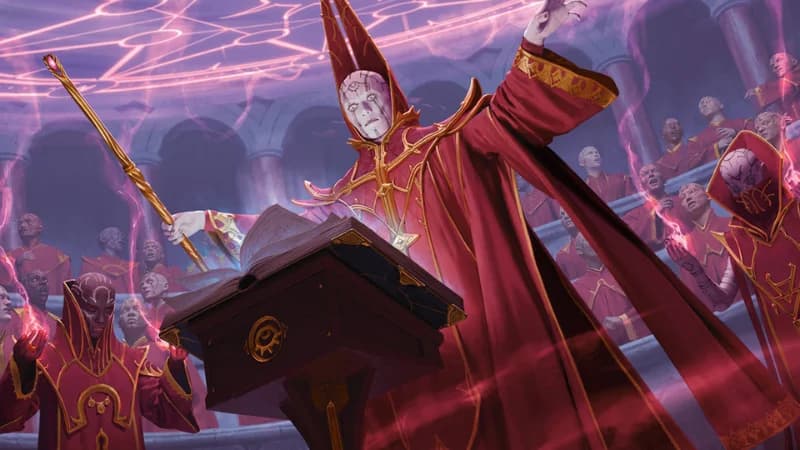
The latest Villainous Options update is not just another UA drop. It is a revision pass, and that changes how you should read it: Wizards of the Coast has taken three villain-flavored subclasses, the Druid’s Circle of the Titan, the Fighter’s Hell Knight, and the Sorcerer’s Demonic Sorcery, and rebuilt them after the first playtest round. For DMs and players, that means these are no longer just cool concepts on paper, they are options being tuned for actual campaign use.
What changed in the Villainous Options update
The update PDF says it is part of Unearthed Arcana, the long-running series of playtest articles for upcoming products, and that it uses Player’s Handbook rules. More importantly, it says outright that these revised versions incorporate player feedback from the initial playtest in which the subclasses first appeared. That is the detail that matters at the table: these are not untouched drafts, but rules that have already been through one public pressure test.
The revised trio is easy to track if you have followed the earlier documents. The first Villainous Options PDF presented four new subclasses: Cleric with the Pestilence Domain, Druid with Circle of the Titan, Fighter with Hell Knight, and Sorcerer with Demonic Sorcery. Villainous Options 2 then added Barbarian with Path of Lament, Monk with Warrior of Venom, and Warlock with Primordial Patron. The update comes after that broader sequence, which makes it part of an ongoing refinement cycle rather than a one-and-done experiment.
The subclasses are being pushed toward clearer table jobs
The design team’s own commentary gives the strongest clue about where the revision energy went. In the D&D Beyond Designer Insights video tied to the update, the team said it wanted Circle of the Titan to feel bigger and more durable, wanted Hell Knight to have more reliable infernal power, and wanted Demonic Sorcery to move in a new direction. Those are not cosmetic edits. They point to the exact kind of play experience each subclass is supposed to deliver when dice hit the table.
That matters if you build villains or morally gray PCs around subclass identity. A bigger, tougher Circle of the Titan reads like a druid path built for a heavier battlefield presence, which is useful whether you are shaping a monster-like ally, a mythic guardian, or a player character who wants to stand in the middle of the fight. A Hell Knight with more reliable infernal power sounds like a subclass that should feel less swingy and more dependable when you want a recurring antagonist with a clear combat rhythm. Demonic Sorcery moving in a new direction signals the sort of redesign that can change the fantasy at the core, not just the numbers around it.
For Dungeon Masters, that is the practical angle. Villainous subclasses are easiest to use when they give you a sharp identity you can drop into an encounter, a rival party, or a boss fight without needing to rewrite the whole character sheet. The more specific the subclass feels, the easier it is to make that NPC memorable after one session instead of one paragraph of lore.
Why the feedback loop matters more than the label
Unearthed Arcana has always been the game’s public testing ground, but the Villainous Options cycle shows the process in a more visible way than usual. You can see the sequence: first a batch of four new subclasses, then a second document with three more, then an update that revises the earlier material after feedback. That is the part to watch if you care about what might survive to final publication, because the content that gets revised is the content the team is clearly still shaping.
The publisher’s social posts pushed that point too. D&D Beyond and Wizards of the Coast used Threads to point people to the update, including the line “your feedback matters.” That phrasing lines up with the document itself and with the structure of the playtest: the audience is not just reading preview material, it is actively steering it. For rules junkies, that is the real story here, because a subclass that gets revised is a subclass the team is listening to.
There is also a neat paper trail around how the document was framed. Todd Kenreck’s April 3, 2026 YouTube livestream description said the Villainous Options document included four new subclasses, matching the original UA release with the Cleric, Druid, Fighter, and Sorcerer entries. That kind of public handoff, from draft to live reaction to revised update, shows how visible the playtest cycle has become across Dungeons & Dragons’ own channels.
What this means for villain builds and campaigns
If you run a campaign that leans into horror, intrigue, dark fantasy, or epic conflict, these subclasses are the sort of material that can change prep fast. A villainous subclass gives you a built-in story engine: a patron, a corruption, a doctrine, a monstrous calling, or a power source that explains why the character does what they do. That is useful whether the character is an enemy, a party member, or a rival adventurer who keeps showing up just when the stakes rise.
The current update is especially relevant because it suggests the design team is not treating “villainous” as a gimmick. Instead, the team is trying to make sure the fantasy feels strong without falling apart in actual play. A sturdier Circle of the Titan, a steadier Hell Knight, and a reworked Demonic Sorcery are all signs that the subclasses are being adjusted toward clearer gameplay roles, which is exactly what you want before you hand one to a boss monster or build a campaign arc around it.
That is the real value of this UA pass: it tells you not only what kind of dark options D&D is willing to explore, but which parts of those options are getting tightened up because players pushed back. When a subclass survives that kind of review, it usually arrives at the table with better edges, clearer purpose, and fewer surprises in the middle of the fight. In a playtest full of fiendish hooks and heavy armor, the smartest roll is still the one that has already been through the feedback gauntlet.
This article was produced by Prism’s automated news system from verified source data, official records, and press releases, then run through automated quality and moderation checks before publishing. The system is built and supervised by the people who set the standards it runs under. Read our full AI policy.
Did this article answer your question?