Dungeons & Dragons playtest lets characters become death knights
Unearthed Arcana now lets you build toward becoming a death knight, turning one of D&D’s classic undead bosses into a player-facing fall from grace.
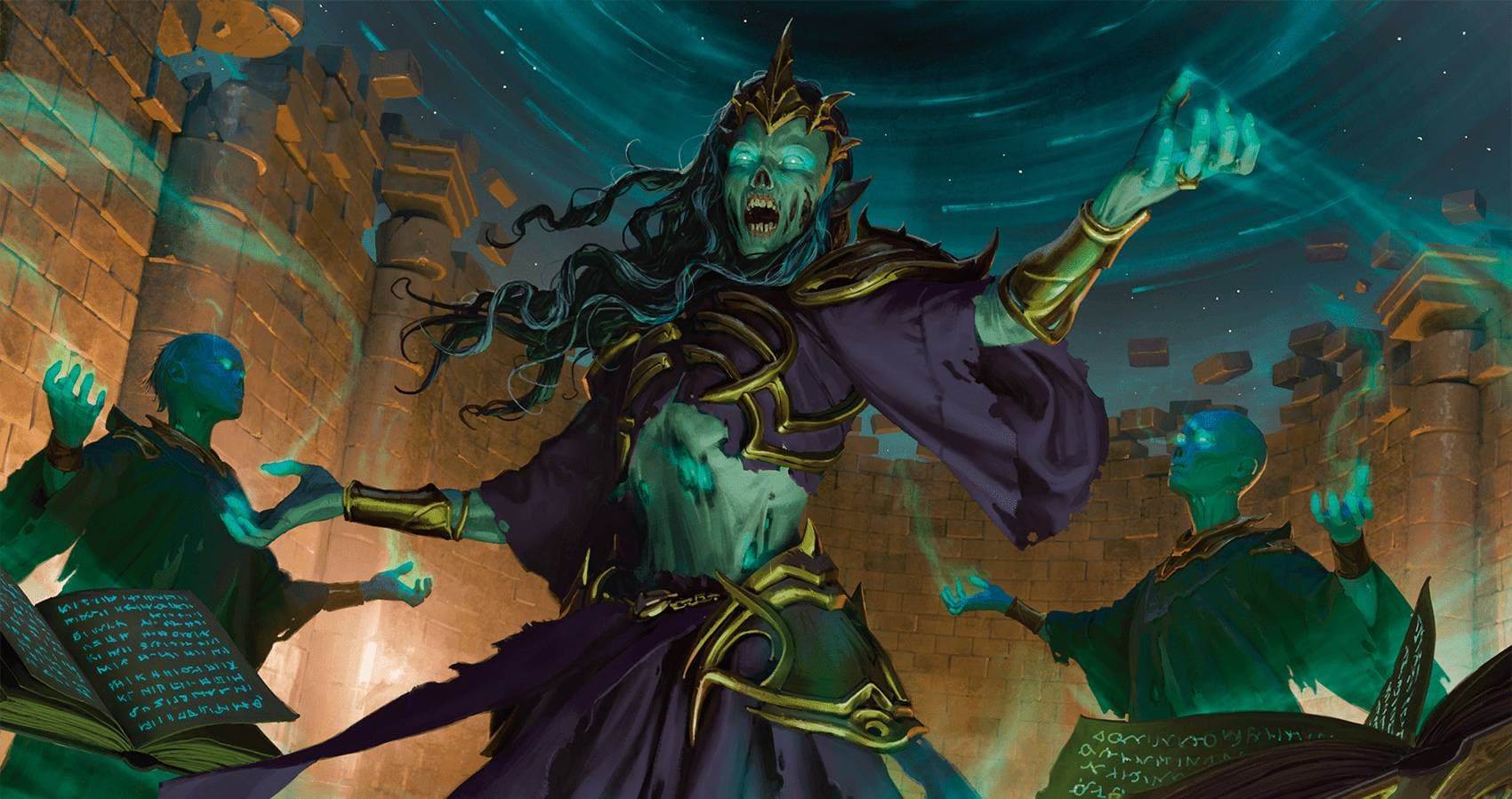
Unearthed Arcana just turned the death knight from a boss monster into a destination. D&D Beyond’s Villainous Options package, published April 2, 2026, includes four new subclasses and two paths of villainy, and the playtest text says those paths can eventually transform a character into a death knight or a lich. That alone makes the packet feel different from the usual class tuning pass: this is not just about better combat math, it is about letting the table walk a character all the way into a familiar piece of monster lore.
From monster manual menace to player-facing arc
The appeal is obvious if you have ever run or played against a death knight. In the monster books, it is the kind of undead commander that shows up when the campaign wants to get mean, a fallen warrior wrapped in dark magic, punishment, or curse and turned into an armored threat with a tragic backstory. Villainous Options flips that premise around and asks a more dangerous question: what does it look like when the fall is the build?
That shift matters because the death knight is no longer just an encounter to survive. It becomes a character arc with milestones, the sort of progression that can track oath-breaking, corruption, vengeance, or plain old doomed ambition over the length of a campaign. Instead of bolting a spooky skin onto a normal martial chassis, the path frames the transformation itself as the point, which gives DMs a cleaner way to stage villainous or morally gray stories without inventing a homebrew descent from scratch.
Why the death knight still feels like D&D royalty
The reason this works is that the death knight has always carried more story weight than a generic undead bruiser. Official D&D material names Lord Soth as the most powerful death knight on Krynn, once a Solamnic Knight of the Order of the Rose who died during Krynn’s Cataclysm before rising again as a death knight. His presence in Dragonlance, and his long shadow across Ravenloft, gives the archetype a tragic, setting-spanning identity that most monster types never get.
That same material also points to Olanthius, the former general of the angel Zariel, and Saint Kargoth, described as Greyhawk’s first death knight. Those names matter because they show how broad the template is. This is not a one-world gimmick, and it is not only a Dragonlance thing. D&D has spent decades using death knights to represent the same devastating idea in different cosmologies: an elite warrior who survives the fall, but not in any way that counts as living well.
How this compares to other martial and necrotic builds
If you are trying to place Path of the Death Knight at the table, the closest comparison is not just “any evil class.” It sits somewhere between a martial build and a necrotic-themed one, but with a stronger narrative spine than either. An Oathbreaker paladin, an undead warlock, or a necromancy wizard can all scratch the dark-fantasy itch, yet those options still feel like standard classes wearing black leather. The death knight path is more direct: it says the corruption is the progression.
That is why the sequential feat structure is the interesting part of the playtest. A feat chain gives the DM and the player visible checkpoints, which makes the descent legible over time. You are not just announcing that your character is edgy now. You are marking off steps on the road to becoming the kind of undead commander that usually stands on the other side of the screen from the party.
Compared with a conventional front-line martial, the death knight concept also shifts the fantasy of the role. A fighter or paladin is usually about protection, discipline, and reliability. A death knight path keeps the armored presence and the battlefield authority, but muddies the moral center. That makes it especially strong for campaigns that want a heavy melee character whose story is doing as much work as the armor class.
What it changes in actual play
On the table, this kind of option changes encounter design as much as character creation. A player-facing death knight is not a throwaway flavor choice; it tells the DM to build scenes around pressure, consequence, and reputation. The character can become the obvious anchor in a fight, but also the one the world reacts to most strongly, because the fantasy is built around a visible slide toward something that others already fear.
It also changes party dynamics in a way that good villainous options should. A death knight path can support the brooding enforcer, the doomed loyalist, or the crusader who went too far and knows it. That gives the rest of the party a reason to engage with the character beyond combat output. You get tension, not just numbers, and that is where this kind of playtest earns its keep.
The broader advantage for DMs is structure. Villainous campaigns often go off the rails when the rules only support the heroic side of the equation. A staged path to death knight status gives the table a framework for corruption without having to improvise what each step means. It is easier to run a long fall when the rules already know where the staircase ends.
Part of a bigger villainous turn in 5.5E
Villainous Options does not stand alone. D&D Beyond’s Unearthed Arcana hub describes playtest materials as draft form, usable at the table but not yet refined by full game development, and it shows the Villainous Options feedback period as ended. The follow-up, Villainous Options 2, published April 23, 2026, keeps pushing the same antihero and villainous direction. That continuity makes the death knight path feel less like a one-off stunt and more like a clear design lane.
The timing also fits the current monster-game balance of D&D’s official releases. Wizards’ revised 2024 Monster Manual includes more than 500 total monsters and more than 75 brand-new monsters, and WPN says it released February 18, 2025, with local game store early access beginning February 4 in the United States and Canada. That book reinforces the classic enemy version of the death knight, while Unearthed Arcana experiments with letting players cross the line themselves. Together, they show a game that is increasingly comfortable with villain-coded power as long as the rules can carry the fantasy.
That is the real draw here. The death knight path is not compelling because it is grim for grimness’ sake. It works because D&D already knows this archetype, from Lord Soth in Dargaard Keep to Olanthius and Saint Kargoth, and now the game is daring to let a player finish the same descent. For groups that want their campaigns to feel like a slow ride toward the grave instead of a clean heroic ascent, this is the kind of option that can change the whole table before the last die is rolled.
This article was produced by Prism’s automated news system from verified source data, official records, and press releases, then run through automated quality and moderation checks before publishing. The system is built and supervised by the people who set the standards it runs under. Read our full AI policy.
Know something we missed? Have a correction or additional information?
Submit a Tip