Stranger Things Finale Reignites Interest in D&D Campaign Storytelling
Showrunners Matt and Ross Duffer answered fan questions after the series finale, confirming the closing Dungeons & Dragons epilogue and the ambiguous fate of Eleven were intentional narrative choices. The episode’s literal campaign-style climax and basement D&D sequence have sparked conversation across the D&D community and renewed mainstream interest in using tabletop structure and modules as storytelling tools.
In the wake of the series finale, showrunners Matt and Ross Duffer explained that the closing Dungeons & Dragons epilogue was a deliberate narrative device meant to let the characters and viewers decide what they believe about Eleven’s fate. The final basement D&D sequence functions as a framing choice rather than a strict canonical answer, placing the show’s emotional resolution inside the same imaginative space the characters have inhabited throughout the series.
The payoff leaned heavily on D&D imagery and story structure, including a literal campaign-style finale that echoes classic tabletop climaxes. That resonance pushed many viewers to read the episode through familiar gaming paradigms: dungeon delving, cinematic boss fights, and the moral ambiguity that emerges when players tell stories together. Conversations across the community have homed in on Strahd and Ravenloft references, the mechanics of campaign endings, and the way tabletop storytelling informed the show’s thematic close.
For local groups and Dungeon Masters, the moment offers practical takeaways. The episode provides a clear example of using a game session as an emotional coda: stage a final in-game meeting that allows characters to narratively assess losses and gains, and leave space for ambiguity rather than forcing tidy answers. Incorporate player agency into epilogues, give players choices about how much is resolved in-game and how much remains a shared story told around the table. Using gothic modules like Curse of Strahd as tonal templates can help replicate the series’ blend of horror, nostalgia, and moral complexity without copying any specific plot beats.
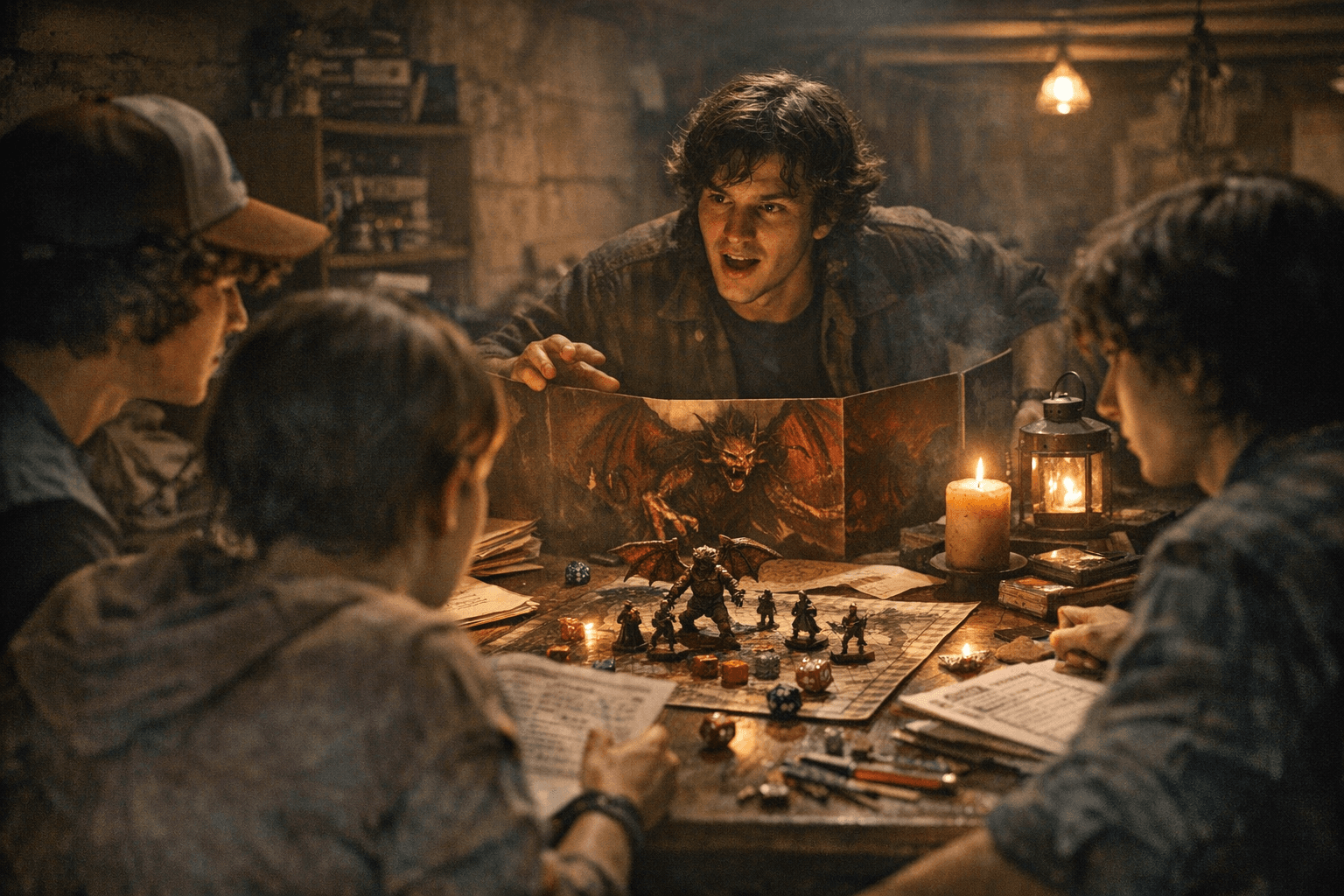
The renewed mainstream interest also creates opportunities for gaming groups and stores. Expect increased curiosity from new players who watched the show and want to explore campaign-style pacing or run a session that mirrors the series’ emotional stakes. If you run games at a store or club, framing an event as a campaign-closing session or a Ravenloft-inspired night can tap into that curiosity and give newcomers a clear way in.
Ultimately, the finale underscored how Dungeons & Dragons is more than a set of rules: it is a narrative engine. The Duffers’ choice to leave Eleven’s fate ambiguous and to resolve the story in a basement D&D scene reminded viewers that tabletop play is a shared act of meaning-making. For DMs and players looking to deepen storytelling at the table, the episode is a useful model for balancing spectacle, character closure, and the productive power of uncertainty.
This article was produced by Prism’s automated news system from verified source data, official records, and press releases, then run through automated quality and moderation checks before publishing. The system is built and supervised by the people who set the standards it runs under. Read our full AI policy.
Did this article answer your question?

