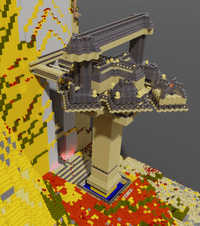
Dwarf Fortress players master magma-safe materials for fortress industry
Magma is where a fortress stops improvising and starts engineering. The wrong floodgate, pump, or depth can turn a thriving industry into molten scrap.
In Dwarf Fortress, magma sits at exactly 12000 °U, and a bridge, pump stack, or floodgate built from the wrong material is one bad tile away from disaster.
Magma-safe means the material itself survives
Magma-safe materials are not just heat-resistant in the loose sense. They are the materials that will not melt, burn, evaporate, or otherwise take damage when they are in close contact with magma. For custom reactions that use [MAGMA_BUILD_SAFE], the game is even stricter: the material has to be solid and stable at 12000 °U.
A rock that only handles warmth is not enough for a magma forge frame, and a mechanism that survives a little heat is not automatically safe when the lava rises. If a part of your industry sits near magma, the question is not whether it looks sturdy, but whether its melting, boiling, ignition, heat damage, and cold damage thresholds all keep it on the safe side of 12000 °U.
The workshops that turn lava into industry
Magma changes fortress planning because it replaces fuel with a permanent heat source. Magma forges, magma smelters, magma glass furnaces, and magma kilns all do the same basic trick in different workshop forms: they let you keep producing without burning wood, coal, or other fuel just to heat the room. A magma forge turns metal bars into goods without fuel, while a magma smelter and a magma kiln do the same for smelting and kiln work, and the magma glass furnace lets glasswork run off lava heat instead of a stockpile of fuel.
That power comes with a layout tax. The magma smelter and magma kiln must be built so at least one edge tile sits directly above magma that is at least 4/7 deep, which means your workshop block has to hug the lava line instead of floating safely nearby.
The traps that kill good plans
Magma never cools, but it can evaporate if it sits at a depth of 1/7 long enough, so shallow routing can fail in ways that feel unfair if you expect it to behave like water. It also mixes with water to create obsidian and steam, which can be useful when you mean it and catastrophic when you do not. Without screw pumps, magma flows like unpressurized water, so long-distance routing and vertical transfer usually demand pump stacks or other staged designs that keep the flow under control.
Floodgates are where a lot of forts learn this the hard way. They are operated by mechanisms and can be built from stone, wood, metal, or glass, but once they are opened, a non-magma-safe floodgate or its attached mechanism can be destroyed by magma. Closed floodgates resist magma, which is why they are reliable as barriers, but the moment you open the wrong gate into a hot channel, the weak part of the setup can disappear before the rest of the system catches up.
A few rules save most of the pain:
- Keep the first moving part magma-safe if the trigger itself will ever sit in the hot zone.
- Do not trust shallow magma channels to stay usable for long.
- Plan for obsidian and steam wherever magma meets water.
- Assume every pump, gate, and connection point is more vulnerable than the stone around it.
If the trigger itself will not be submerged, only the first mechanism needs to be magma-safe. In practice, that means a careful design can sometimes get away with less exotic material, but only if you have mapped exactly which part of the control chain ever touches the hot zone.
Why bauxite still has a place in the conversation
Veteran players still talk about bauxite because it used to be the only practical source of magma-safe mechanisms, and that made it feel precious in a way newer forts can barely imagine. The material is a dark-red sedimentary stone, and for a long stretch of play history it was the thing people hunted when they wanted reliable hardware near lava.
The game’s current material pool is much wider. The Dwarf Fortress Wiki’s magma-safe category includes 48 pages, and more stone types qualify as heat-resistant than in the old days, while iron and steel mechanisms give players other ways to build safe infrastructure.
A stable system inside a famously unstable game
Magma rules have stayed recognizable across long stretches of Dwarf Fortress history. The game has been in development since 2002 and first released in alpha in 2006, and the magma rules remain one of the clearest examples of its deep simulation style. The same ideas keep paying off: exact temperatures, exact depth rules, and exact failure points at mechanisms, pumps, and floodgates.
This article was produced by Prism’s automated news system from verified source data, official records, and press releases, then run through automated quality and moderation checks before publishing. The system is built and supervised by the people who set the standards it runs under. Read our full AI policy.
Did this article answer your question?