Utah's Eagle Man and his golden eagle Scout inspire rescue work
Martin Tyner’s bond with Scout shows how falconry can serve hunting, rescue, and public education at once. His work also reminds handlers that half the birds brought in won’t make it.

Martin Tyner, the man many in the West know as the “Eagle Man,” has built a falconry life that does not stop at the field edge. Outside Cedar City, his home and wildlife rescue shelter function like a revolving door for injured and orphaned animals, and that constant traffic shapes everything he does with birds of prey. At the center of it all is Scout, a large golden eagle who is both hunting partner and educational ambassador, the kind of bird that can pull a crowd and still keep the work grounded in real daily care.
Tyner is not just a bird man with a good story. He is a federally licensed eagle falconer, a wildlife rehabilitator, and the founder of the Southwest Wildlife Foundation, also known as Enoch Wildlife Rescue. That mix matters because it shows the full reach of modern falconry when it is practiced as more than a sport: field work, rehabilitation, and public education all sit under the same roof.
Scout, Belle, and Helen show the range of the craft
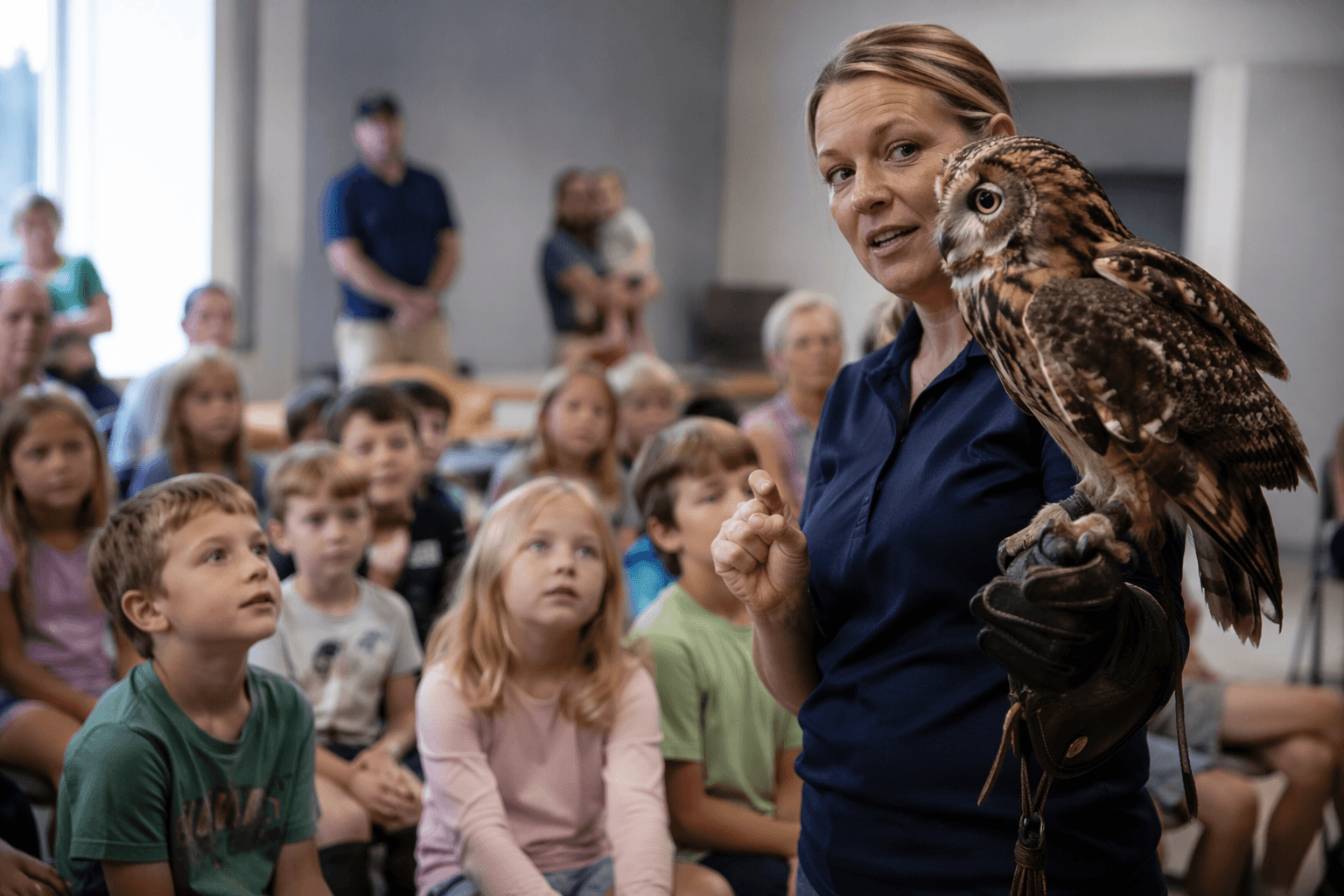
Scout gets the headline attention, but the profile makes clear that Tyner’s bird work spans very different roles. Belle, a Harris hawk, is used for jackrabbit hunting, which puts her squarely in the practical tradition most falconers recognize: a trained bird, a live quarry, and a handler who needs precision, patience, and trust. Helen, a visually impaired peregrine falcon, has gone in the opposite direction, speaking to schoolchildren and corporate audiences as a living teaching bird.
That spread matters because it shows how one falconer can use different species and individual birds for different purposes without losing the thread of the craft. Scout may be the public face, but Belle and Helen reveal the structure underneath: a working partnership with each bird’s abilities, limits, and temperament respected in the way every good handler learns to respect them.
What rescue changes about a falconer’s philosophy
Tyner’s rescue work gives the profile its hardest edge. He says rescue can be brutal, and the piece notes that about half of the animals brought in do not make it. That number changes how you read the glamour around a golden eagle or a peregrine on a glove. In a shelter like Tyner’s, every admission is a decision point, and every bird is either a rehabilitation case, a release possibility, or a loss.
For falconers, that reality pushes ethics to the front. It is easy to talk about bird strength, weight, and responsiveness in the clean language of the field. It is harder, and more honest, to build a philosophy that also accounts for pain, injury, and the fact that some animals arrive too far gone to save. Tyner’s work suggests that a serious handler does not separate performance from welfare. If you keep birds, fly birds, or rehabilitate birds, the bird’s condition has to govern the decision, not your pride.
Mentorship is the through-line
Tyner’s own start in birds began in childhood, then deepened through mentorship, including time with a Hungarian falconer who taught him the craft. That detail is more than biography. It is the core mechanism by which falconry survives, because the old skills are not preserved by sentiment alone. They are handed over through time in the field, by example, correction, and repetition until the new handler can make the same judgment without being told.
That kind of apprenticeship produces a different sort of falconer than a weekend hobbyist with equipment and enthusiasm. It builds continuity. The bird matters, the quarry matters, the land matters, and the older handler’s standards become part of the younger handler’s instincts. Tyner’s path shows that mentorship is not a decorative piece of falconry culture. It is the culture.
The public education side of the bird
One of the strongest takeaways from Tyner’s work is that a falconer can do real public education without flattening the birds into mascots. Helen, the visually impaired peregrine, has spoken to schoolchildren and corporate audiences, which shows how a single bird can become a bridge between the field and the wider public. Scout does similar work by being both hunting partner and ambassador, a combination that gives people a live example of what a bonded raptor partnership looks like.
That matters because most people encounter birds of prey as silhouettes overhead or as photos on a screen. Tyner’s model brings them closer to the realities that matter: injury, care, hunting behavior, species differences, and the discipline behind handling them. Public education works best when it does not exaggerate or sentimentalize, and Tyner’s birds seem to do exactly that. They make the case for raptors by being themselves.
What experienced falconers can take from Tyner’s example
Tyner’s career offers a practical set of lessons for anyone already in the field or working toward it:
- Build relationships with birds that reflect the bird’s actual role, whether that is hunting, outreach, or rehabilitation. Scout, Belle, and Helen each do a different job.
- Treat rescue as part of the same ethical universe as falconry. The birds do not care whether they are in the mews or in a recovery pen; their welfare still sets the standard.
- Learn from older hands and pass it on. Tyner’s foundation in childhood and his training under a Hungarian falconer show how the craft stays alive.
- Keep public education honest. A bird that appears in a classroom or on a stage should still represent the real life of raptors, not a softened version of it.
- Accept that loss is built into the work. The shelter’s hard numbers are not an anomaly; they are part of what rehabilitation actually demands.
Tyner’s story lands because it refuses to separate the romance of the eagle from the grind of the rescue room. Scout may draw the eye, but the bigger lesson is the one that has shaped Tyner’s entire life in falconry: if you want to speak for birds of prey, you have to live with the full cost of caring for them.
This article was produced by Prism’s automated news system from verified source data, official records, and press releases, then run through automated quality and moderation checks before publishing. The system is built and supervised by the people who set the standards it runs under. Read our full AI policy.
Did this article answer your question?