BRIX Marine Delivers Two More Foil-Assist Catamarans to Na Pali Experience
Na Pali Experience's Kaua'i tour fleet grows to five foil-assist cats as BRIX Marine delivers two more 34-footers, validating the Port Angeles builder's 2024 platform with a repeat order.
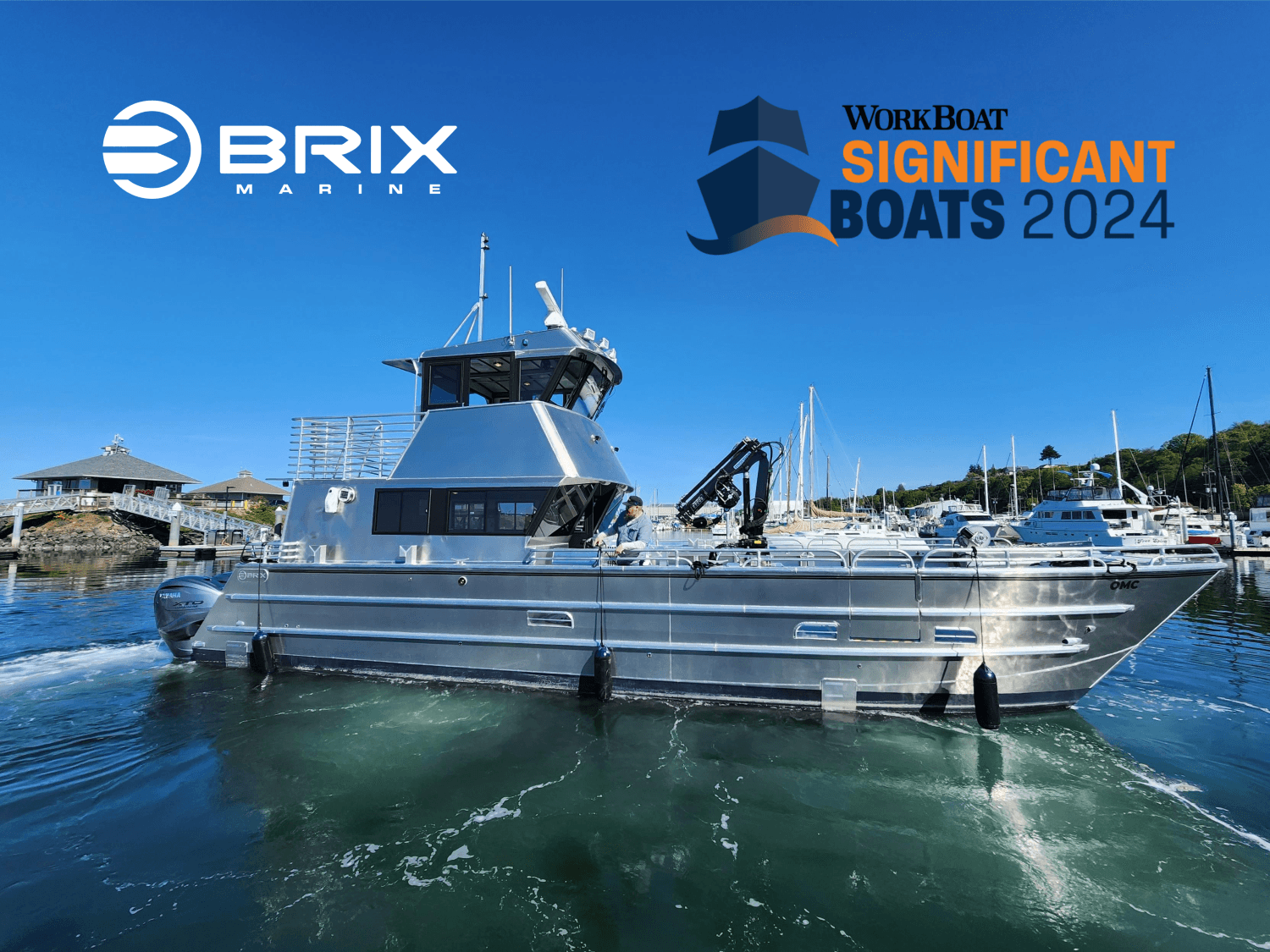
Na Pali Experience has taken delivery of two more 34-foot foil-assist catamarans from BRIX Marine, the Port Angeles, Washington-based aluminum boat specialist, bringing the Kaua'i tour operator's fleet to five vessels on the same platform. The repeat order, announced March 27, stands as the clearest signal yet that the design BRIX and Na Pali Experience committed to in 2024 has earned its place on the water.
The original three vessels, named Kulea, Lanakila, and Tokihi, launched in September 2024 under a collaboration between BRIX Marine and Jutson Marine Design. Those hulls introduced an asymmetric catamaran form with midship-mounted hydrofoils, twin 300 HP Suzuki outboards, and twin 100-gallon fuel tanks, each configured to carry up to 20 passengers and one crew member along the Na Pali Coast. The two new deliveries follow that same proven blueprint.
"Foil-assist" is a precise term worth unpacking for anyone who spends time on a surf foil or wingfoil. These are not full-foiling craft: they use relatively small hydrofoil struts to partially unload the hulls at planing speeds, shrinking the wetted surface and cutting fuel burn without committing the vessel to flight. The result sits between a conventional planing cat and a full-foiler: quieter, more fuel-efficient, and noticeably smoother through chop, which matters when a seasick guest on a coastal tour is your biggest operational risk.
For Nathaniel Fisher, founder and owner of Na Pali Experience, that ride quality is a competitive differentiator on one of Hawaii's most demanding stretches of coastline. A repeat order of this scale, coming less than 18 months after the original three hulls entered service, reflects confidence in both BRIX's build quality and the Jutson design's real-world performance.
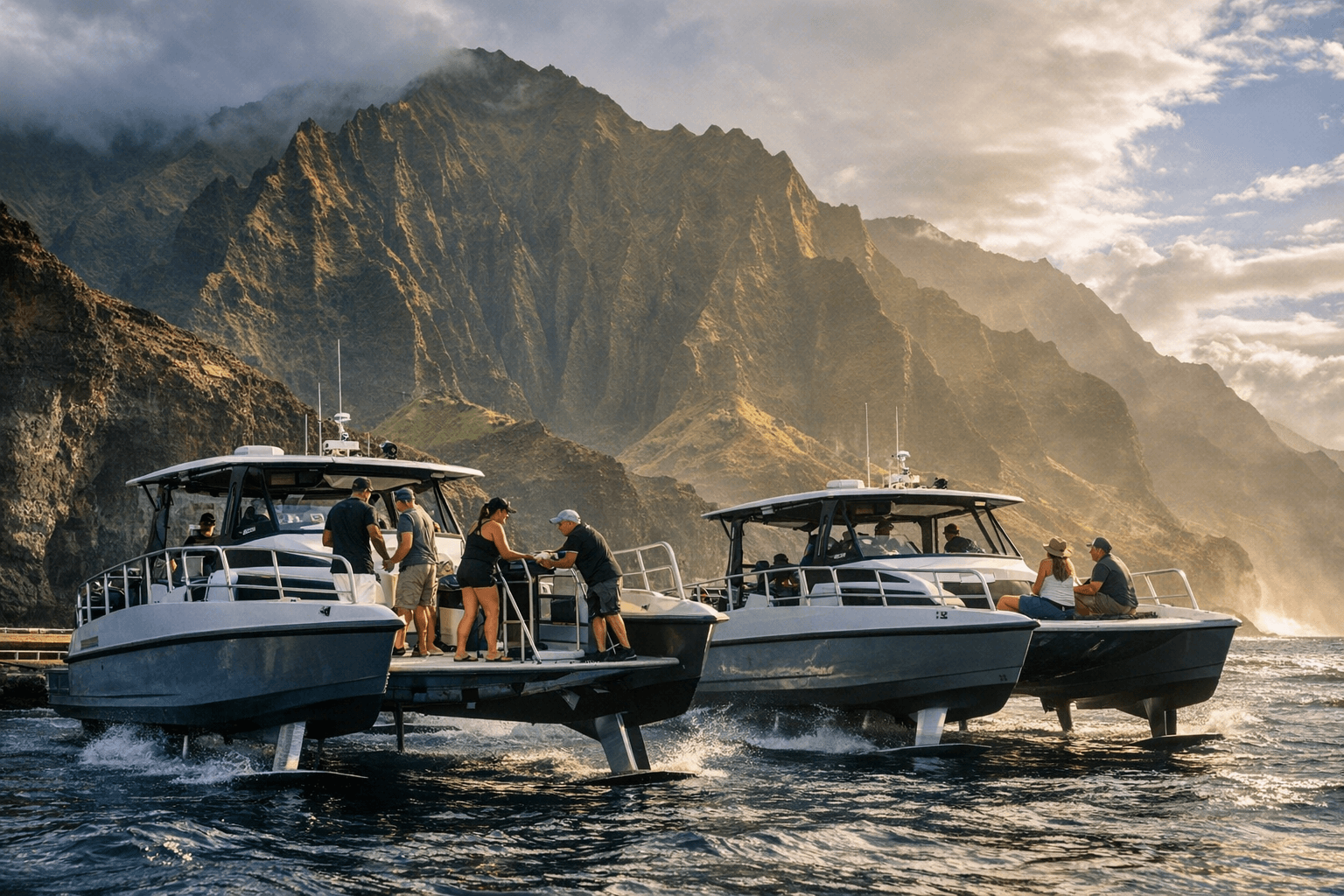
The broader foiling community has reason to track these deliveries beyond tourism economics. Commercial operators scaling hydrofoil technology into working fleets accelerate the supply chain dynamics that eventually reach recreational riders: more trained technicians familiar with foil strut servicing, bearings, and hull-foil junctions; greater regulatory familiarity from coast guard and harbor authorities; and a thicker network of aluminum fabricators experienced with foil-integrated structures. Foil-assist vessels like these require less specialized maintenance than full-foiling craft, but they are still sophisticated enough to move the needle on what local marine yards know how to work on.
Five vessels under one commercial operator, all running the same BRIX platform on some of the most-photographed water in the Pacific, is the kind of fleet density that turns experimental technology into infrastructure.
Know something we missed? Have a correction or additional information?
Submit a Tip