Foil Builders Share TPU Printed Mini Pod Design for E-Foil Electronics
Builders on FOIL.zone shared a single-piece TPU pod protecting VESC boards and GPS trackers from saltwater, with files already circulating and no permanent mods to carbon boards.
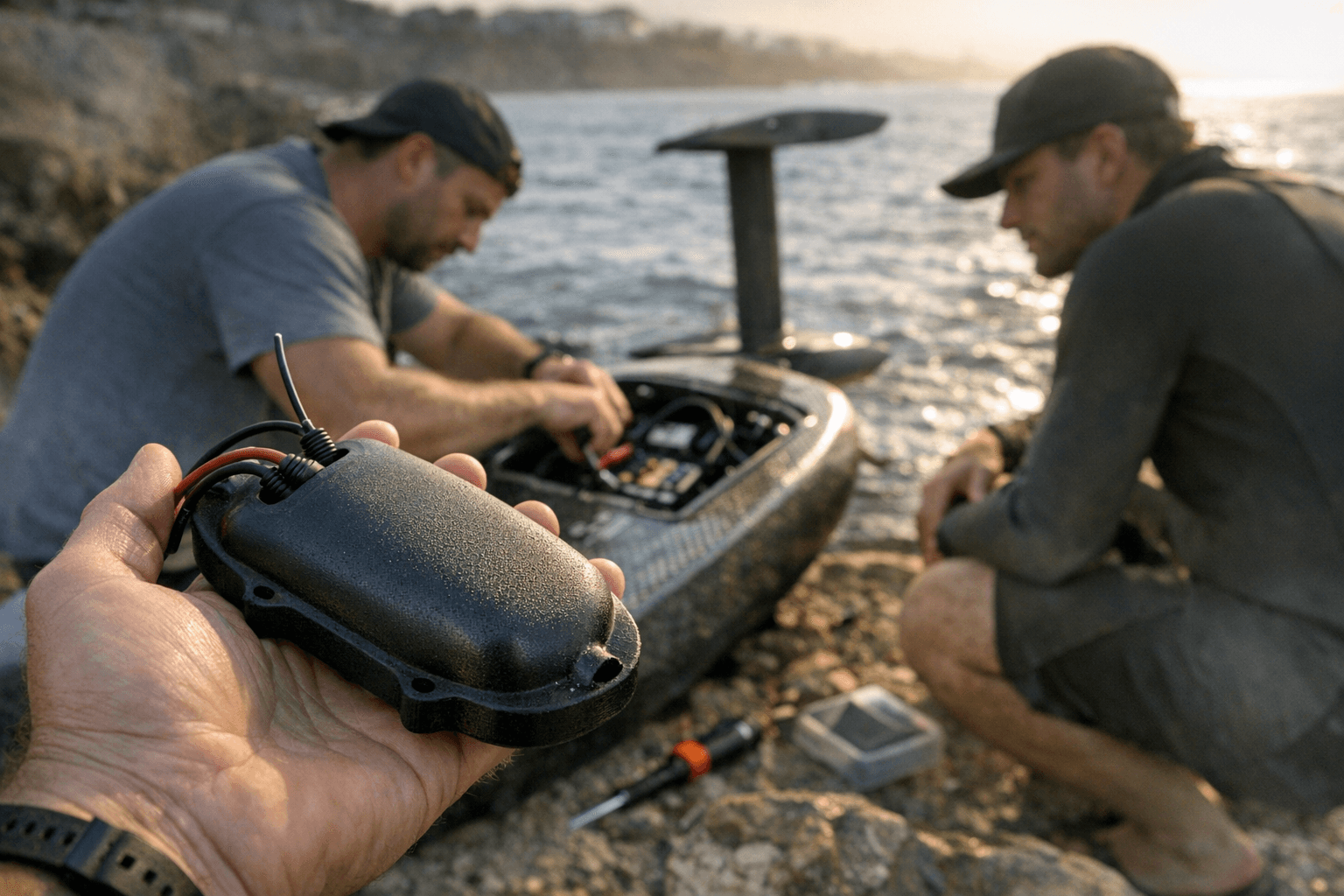
The problem is familiar to anyone running electronics on a DIY e-foil: carbon boards are expensive to modify permanently, seam-based housings fail at glued joints under saltwater cycling, and off-the-shelf enclosures are either too rigid, too bulky, or shaped for nothing in particular. A thread posted to FOIL.zone on March 23, titled "StretchPod - TPU printed single piece mini pod," tackled all three in one design.
The StretchPod is printed in TPU, a flexible thermoplastic polyurethane, as a single continuous piece rather than a multi-part shell requiring bonded seams. The single-piece approach directly addresses the most common failure point in printed enclosures: the glue line. By eliminating joints, the design reduces leak pathways and simplifies production for builders running small print farms or one-off builds.
Contributors zeroed in on settings almost immediately, sharing Cura and PrusaSlicer profiles and debating TPU shore hardness to balance flex with waterproofing integrity. The consensus favored specific infill and perimeter counts that keep the pod compliant enough to absorb impact from slap and abrasion while still sealing against mild submersion. The pod is not rated for full-depth immersion under powered conditions, and that distinction matters on an e-foil where prop blast and cavitation can force water into any gap not engineered for pressure.
Practical use cases covered three main scenarios: housing small GPS trackers for ride-data logging, slipping a compact VESC telemetry board into a soft protective shell, and protecting battery-management board connectors from water and abrasion in DIY e-foil and tow-foil setups. For builders who have spent sessions debugging connector corrosion, that last application alone justifies the print time.
Bonding to composite boards drew its own sub-thread, with experienced builders advising against approaches that could damage carbon skins. Several participants worked through adhesive strategies allowing the pod to be repositioned without leaving a permanent footprint.
The safety conversation ran equally detailed. Contributors warned against any shop marketing TPU-printed pods as "waterproof" without testing for repeated powered immersion and cavitation exposure. The consistent recommendation: pair any pod on a powered e-foil with secondary silicone seals and schedule inspection intervals rather than treating a single print as a permanent install.
A handful of small commercial printers joined the thread offering to produce and ship batches, which is where hobbyist threads like this typically begin their transition toward OEM territory. STL files were shared for download and local distribution, keeping the barrier to entry low for anyone with a printer already in the workshop.
Six days of commentary from builders across multiple countries produced a tested, iterable solution to a real electronics protection gap. The files are already circulating.
Know something we missed? Have a correction or additional information?
Submit a Tip