Foil builders tackle external heat sinks for waterproof VESC setups
A tiny heat-sink question exposes the real eFoil killer: once the box is sealed, heat has to go somewhere or the controller will throttle, trip, or cook itself.
Why this “simple” heat-sink question matters
An April 20 FOIL.zone post asks something that sounds basic and turns into the whole reliability problem in one line: how do you mount an external heat sink on a waterproof VESC setup? That question is really about whether the build can survive a full session, not just look clean on the bench. In electric foiling, thermal headroom decides whether you keep riding or get a hard cutoff halfway through the run.
The builders comparing notes are not debating theory for fun. They are trying to solve the exact failure mode that ruins DIY foil-assist and eFoil projects: tightly packed waterproof boxes that trap heat around the controller, battery, and wiring. Once the electronics heat up, the system can throttle back, trip out, or force a break long before the rider wants one.
The weak point is usually not the motor, it is the box
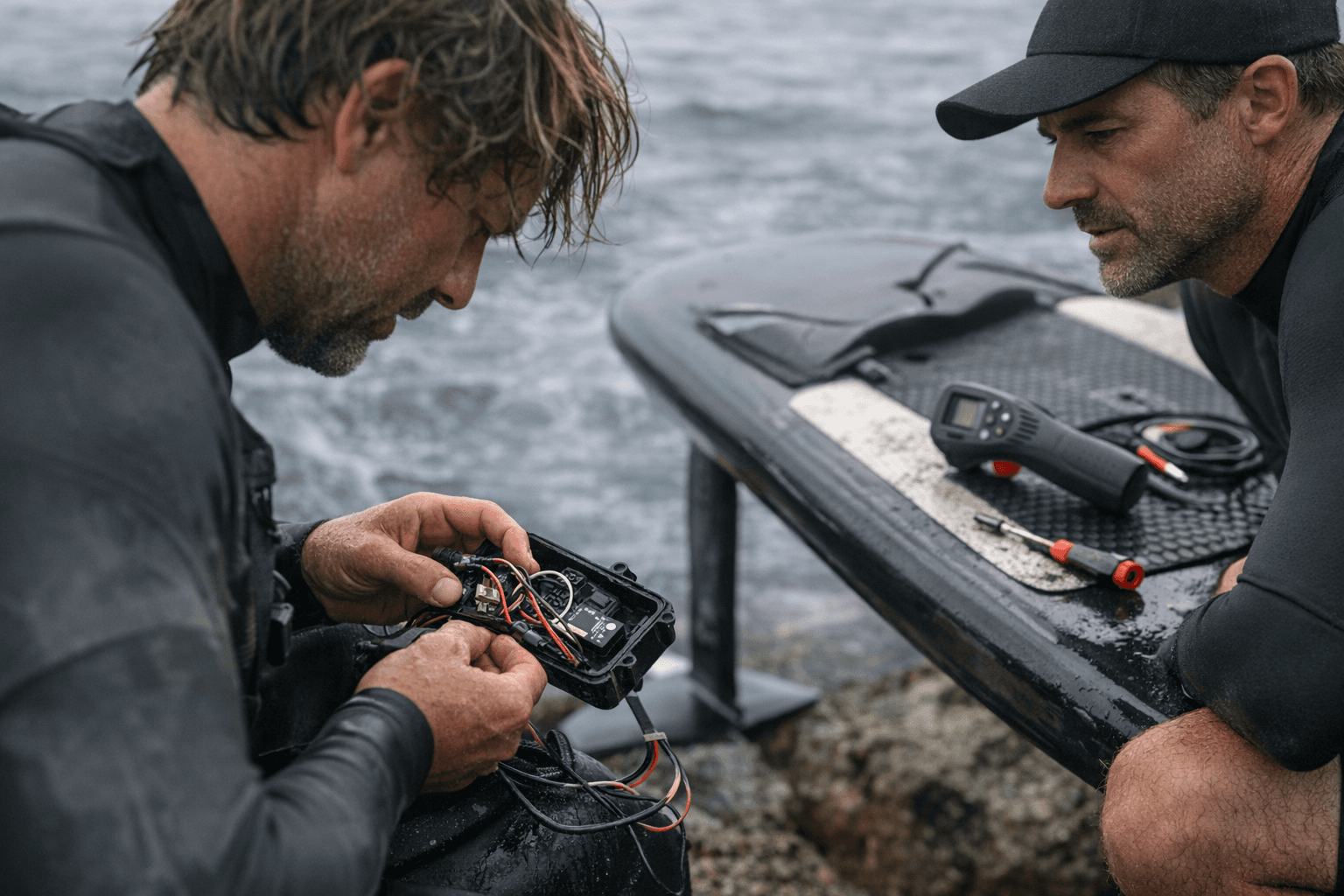
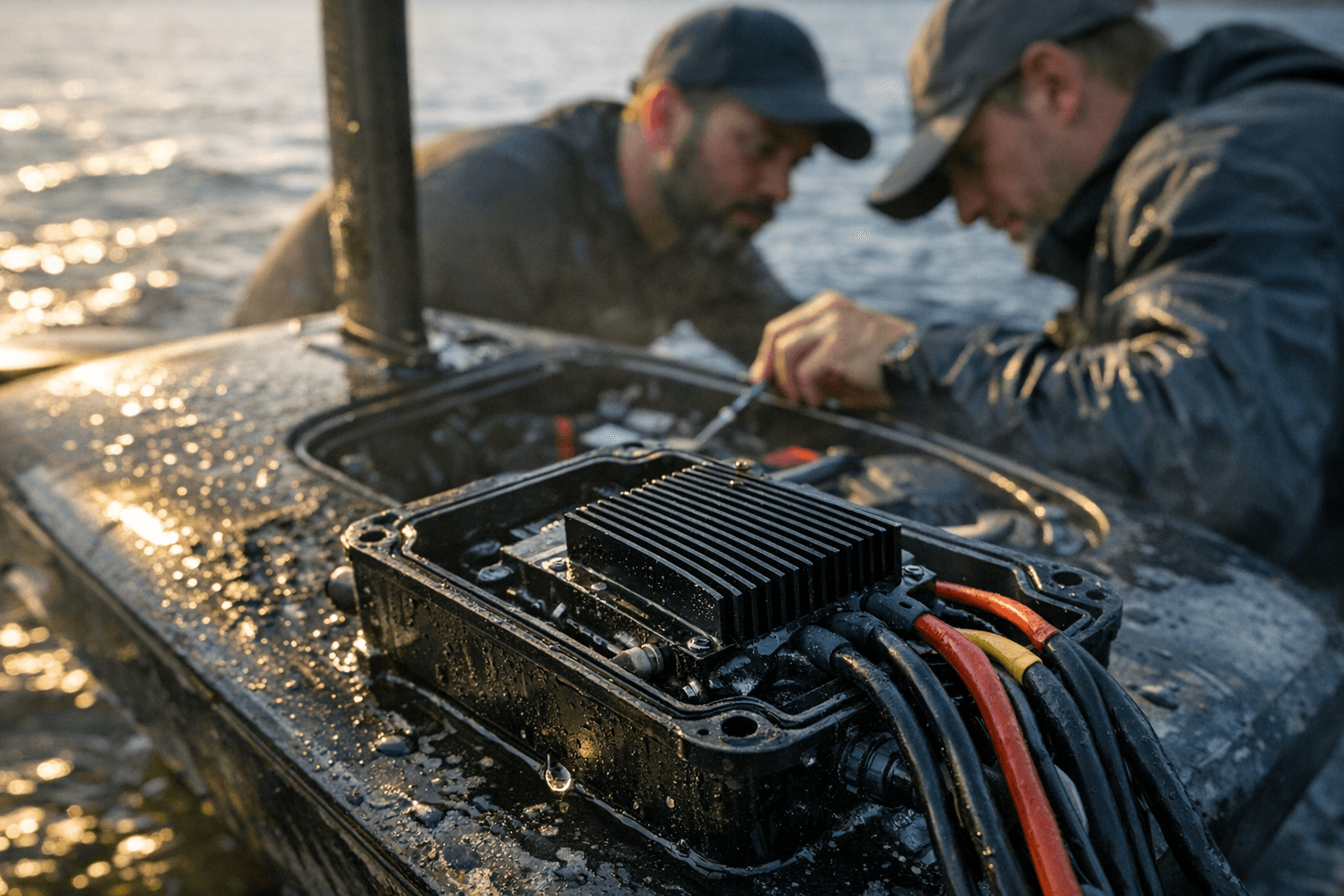
A February 2023 FOIL.zone build from Maui, Hawaii, puts the problem in plain language. The rider had a VESC mounted on an aluminum plate inside a small waterproof box, and the controller was getting hot enough that they could only ride about 4 to 5 minutes before needing a break. Their own conclusion was blunt: they would probably need to cut a hole in the box and add a proper external heat sink.
That pattern shows up again in other builds. In one FOIL.zone discussion, a single switching board with no cooling hit overtemperature cutoff in about 10 seconds at 100A. That is the kind of number that changes how you think about a build immediately. Peak power is useless if the controller cannot stay alive long enough to get the board moving.
A later FOIL.zone post about a short-board passive-water-cooled setup told a similar story from the water side of the equation. The controller overheated after about 10 seconds before takeoff, but partial mineral-oil filling extended startup time to about 1.5 to 2 minutes. Once foiling, ESC temperature sat around 55 to 60°C. That is the real game here: not just whether a cooling method works, but how much time it buys you in the exact phase where the system is most stressed.
What builders are actually comparing
The cooling ideas in these threads fall into a few recognizable camps, and each one solves a different problem.
External heat sinks are the obvious answer when the box itself is the bottleneck. In the Maui build, the logic was simple: if the VESC on an aluminum plate is still too hot, the cleanest fix may be to move the heat sink outside the waterproof shell and give it room to dump heat directly.
A more aggressive approach is the aluminum IP67 case filled with transformer oil. One FOIL.zone commenter described that setup as a way to move heat from the electronics to the cooling fins. The point is not just sealing the board against water, but using the oil as a thermal bridge so the heat can get out to the fins efficiently. Another builder in that thread said water-cooled heat sinks work, but preferred the oil approach as the better overall solution.
Then there is the board-integrated heat sink strategy. A FOIL.zone user reported a makerX 75200 mounted on a heat sink built into the board reaching nearly 70°C after 10 minutes at 33 km/h. That builder still considered the result acceptable, which tells you something important: in this space, “acceptable” often means warm but controlled, not cool to the touch. If the system holds temperature without cutting power, the build can still be a success.
How to think about the tradeoff before you seal the enclosure
The temptation with waterproof electronics is to make the box as airtight and compact as possible. That is exactly where builders get trapped. A neat enclosure can hide a terrible thermal path, and once the controller is boxed in, every extra watt of heat has to travel through plate, adhesive, oil, fins, or water before it escapes.
The practical question is not whether you have a heat sink. It is whether heat can move from the VESC to the sink fast enough, and whether the sink can actually reject that heat into the environment. A thick aluminum plate helps only if it is coupled well to the controller. A perfectly sealed box helps only if it also gives heat a path out. And every added cooling trick has to respect the other two constraints in foiling: waterproofing and drag.
That is why the same problem keeps returning in different forms. A cutaway box with an external sink may solve temperature but add complexity around sealing. Oil cooling may improve heat transfer but complicate service. Passive water cooling can work, but the startup window may still be too short for a hard launch. There is no free lunch here, only better compromises.
Why VESC keeps showing up in these builds
The reason VESC comes up so often is that it is not just a foil controller. The VESC Project says its motor controllers are used in robots, multicopters, planes, camera gimbals, e-bikes, electric skateboards, RC equipment, and industrial applications. That broad base matters because foil builders are borrowing hardware that was not originally designed for a saltwater, waterproof, high-drag, high-load marine enclosure.
The official VESC Tool is the configuration and data-analysis software for that hardware, and it matters just as much as the controller itself. If you are chasing heat issues, you need logs, temperatures, tuning data, and a way to see exactly when the system is hitting its limit. Thermal guesses are how builders waste sessions. Real data is how they stop cooking controllers.
There is also a recent organizational shift worth noting. In 2025, Benjamin and key members of the VESC project founded VESC Labs in Sweden, and the project says it no longer works directly with Trampaboards, although Trampa continues to sell legacy devices. For builders, that is a reminder to check which ecosystem they are actually tuning into, especially when they are mixing older boards, newer controllers, and custom waterproof enclosures.
What the commercial benchmark says about the DIY problem
Fliteboard’s Performance eFoil systems give a useful comparison point because they solve the same broad problem with more integrated packaging. The company says its low-drag conical wing interface is designed to improve efficiency, stability, and ride time, and it describes Flite Jet 2 as its most powerful and efficient propulsion system. The shape of the product matters here: less drag and better integration mean less waste heat and more usable runtime.
Fliteboard also says its ride calculator is based on real-world data and is accurate within about 10% in most situations. That is a telling number for DIY builders. If a premium commercial platform is already modeling output so tightly, then the homemade system has to be judged by the same standard: sustained performance, not just peak punch.
The pre-ride checklist that actually protects the build
Before you close up a waterproof VESC setup, the thermal path needs to be obvious from start to finish:
- Make sure the VESC has a real conduction path into the aluminum plate or heat sink, not just physical contact.
- Decide where the heat is going to leave the system: external fins, water cooling, oil, or a board-integrated sink.
- Test the startup phase as seriously as the ride phase. Several FOIL.zone builds show the first seconds are where overtemp happens fastest.
- Use VESC Tool to watch temperature behavior, not just speed or current.
- Treat 55 to 60°C while foiling as a meaningful data point, not a guess, and take nearly 70°C after 10 minutes at 33 km/h as a warning to verify your margin.
- If the controller cannot survive a hard launch, the enclosure is not finished, no matter how clean it looks.
The builders who get this right are not just making prettier boxes. They are building systems that stay alive long enough to matter, and that is what separates a working foil platform from a weekend prototype.
Know something we missed? Have a correction or additional information?
Submit a Tip