Great White Shadows Downwind Foiler Miles Off Santa Barbara
A 10- to 11-foot great white shadowed a Santa Barbara-to-Carpinteria foil run for miles, putting route planning and support boats in sharp focus.
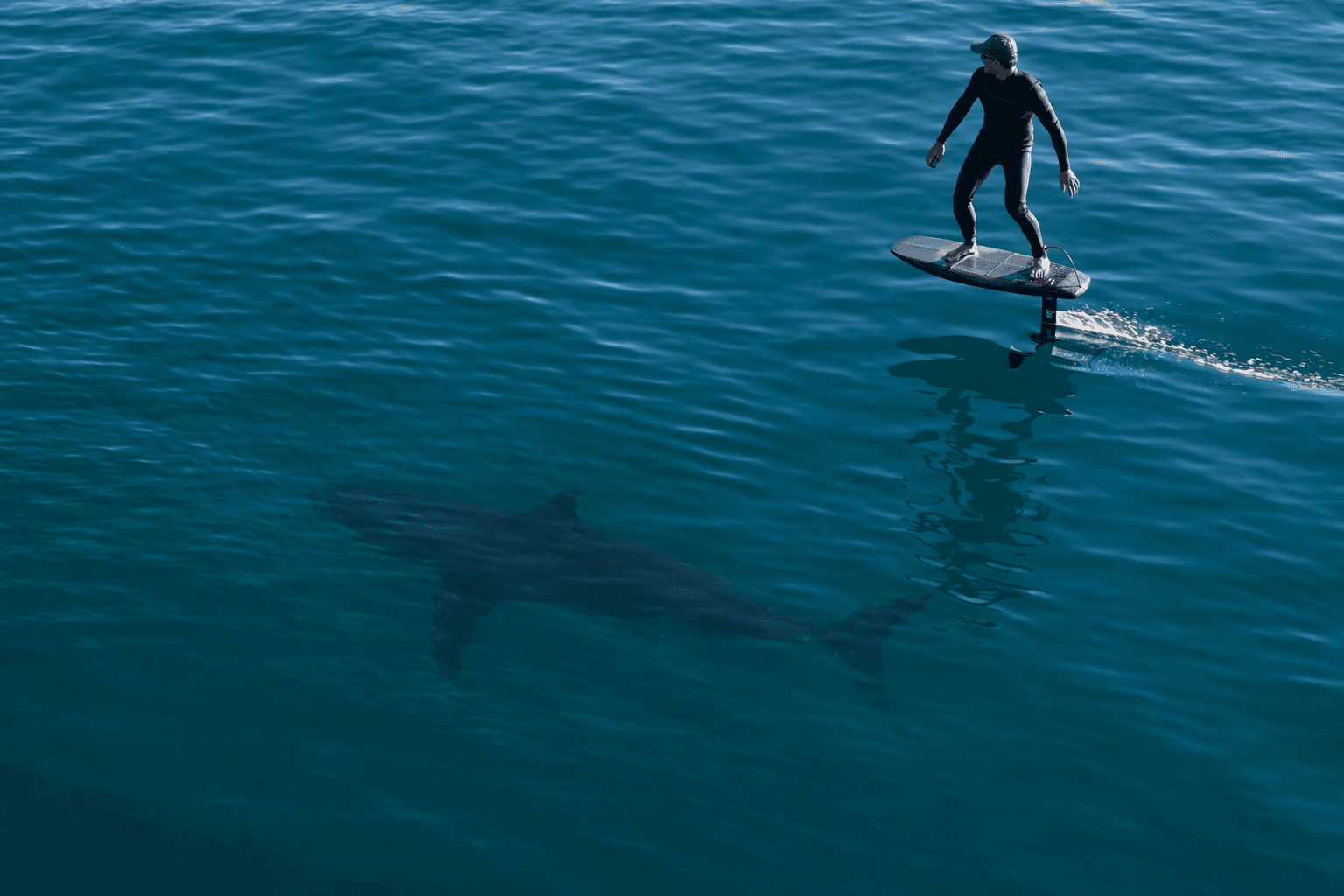
The safest lesson from the Santa Barbara-to-Carpinteria run is simple: once a foil mission leaves the nearshore comfort zone, route choice, communication, and a backup plan matter as much as speed. In this case, a downwind point-to-point ride turned tense when a great white estimated at 10 to 11 feet kept pace for miles, trailing the foiler in open water without a strike or injury but with enough persistence to turn a long glide into a prolonged shadowing incident.
The footage, posted by Kai Lenny, shows why open-ocean downwinding carries a different risk profile than a short beach-break session. On a foil, the board lifts on a wing beneath the water, cutting drag and letting riders cover distance efficiently across a wide range of conditions. That same efficiency is what sends riders farther from shore, into stretches of water where there is no lineup, no crowd buffer, and far less room to react if a large predator or another hazard appears. In a run like this one, a support boat, reliable radio or phone contact, and a clear bailout plan are not extras; they are part of the mission.
The shark itself fits a pattern California wildlife officials have long emphasized. The California Department of Fish and Wildlife says white sharks are responsible for the vast majority of shark-human incidents off California, and it prefers the word incident over attack because many encounters are believed to be exploratory rather than predatory. Since 1950, the state has logged fewer than 250 documented shark incidents, with fewer than 20 fatalities. A 2022 study in Frontiers in Marine Science verified 201 California shark incidents from 1950 through 2021, with 107 causing injury and 15 fatal, and 178 of them involving white sharks.
That data matters because the state’s shark incident dataset, updated in April 2026 through California Open Data, includes details that help riders read patterns, from date and time to location, water depth, activity, injury status, species, and source information. For foilers chasing long mileage, that kind of record turns a dramatic clip into practical route intelligence.
The Santa Barbara episode also landed in the middle of a busy Southern California shark cycle, with multiple April 2026 reports about great white sightings and hooked sharks. For a sport built on range, speed, and exploring what lies past the break, the message is becoming harder to ignore: downwind protocols in Santa Barbara may need to account more directly for wildlife awareness, escort options, and the kind of visibility checks that help riders spot trouble early, before a mile-long shadow becomes the story.
Know something we missed? Have a correction or additional information?
Submit a Tip