New Study Maps Unsteady Cavitation Patterns Across Clark-Y Hydrofoil Cascades
Strouhal numbers diverge sharply between cascade layers in a new Clark-Y study, revealing why stacked foil designs hit unpredictable speed ceilings at pace.
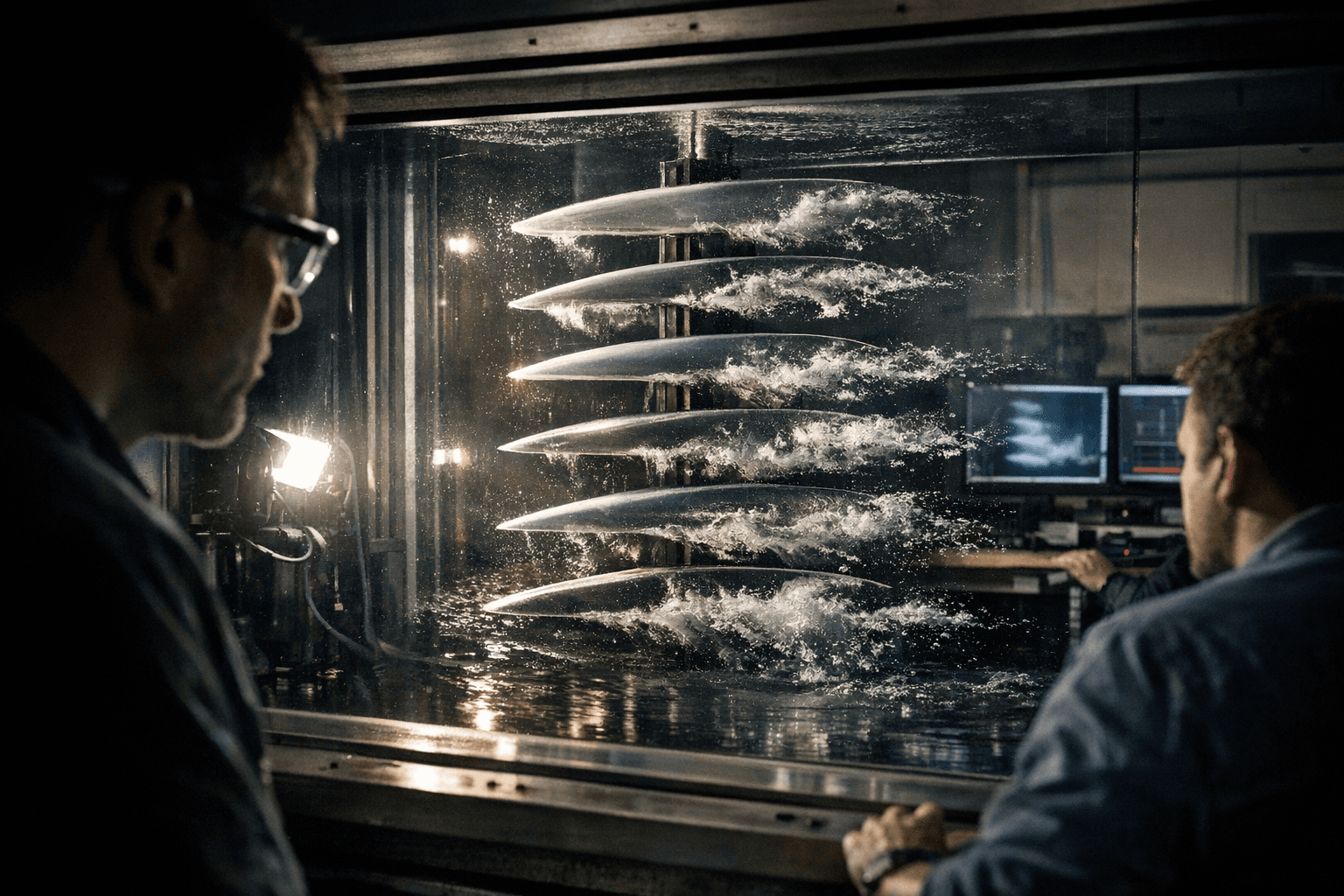
The gap between a Strouhal number of 0.2 and 0.3 might not sound dramatic until you understand what it means at speed: the top and bottom wings of a stacked hydrofoil cascade are collapsing cavitation bubbles at fundamentally different frequencies, creating competing vibration signatures that riders often feel as mysterious buffeting with no obvious cause.
That finding sits at the centre of a new peer-reviewed study published in the Journal of Marine Science and Engineering on March 27, 2026. Using physical tank experiments and numerical simulations, the authors mapped unsteady cavitation behaviour across a Clark-Y hydrofoil cascade designed to mirror the stacked wing geometry common in high-performance foil craft.
The results draw a sharp distinction between layers. The top foil behaved like an isolated single hydrofoil, producing large-scale shedding vortices at the trailing edge when cloud cavitation onset arrived. Middle and bottom foils told a different story: hydrodynamic interference between layers actively damped the formation of large re-entrant bubbles, the mechanism behind the most aggressive collapse events, while pushing those layers to a Strouhal number of roughly 0.3 versus 0.2 for the top.
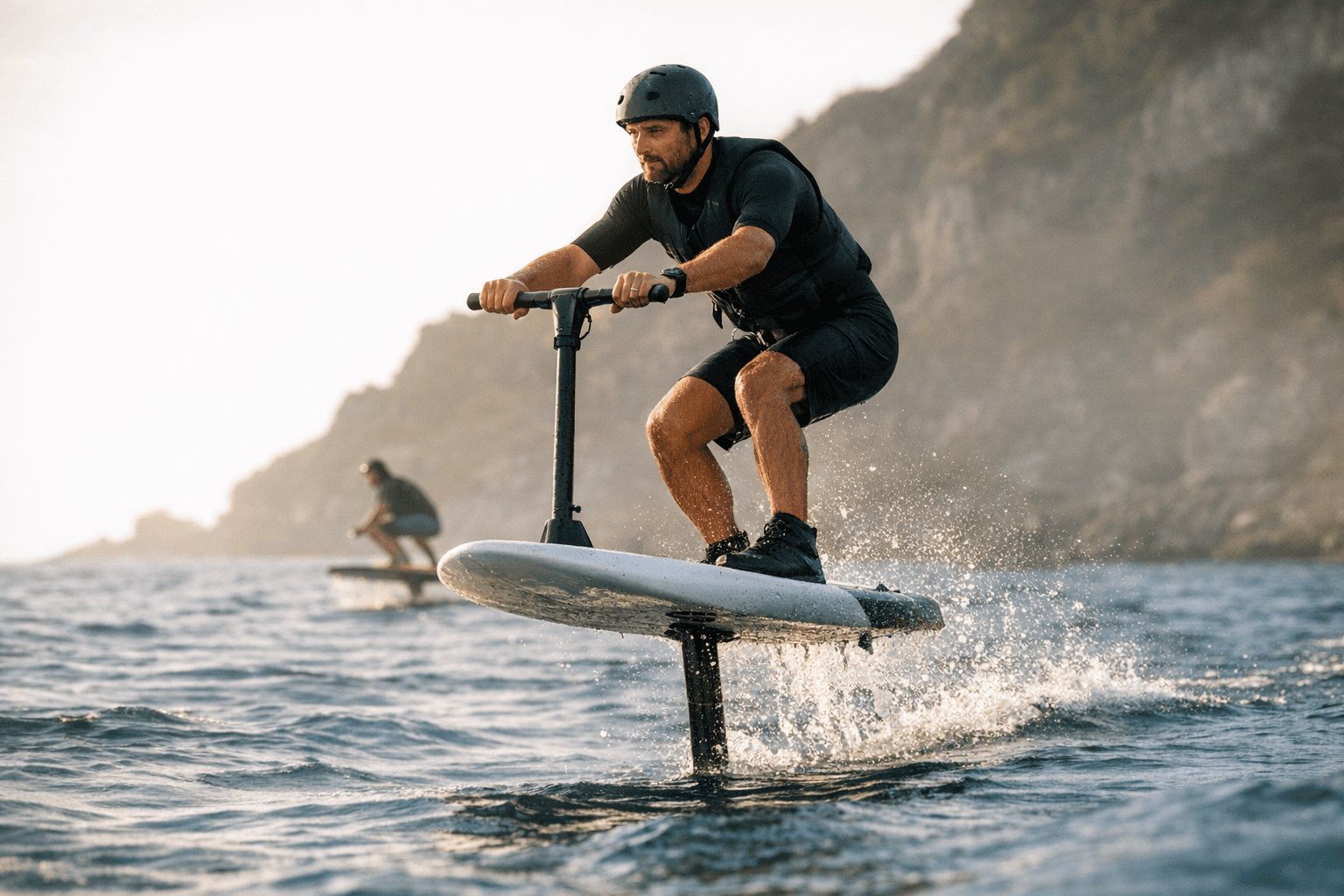
For riders pushing fast e-foils or high-aspect downwind wings near their upper speed limits, those numbers connect to real symptoms. Unsteady cavitation is the mechanism behind the sudden gravel-on-glass noise from beneath the wing. It drives the micro-vibration riders sometimes misattribute to mast stiffness. It creates speed ceilings that appear not from drag alone but from lift degradation as vapour sheets form and collapse across the foil surface. Repeated cycles erode wing material over months, particularly at leading edges where bubble collapse energy concentrates.
Three signals from this research are worth tracking when comparing wings at retail. First, section choice: a Clark-Y profile carries specific camber and thickness characteristics that set its cavitation inception threshold, and brands making speed claims without specifying foil section geometry are offering incomplete information. Second, surface finish: cavity development is sensitive to leading-edge roughness, so manufacturing consistency in finish quality directly affects where cavitation onset occurs across a production run. Third, inter-element spacing: the cascade study shows that foil-to-foil gap and stagger geometry change cavity development histories measurably; on multi-element craft like RaceBirds or twin-wing setups, whether a designer has specifically tested those gaps matters more than planform marketing language.
The study also has clear limits readers should not talk past. The cascade used Clark-Y foils under controlled laboratory flow, not the irregular wave encounter angles and velocity fluctuations of open-water foiling. The research does not validate any commercial wing design and does not prove that any given brand's foil will or will not cavitate at a specific speed. The authors themselves flag transient manoeuvres, including sharp turns and rapid throttle changes, as unresolved territory, alongside material fatigue data from repeated cavitation loading cycles.
What the work does provide is a precisely quantified set of experimental benchmarks around Strouhal numbers and cavity shedding frequencies that CFD teams at foil OEMs can use to validate their own simulation models, a genuinely scarce resource for developers at e-foil brands and RaceBird programs working through their safe operating envelopes.
Know something we missed? Have a correction or additional information?
Submit a Tip