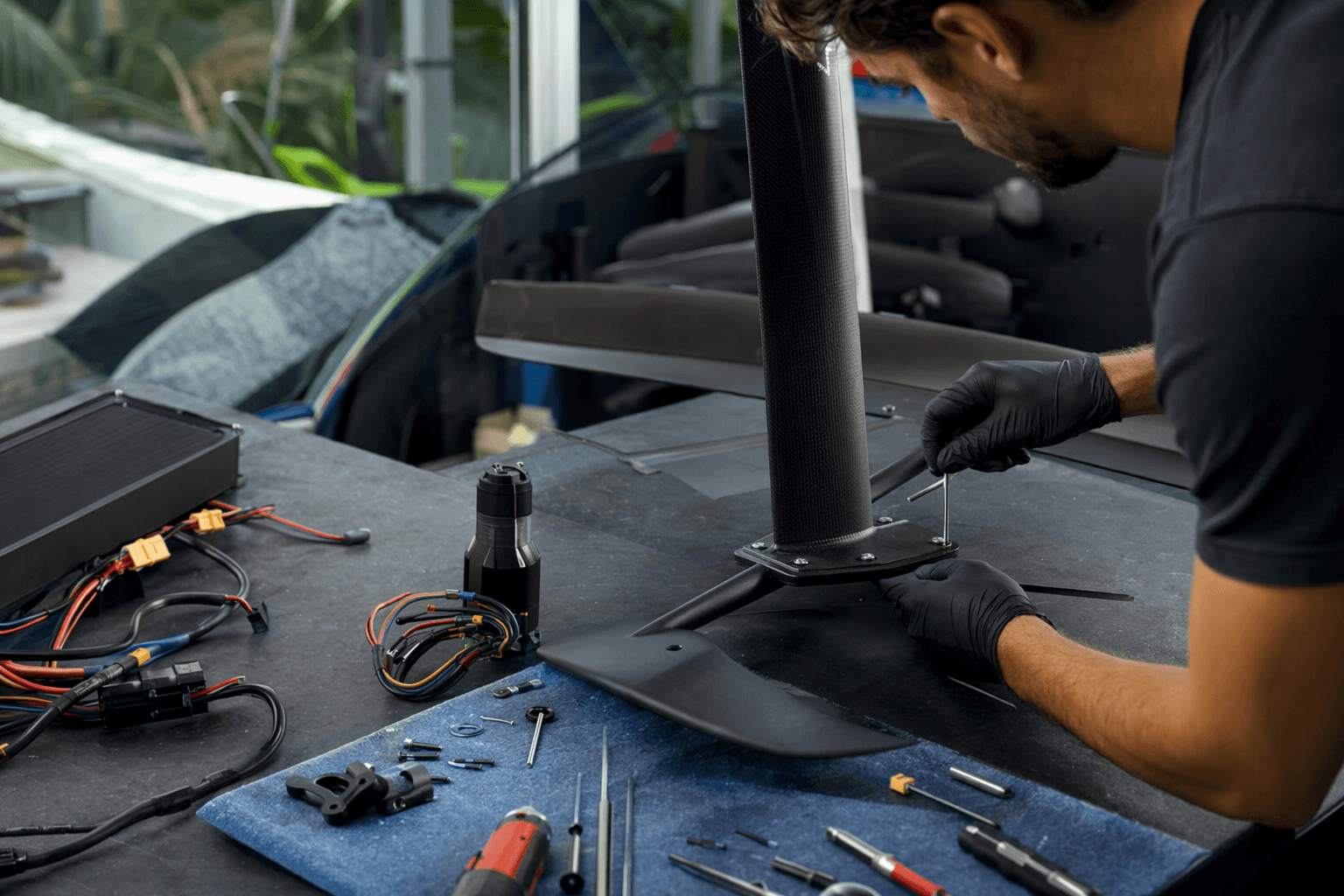
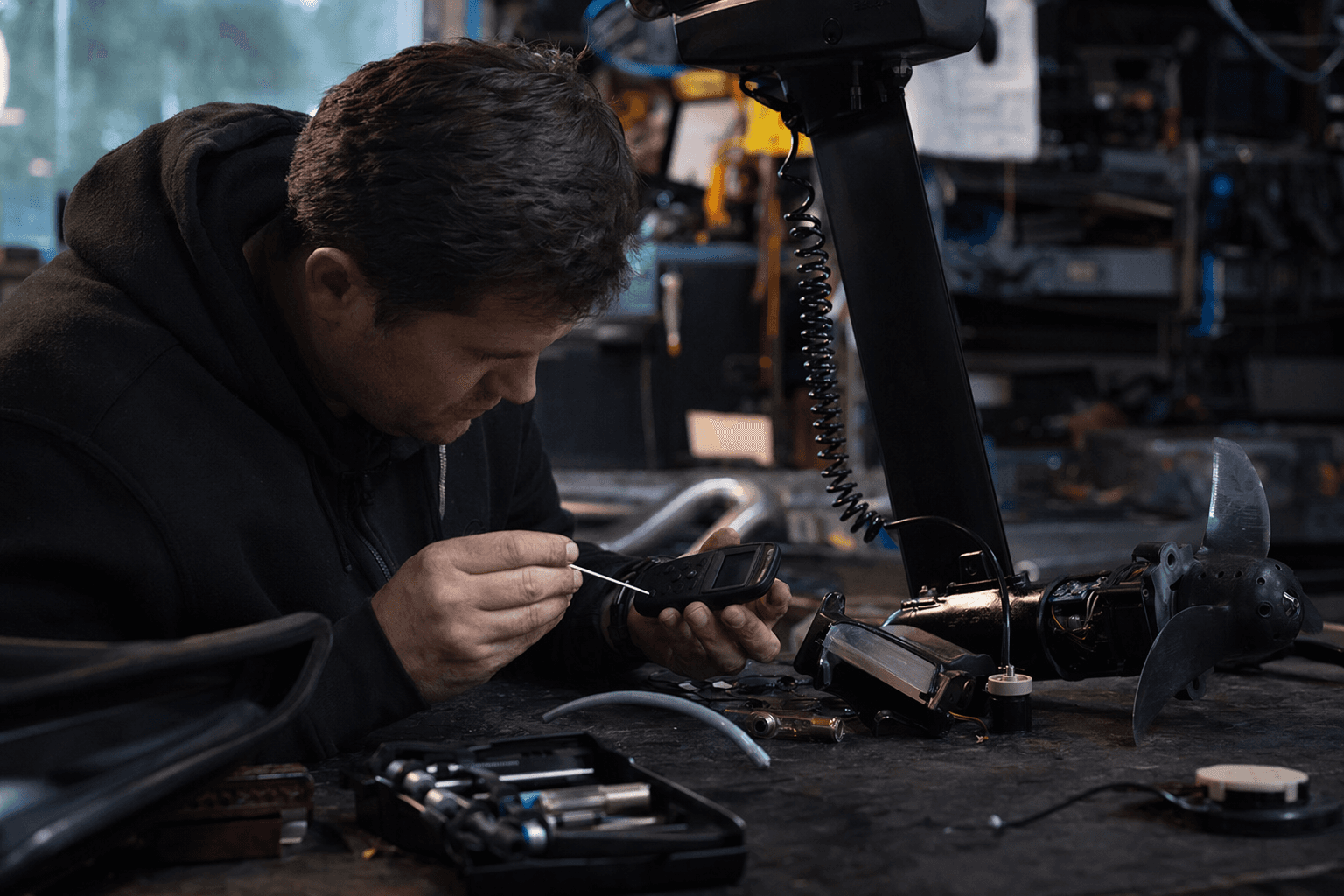
Swedish students build two low-cost eFoils with LiFePO4 battery packs
Two Swedish students are building twin budget eFoils, and the real lesson is that LiFePO4 safety, sealing, and foil compatibility eat the budget fastest.
Two boards, one shared budget logic
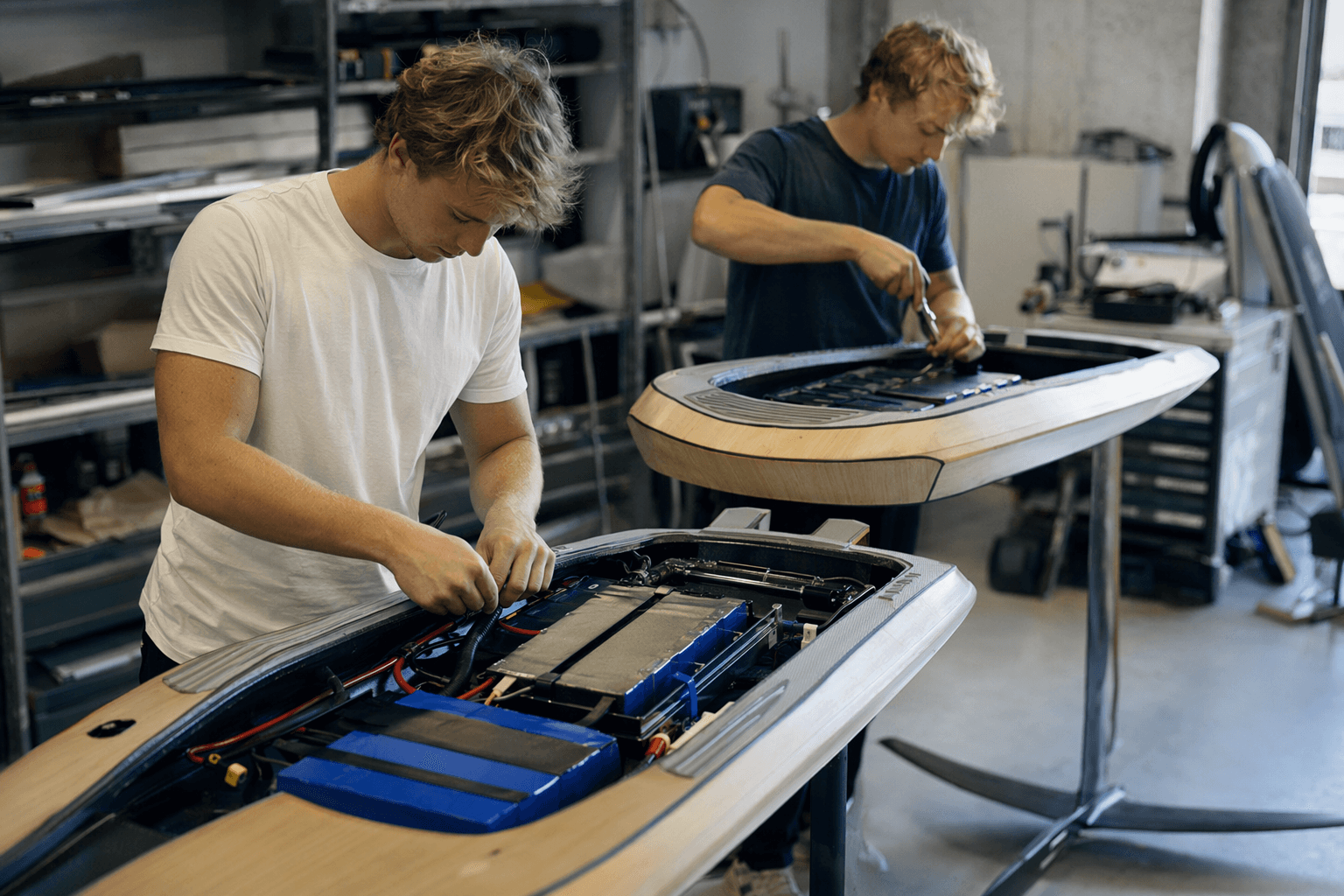
A pair of engineering students in Sweden are trying to do something most eFoil buyers only sketch out on paper: build two rideable electric foils, one for each of them, without blowing the budget. The plan is refreshingly direct. They want respectable performance, a sensible parts list, and no unnecessary flash, which makes this build feel less like a toy project and more like a costed engineering exercise.
The thread sits inside FOIL.zone’s efoil.builders community, a corner of the forum built around foiling enthusiasts and DIY electric foiling projects. That matters, because this is not a random one-off brainstorm. It is part of an active build culture where motors, batteries, remotes, and foil compatibility get debated in detail, and where earlier Sweden-based eFoil and tow-boogie projects have already established a practical knowledge base.
Where the money goes first
The students’ quoted target is about 9,500 SEK for the electronics and battery side, with the full build landing around 18,000 SEK, or roughly $1,900. That full figure is the number that makes the thread stand out. It puts the project in the same conversation as entry-level commercial gear, while still leaving enough room for the kind of compromises that make or break a DIY foil.
That comparison becomes even sharper next to Fliteboard’s official Standard eFoil System, which is listed at $2,465 USD for Prop & Guard before shipping and tax. Fliteboard also says its system uses a patented unibody fuselage and 5 kW propulsion. The Swedish build is therefore not just chasing “cheap”; it is trying to hit a genuinely competitive spot against a commercial benchmark with a much more integrated, polished package.
The powertrain is all about practical parts
The drive system is built around a Flipsky 65161 120KV 6kW motor and a Flipsky 75200 V2.0 Pro water-cooled VESC with a built-in anti-spark switch. A water pump is part of the plan too, which is exactly the sort of plumbing that reminds you this is a real marine build, not just an electric longboard with a mast bolted on.
That component choice says a lot about the philosophy behind the project. The students are leaning on widely available, hobbyist-friendly hardware instead of hunting for a mysterious bargain motor that might save a little money and cost a lot of reliability. In a market where compatibility and sealing can make or break a build, that is a smart place to avoid false economy.
The battery is the biggest deliberate compromise
The battery decision is the clearest expression of their priorities. They are planning a 16S2P LiFePO4 pack built from EVE C40 cells, paired with a Daly BMS and a generic 58.4V 20A charger. The builder says the pack would weigh 12.0 kg, about 4 kg more than an equivalent lithium-ion pack.
That extra weight is not treated as a flaw so much as a tradeoff. The reasoning is simple: they do not want to risk a catastrophic battery failure, and they are willing to carry the penalty in exchange for better safety margins and longer cycle life. That logic lines up with the broader technical conversation around lithium iron phosphate, where degradation and lifetime modeling have been important enough to draw sustained attention from the National Renewable Energy Laboratory. It also fits the chemistry’s reputation for more predictable cycling behavior and better thermal stability than many higher-energy lithium-ion alternatives.
This preference is not isolated, either. A 2022 FOIL.zone Sweden build also leaned toward LiFePO4 for safety reasons, which makes the chemistry choice look like a recurring community answer rather than a one-time personal hunch. In other words, the students are following a path other builders have already considered when the priority is keeping a homemade pack as conservative as possible.
The board itself is built for function, not finish
On the board side, the structure is intentionally no-frills: XPS foam sheets, fiberglass lamination, a wooden mast mounting plate, and waterproof inspection hatches for access to the internals. The poster is explicit that appearance is secondary. That is the right call for a project where sealing, reinforcement, and access matter more than showroom looks.
This is also where DIY eFoils often win or lose their economics. Foam and fiberglass can be affordable, but the savings disappear fast if you skimp on the mast mount, underbuild the laminate, or make the internals hard to reach for maintenance. Waterproof hatches are a small detail with a big effect, because they can save hours of frustration every time a component needs checking, drying, or replacement.
The foil package keeps to known names
For the foil itself, the plan uses a GONG v3 Ascent 19mm mast with XL front and rear wings and a Fliteboard propeller. GONG’s Ascent V3 front wing is marketed as an all-round front wing for rapid progression, and the listed version comes in at 690 cm2 with a 69.0 cm span and a 7.0 aspect ratio. GONG also positions the Ascent V3 stabilizer as a versatile, progressive rear wing.
That is a sensible match for a budget-minded build that still needs to ride well. The wing choice suggests lift, glide, and forgiving handling matter more than chasing an exotic race setup. The use of a Fliteboard propeller is another tell: the students are avoiding obscure no-name parts that might look cheaper on a spreadsheet but offer less trust in the water.
The forum context matters here too. The specific Flipsky 65161 and GONG combination has been discussed before, which means this project is drawing from a living community knowledge base rather than inventing an unsupported parts stack from scratch.
What is smart savings, and what is not
The smartest savings in this build are the ones that do not threaten safety or compatibility.
- Smart savings: using off-the-shelf Flipsky electronics, choosing LiFePO4 for the battery, keeping the board structure simple, and relying on established GONG and Fliteboard-compatible foil hardware.
- False economy: chasing the cheapest possible foil package, underestimating sealing work, or treating battery weight as the only metric when safety and longevity are the real concerns.
- Quiet cost traps: waterproof access, mast reinforcement, charger selection, BMS quality, and the inevitable time spent tuning the system after the first water test.
That is why the project feels credible. The students are not trying to win a race to the absolute lowest parts cost. They are trying to land in the zone where a DIY eFoil can be built, ridden, maintained, and trusted.
Does this beat buying used or entry-level complete setups?
On paper, the answer is yes in one narrow sense and no in another. The quoted 18,000 SEK total is strikingly low against commercial pricing, especially compared with Fliteboard’s $2,465 standard system before shipping and tax. For two students who can build, troubleshoot, and accept a heavier battery pack, the value proposition is strong.
But the real comparison is broader than sticker price. A used complete setup or an entry-level commercial eFoil will usually buy you integration, warranty, and less time spent on assembly and debugging. The Swedish build buys customization, learning, and a lower cash outlay on the quoted parts, but it also shifts the burden of sealing, compatibility, and system integration onto the builders themselves.
That is the real takeaway from this thread. In the eFoil world, the biggest savings are not found by going cheaper on everything. They come from knowing exactly where not to compromise.
Know something we missed? Have a correction or additional information?
Submit a Tip