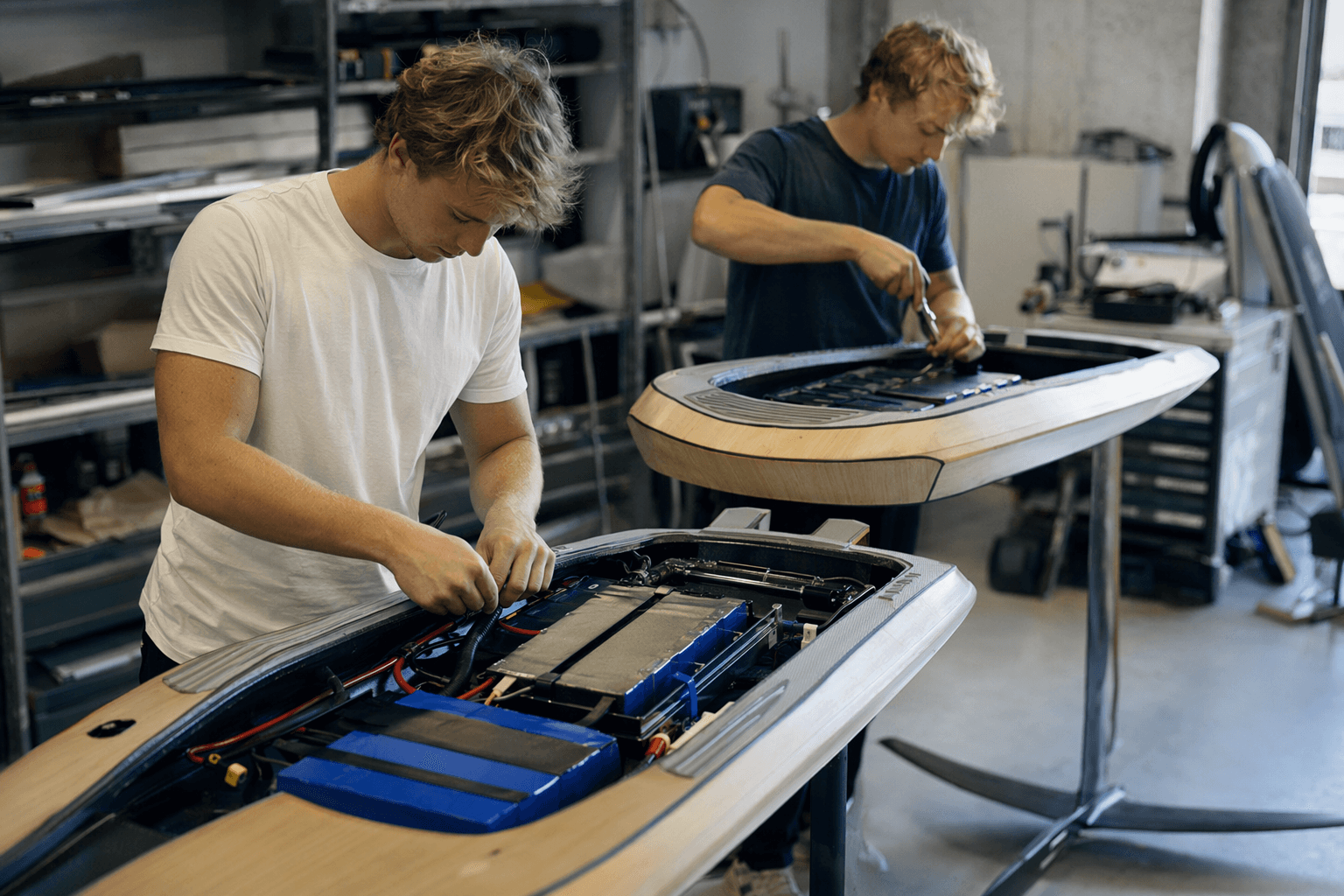
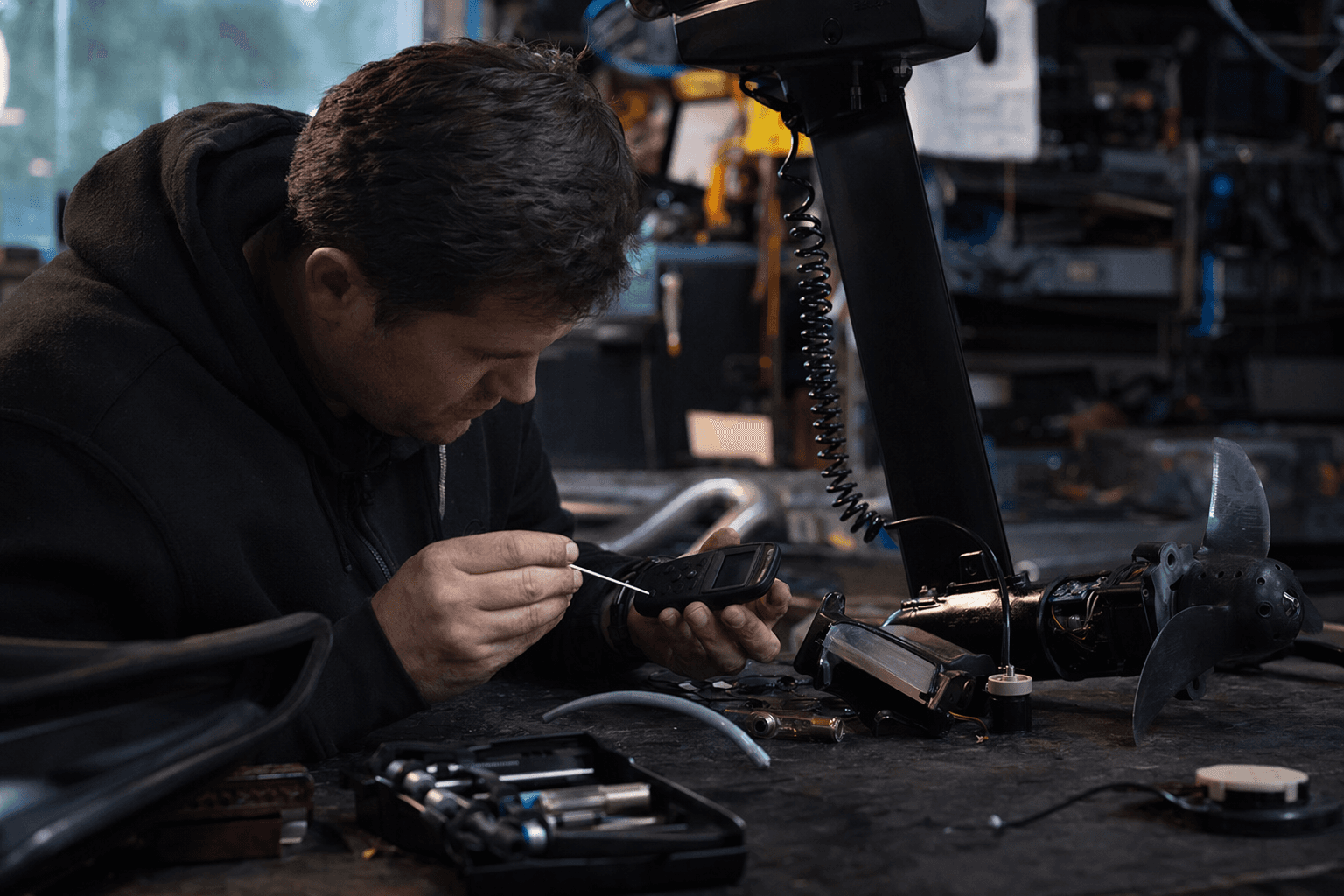
Foil Zone DIY thread guides first-time eFoil builder on setup
A Greek beginner's thread turns into a usable eFoil recipe: build simple, copy the proven parts, and respect the legal reality before buying anything.
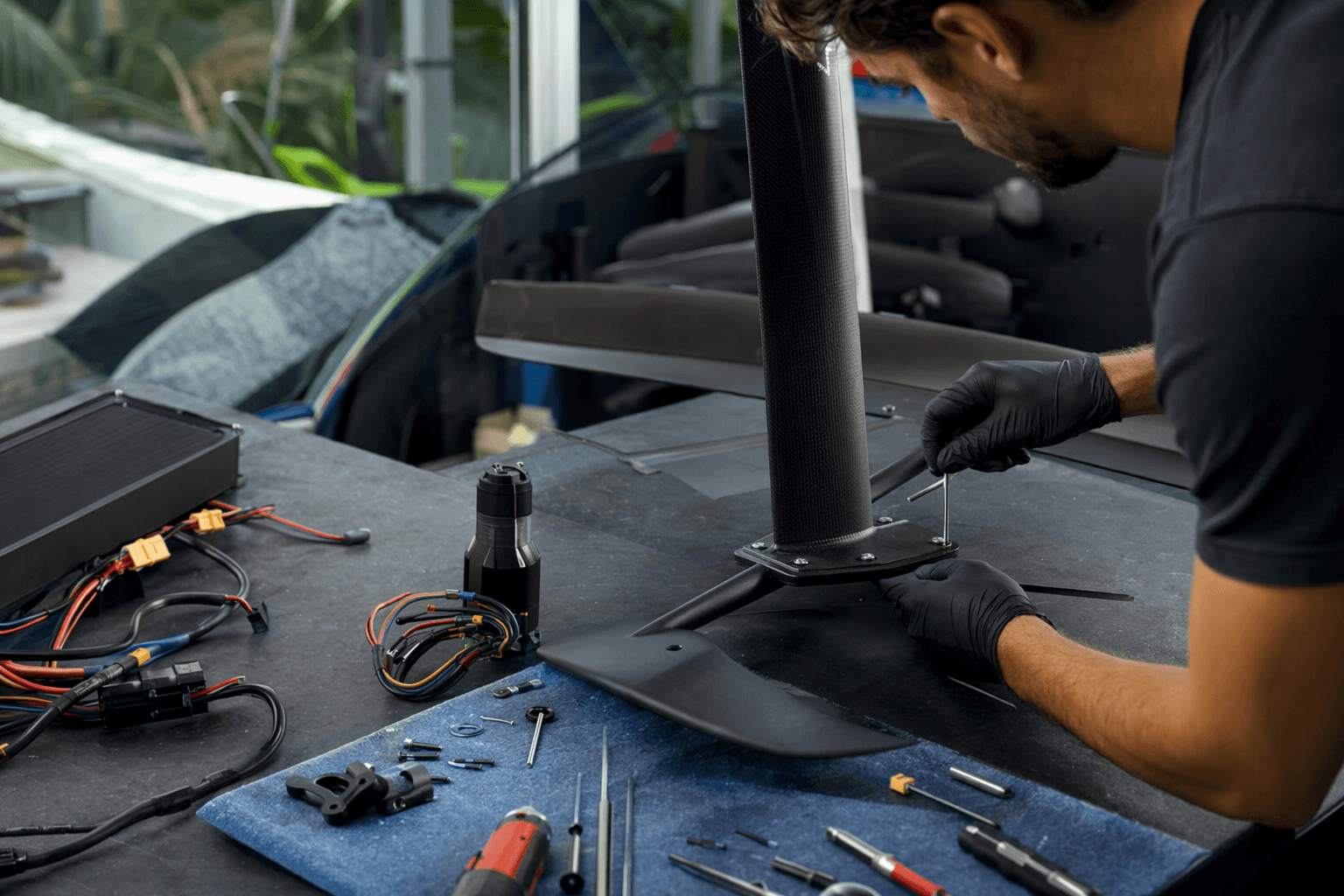
A starter recipe, not a shopping spree
Dimitris did the right thing by asking before buying parts. He said he was in Greece, weighed 85 kilograms, stood 1.78 meters tall, and wanted to build his own eFoil on a limited budget without ending up with a pile of mismatched hardware. That is exactly how a first-time builder should approach this scene: start with rider weight, board volume, mast length, foil lift, and control electronics, then choose parts that already work together.
The thread’s most useful answer was not flashy. It was a compact baseline that pointed to Gong materials, a board around 5 to 6 inches, a mast in the 70 to 80 centimeter range, XXL or XL Allivator wings with a stab, and Flipsky motor, VESC, and remote components. That is the real beginner playbook here, not a custom one-off experiment.
Start with float, not fantasy
FOIL.zone has been repeating the same lesson for years: the first board should float. The forum’s own rule of thumb says to take the rider’s weight in kilograms, add 30 liters, then multiply by 1.1 for nose-bevel compensation. For Dimitris, that puts the starting point at about 126.5 liters, which is a very different conversation from chasing the smallest or sleekest board on the internet.
That formula matters because a beginner board is not just about speed or looks. It is about safety when the system fails and about making the first sessions easier, not harder. A board that floats gives you margin when you are standing still, launching, remounting, or dealing with a throttle or control issue, and that margin is worth far more than saving a few liters.
Why the community keeps steering people to the same baseline
The recurring theme across FOIL.zone is standardization. The efoil.builders category has been active since October 15, 2020, and it is organized around propulsion systems, electronics, foils, and boards, which tells you how the community thinks about a first build. Instead of pushing newcomers into bespoke design work, the forum keeps circling back to repeatable parts and proven dimensions.
That is why the Greek thread landed on a 70 to 80 centimeter mast and the Allivator wing setup. A mast in that range gives a practical starting point without pushing a new rider into the awkward extremes of too little clearance or too much complexity, and the XXL or XL wing choice leans toward predictable lift rather than a twitchy, high-maintenance setup. The Flipsky motor, VESC, and remote recommendation follows the same logic: use known components that already speak the same language.
If you are building on a tight budget, this is where the money goes first. Spend on compatibility, not novelty. Spend on the board volume, mast length, wing set, and control electronics that the DIY crowd keeps repeating, because every oddball part you introduce increases the odds that the build turns into a troubleshooting exercise.
The simplest first build is usually the smartest one
FOIL.zone’s own beginner guidance says to keep the first build simple and lean on general wisdom instead of overthinking the project. That advice sounds obvious until you are staring at a list of carbon, foam, motors, batteries, controllers, remotes, mounts, and foil hardware. The temptation is to optimize everything at once, but the community’s long-running threads make the opposite case: copy the baseline first, then learn what you actually want to change.
There is also a practical fallback baked into the forum culture. If a builder gets stuck and cannot find the answer on FOIL.zone, the FAQ says to ask ChatGPT and search RC forums. That tells you how pragmatic this world is. The goal is not purity, it is getting a workable eFoil in the water without wasting weeks on avoidable mistakes.
The part that turns a hobby build into a regulated vessel
The legal side is not optional, and it matters just as much as the hardware list. The U.S. Coast Guard’s Policy Letter 22-02 classifies a mechanically propelled personal hydrofoil, or eFoil, as a vessel. A NASBLA FAQ says the Coast Guard issued that policy letter on August 26, 2022, and that an eFoil or motorized surfboard must have a hull identification number.
That changes the tone of a DIY build immediately. A Coast Guard boating safety circular says operators must also comply with federal equipment-carriage requirements, and Hawaii officials have said eFoils have been required to register as motorized vessels since September 2020. So the first build is not just a garage project. It is a watercraft that may need registration, identification, and proper safety gear depending on where you launch.
What to copy, what to simplify, and what to avoid
Copy the part of the thread that shows discipline, not improvisation. Copy the Gong-based starter recipe, the 70 to 80 centimeter mast, the XXL or XL Allivator wings, and the Flipsky motor, VESC, and remote stack. Copy the board-sizing logic too, because a float-friendly board around the 126-liter range makes far more sense for an 85-kilogram rider than a cramped, over-optimized shape.
Simplify everything else. A first-time builder does not need a novel foil concept, a boutique control setup, or a parts list assembled from random sellers that have never been tested together. Avoid the expensive mistake of buying pieces in isolation and hoping they fit, because the real cost is not only money. It is the weeks lost to mismatched hardware, the frustration of an unrideable board, and the safety risks that come with a first eFoil built on guesswork.
The thread’s real lesson is bigger than one Greek builder asking for advice. FOIL.zone has built a long archive of beginner-friendly answers, and the loudest message in that archive is still the best one: start with a proven baseline, keep the first build simple, and respect the fact that an eFoil is a vessel before it is a project.
Know something we missed? Have a correction or additional information?
Submit a Tip