Wing foiling lures kitesurfers with faster learning and simpler setup
Wing foiling strips away kiteboarding’s beach hassle and now has a real competition ladder behind it.

Why the crossover keeps making sense
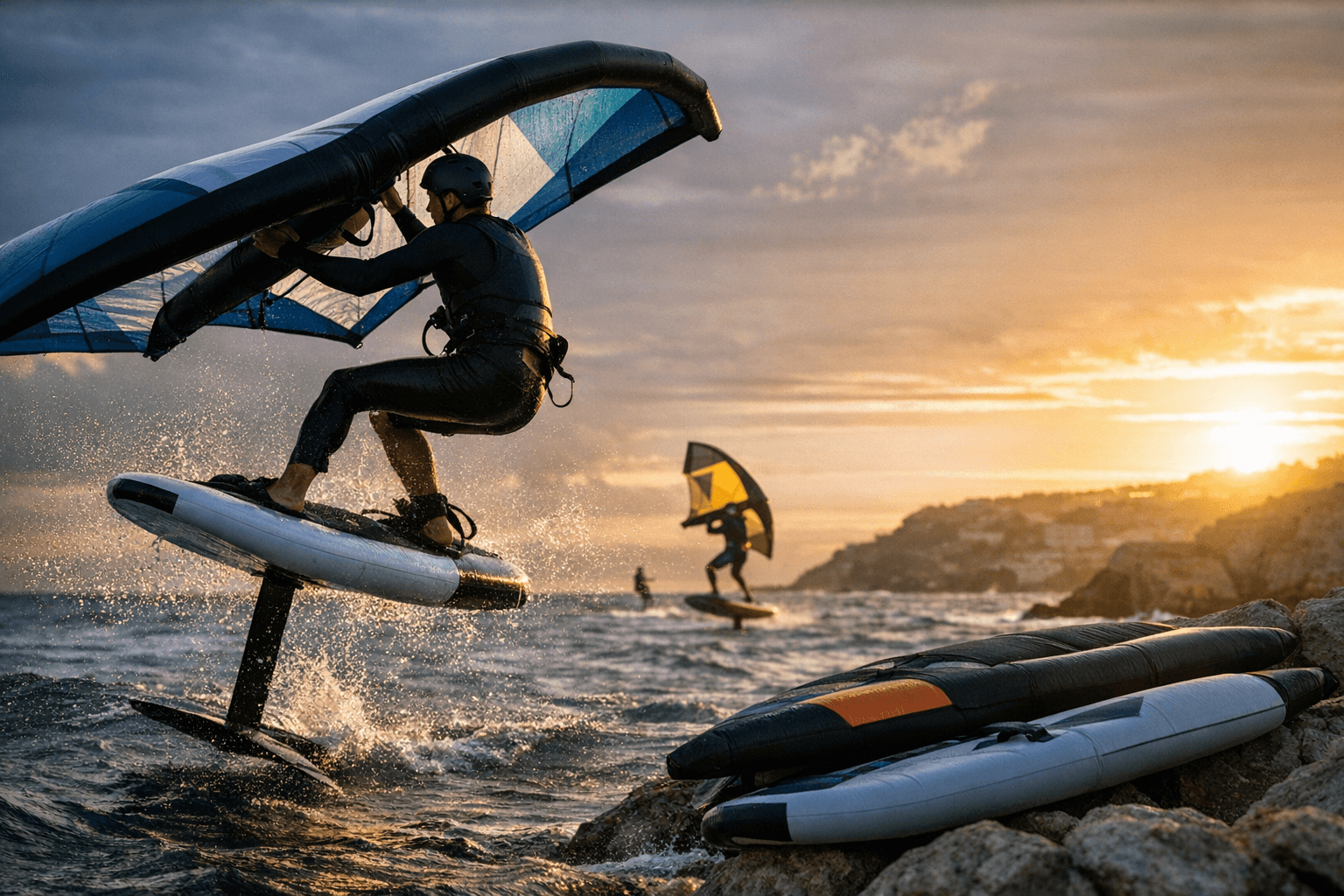
If you already know the kite beach routine, wing foiling feels instantly cleaner. You are holding the power source in your hands, not managing lines and launch chaos, and the pitch is that you can get to your first foil flight in roughly three to six sessions. That is the kind of shortcut that matters when you want more water time and less rigging drama.
The biggest draw is friction, or rather the lack of it. Ocean Safety says wing foiling needs less kit than kiting and less space to kit up, while the sport can work in very light winds thanks to the foil under the board. The Inspired by Sports guide adds the practical bit kitesurfers notice fast: you can pack the whole setup into a single large backpack and launch from tight bays, lakes, or rivers where kite gear gets awkward or outright impossible.
That is why wing foiling lands so hard with riders who are tired of waiting for the perfect open beach. If your regular spot is more Lake Garda, Lake Constance, Chiemsee, or Steinhuder Meer than a long, empty kite beach, winging suddenly looks less like a side quest and more like a real season extender. The same logic works in smaller launch spots across the coast, where a kite setup demands more room than the beach can comfortably give you.
What you gain, and what you give up
The numbers are a big part of the sales pitch. A complete beginner setup is sitting around 2,000 to 3,000 euros, and the usable wind window is roughly 10 to more than 25 knots depending on gear and skill. If you are buying just one wing, the 5 m² size is the workhorse callout, because it covers a broad slice of conditions without forcing you into a huge quiver on day one.
That said, the trade-off is not imaginary. You gain simpler launch access, quicker setup, and a much lower logistics burden; you give up the line-powered ritual and the big kite-specific dance that comes with a full kite session. For plenty of kitesurfers, that is exactly the point. Wing foiling is not trying to be kiteboarding with fewer steps, it is trying to be the cleaner, more repeatable path to flying.
The gear market is clearly chasing that same crossover rider. Starboard’s Source progression wing is aimed at first-time riders, schools, and clubs, and it comes in 2.5, 3.5, 5, and 6 m² sizes. The brand is pitching it as a wing that makes learning easy and progression natural, which is the kind of product language that tells you the entry-level market is no longer an afterthought.
What the learning curve really looks like
Wing foiling still asks you to learn foil control, balance, and timing, so the first few sessions are not magic. But the reason it hooks so many crossover riders is that the core learning is contained: the wing is in your hands, the board is under you, and there is no harnessed kite system to set, relaunch, or manage through a bad gust. That makes the sport feel less technical at the beach and more technical on the water, which is a good trade if you like progression that shows up quickly.
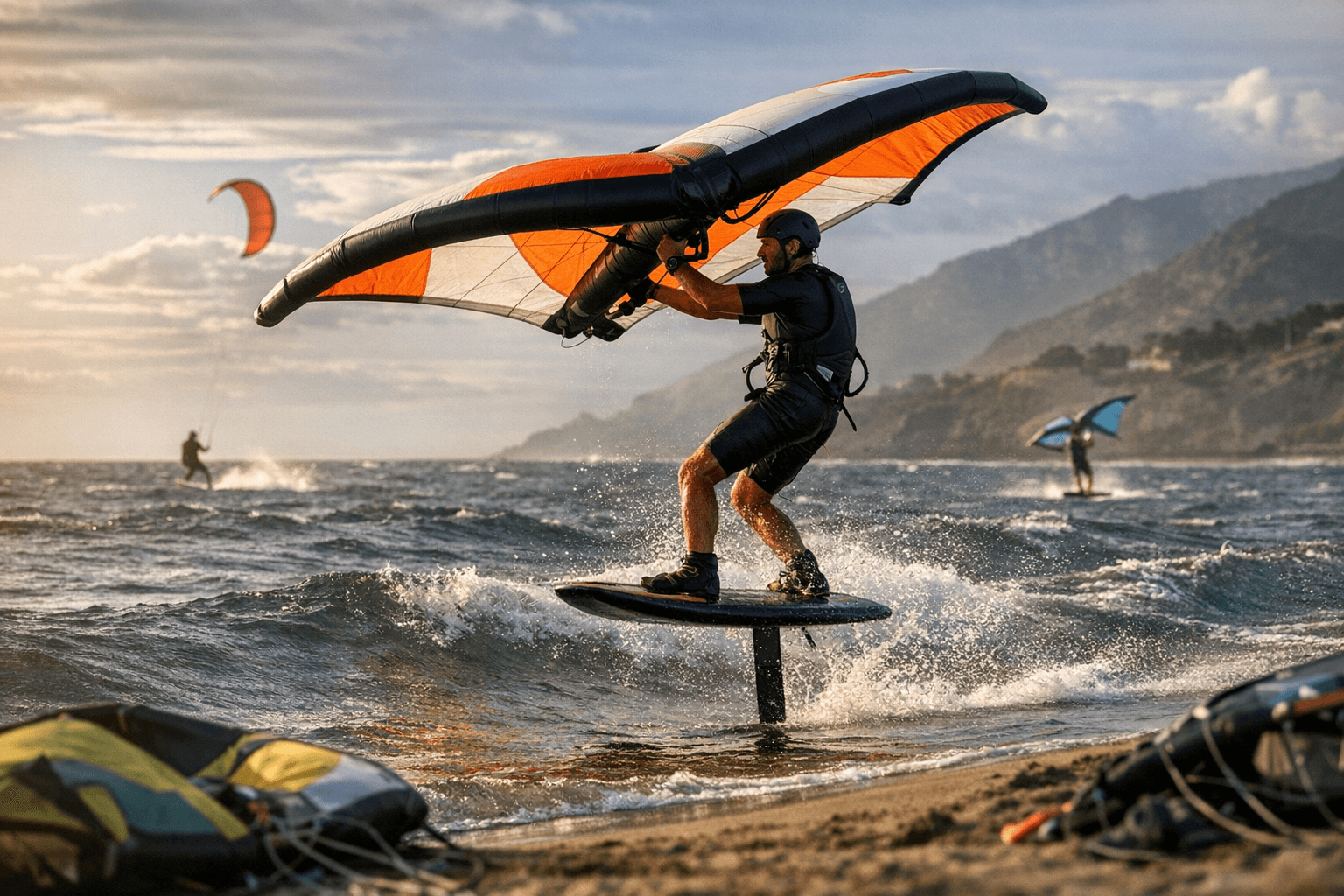
The early lesson window is also why schools and clubs are leaning into simple, durable wings. Starboard’s club-ready progression line is designed around easy handling and a minimal first quiver, because once riders stop fighting the gear, they can focus on foot pressure, foil lift, and line choice in the water. That is the real learning curve shift: not less skill, just less setup noise.
Safety, sessions, and the sweet spot for beginners
Ocean Safety’s advice is blunt and useful. Start in calm water and light wind, carry a PFD, helmet, impact vest, board leash, and wing leash, and respect offshore wind because it can push you away from shore and turn the return trip into a long, tiring grind. Rough water and offshore breeze are especially bad news when you are still learning the rhythm of the foil.
That safety list also explains why wing foiling gets so much love as a practical crossover sport. When the wind is marginal, the foil can still make the session worthwhile, and when the beach is cramped, you are not waiting for a giant launch corridor or a clean line set. In everyday rider terms, it extends the number of days that are actually worth showing up for.
This is a real shift, not just brand hype
The sport has also outgrown the early-adopter phase. The Global Wingsports Association launched in 2020, said it produced three international wingfoil events that year, and then moved into its first dedicated World Tour season in 2021 with events planned for France, Portugal, Switzerland, Brazil, and Morocco. Today the GWA says the structure runs from national events to continental championships, youth worlds, and senior World Tour levels.
Just as important, the tour has real competitive depth. The GWA currently runs four World Sailing-sanctioned expression disciplines, Surf-Freestyle, FreeFly-Slalom, Wave, and Big Air, which tells you the sport is diversifying rather than staying locked in a beginner-friendly lane. At Indoor Düsseldorf this season, Nia Suardiaz and Ancor Yone Sosa Kather were already on the results sheet, which is exactly the kind of recognizable rider signal that separates a growing sport from a marketing campaign.
The bottom line is simple: if you want the least annoying route from kite life into foiling, wing foiling is the obvious crossover. You get faster setup, easier launch access, smaller beach demands, and a learning curve that feels friendlier than kiteboarding’s logistics-heavy start, while still leaving enough depth for real progression once the first flights stop feeling magical and start feeling normal.
Know something we missed? Have a correction or additional information?
Submit a Tip