Anasazi State Park Museum reveals Four Corners' Indigenous crossroads
A quiet stop in Boulder turns Four Corners into a living cultural landscape. The Coombs Site adds 900-year-old context that crowded marquee parks can miss.
The road into Boulder already asks you to slow down, and Anasazi State Park Museum rewards that choice. This is not a place for ticking off another overlook; it is where the Four Corners starts to make deeper sense, because the landscape is tied to a specific village, specific cultures, and a specific story that still matters now.
Why this stop belongs on your route
Jamie Skidmore and the park staff are trying to tell the story accurately, and that makes the stop valuable in a way most roadside attractions are not. The museum is built around the Coombs Site, an over 900-year-old Ancestral Puebloan village that Utah State Parks says was likely occupied from A.D. 1050 to 1200. It was not a tiny outpost either. The site is described as one of the largest communities west of the Colorado River, and Utah State Parks says it once supported roughly 200 people.
That scale changes how you read the country around Boulder and the rest of the Four Corners. Instead of seeing empty desert and sandstone as backdrop, you start seeing a lived-in place with trade, movement, and cultural overlap built into it. Utah State Parks also places the site near the border between Ancestral Puebloan and Fremont cultural areas, which is why archaeologists treat it as a prehistoric crossroads rather than a simple ruin.
What you actually see on the ground
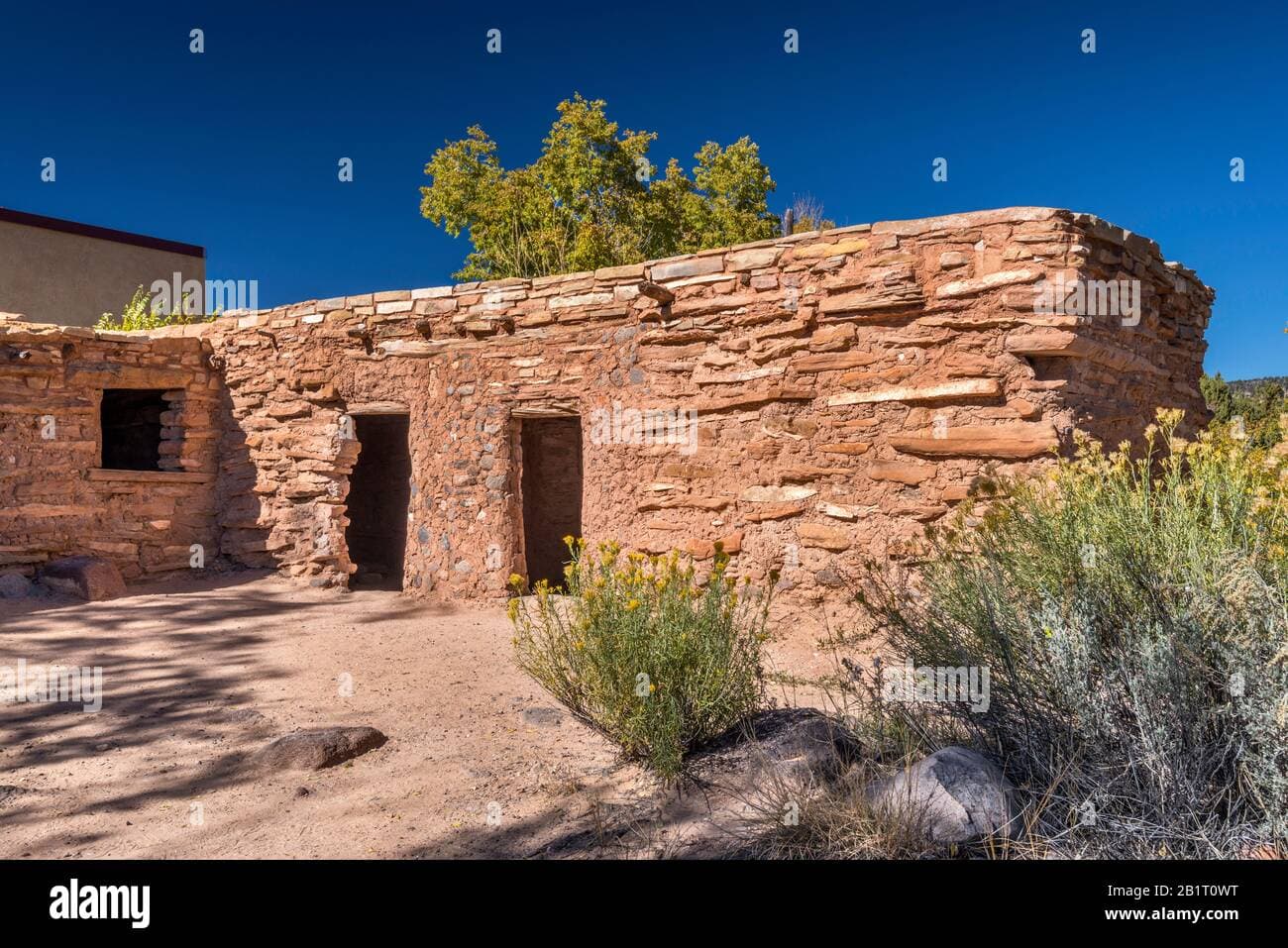
The best part of the visit is that it does not leave everything to imagination. The site still contains pit houses, storage areas, and other archaeological remains, and Utah State Parks says the museum includes a life-sized, six-room replica pueblo structure to help visitors picture the community as it may have looked. That replica is not a gimmick. It is the fastest way to understand how a village of this size would have functioned in daily life, and why the site matters far beyond its footprint.
The park itself has a long preservation history. Utah State Parks says Anasazi State Park Museum was established in 1960 and opened to the public as a state park in 1970. That timeline matters because the place was set aside to protect the Coombs Site, not to turn it into a flashy attraction. The result is a museum and park that lean hard into interpretation rather than spectacle, which is exactly why it works for travelers who want more than a photo stop.
The museum shop is part of the mission
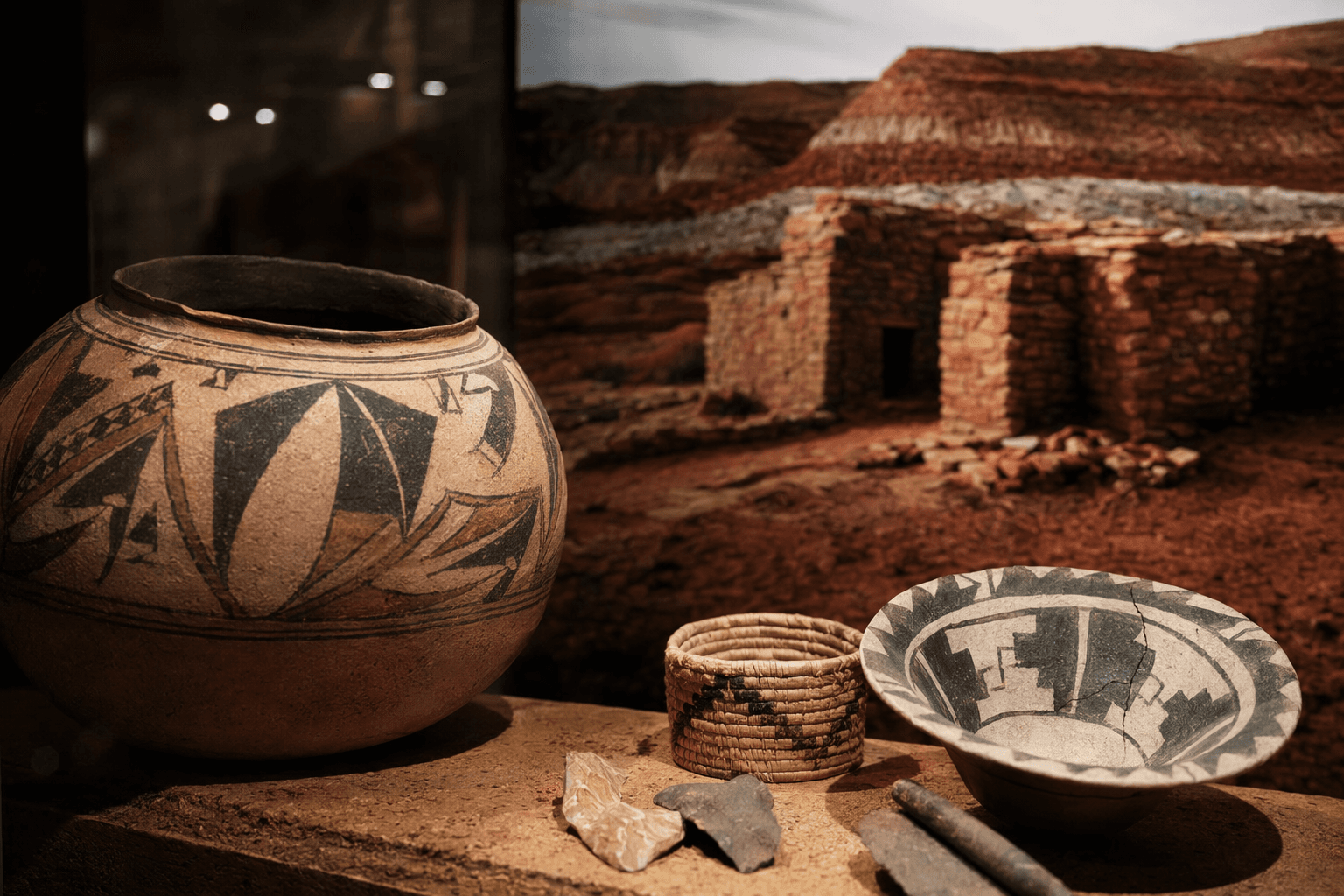
One detail that often gets overlooked on a quick visit is the shop, but here it fits the park’s mission instead of fighting it. Utah State Parks says the museum store carries authentic American Indian arts, including jewelry, pottery, baskets, and fetishes. The park also works with Native artists and makers from around the Southwest, so purchases support living communities instead of reducing Indigenous culture to glass cases and labels.
That is a meaningful distinction in a region where so many travelers move from landmark to landmark without much sense of who is still connected to the land. Skidmore’s framing makes the point clearly: this is not a static exhibit frozen in the past. It is a place that helps you understand that Indigenous communities are still here, still creating, and still part of the story of this landscape.
Why the traffic numbers undersell the experience
The official visitation count makes Anasazi State Park Museum look almost negligible, and that is exactly why people miss it. Utah State Parks counted about 900 visitors in the last fiscal year, which would make it the least-visited park in Utah by that measure. But Skidmore says the real turnout was closer to 25,000 because the park had been through a prolonged remodel and was not charging entrance fees during that period.
That gap tells you not that the park is empty in spirit, but that the numbers are easy to misread. Utah State Parks announced on Dec. 19, 2023, that the museum had closed the day before for renovation and was expected to reopen in July 2024. Put that alongside Utah’s bigger park picture, and the contrast becomes obvious. Utah state parks reached a record 12.9 million visits in 2024, and Sand Hollow State Park alone drew 1.53 million visits. Against that kind of traffic, Anasazi is the quieter, more deliberate stop.
How to work it into a Boulder or canyon-country day
The smartest way to visit is to treat it as the anchor for a slower day through Boulder and nearby canyon country. Do not wedge it in between two rushed photo stops. Give yourself enough time to walk the site, study the replica dwelling, and read the interpretive material before you get back on the road. The payoff is not adrenaline; it is context, and that context changes everything else you see afterward.
For a day trip, pair the museum with a drive that lets you keep the pace loose and the stops intentional. For a weekend, make it the cultural counterweight to whatever outdoor miles you are putting in around the region. It is especially useful if you have already visited the marquee Utah parks and want something that feels less crowded, less performative, and more rooted in the actual human history of the Four Corners.
The road into Boulder still asks you to slow down, and that is the right way to reach Anasazi State Park Museum. Once you do, the detour stops looking like a sidetrack and starts looking like the part of the trip that gives the whole landscape its meaning.
This article was produced by Prism’s automated news system from verified source data, official records, and press releases, then run through automated quality and moderation checks before publishing. The system is built and supervised by the people who set the standards it runs under. Read our full AI policy.
Did this article answer your question?