Arches and Zion tighten canyoneering rules to protect visitors and resources
These parks are not softening canyoneering into a scenic hike. Arches and Zion are making the permit, rope, and partner skills gate explicit before anyone drops in.

A slot canyon looks inviting right up until you reach the first rappel. In Arches and Zion, the mistake is treating canyoneering like hiking with extra scenery, because once ropes come out, the route demands anchor judgment, route finding, and real self-rescue thinking. The parks have tightened the rules: if you are not ready to carry the right gear, read the route, and finish what you start, the canyon is not the place to learn.
What counts as canyoneering here
The National Park Service draws a bright line between a canyon walk and a technical descent. Canyoneering uses climbing equipment for rappels and other technical moves, and it can also involve swimming, hiking, problem solving, and route finding.
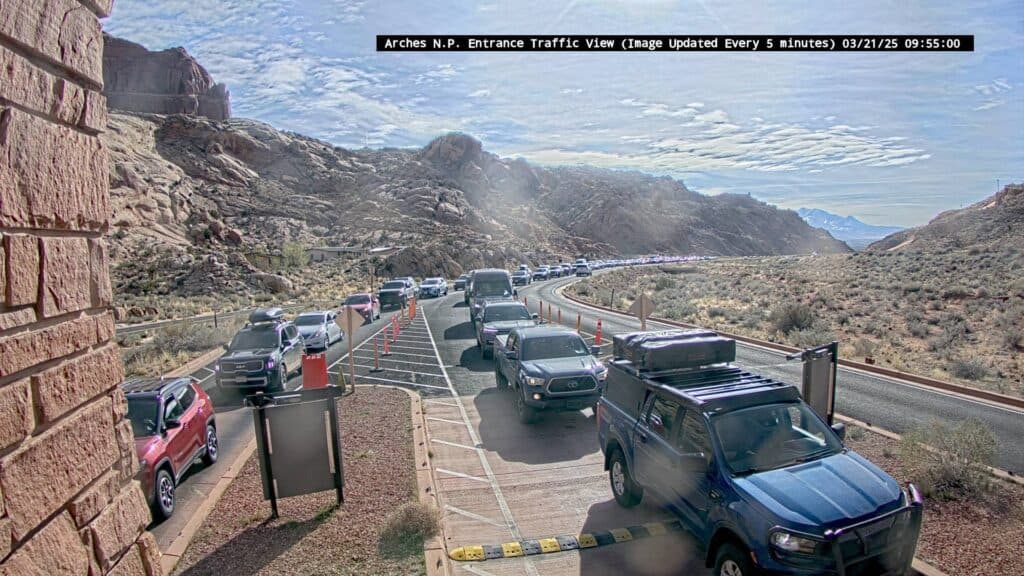
Arches does not have classic slot canyons in the Zion sense, but its sandstone walls are cross-hatched with narrow passages suited to this kind of travel. Some canyon outings may not need ropes at all, while technical canyoneering does. If your trip depends on descending gear, the trip is no longer casual canyon sightseeing.
The permit line in Arches and Zion
Arches built its current approach around a Climbing and Canyoneering Management Plan developed in December 2013 to protect natural resources, visitor experience, and safety. Every route requires a permit, and you need to carry that permit during the trip. The park also keeps groups small: six people in Fiery Furnace or Lost Spring Canyon, and 10 elsewhere.
Arches also bans the shortcuts that damage the rock or invite bad habits. You cannot rappel off arches, alter rock to create anchors, or use deadman anchors.
Zion’s permit system is equally specific. Wilderness permits are required for all technical canyoneering trips, for the Left Fork of North Creek, known as The Subway, and for the Narrows top-down. The permits protect resources, manage visitor encounter rates, and educate users about safety and resource protection.
Gear is the price of admission
If you are thinking about a canyon trip, the minimum gear list is not optional shopping advice. Every party should be ready with the right rope, an individual harness and rappel device for each person, a headlamp, a first-aid kit, extra clothing, and extra food. Unintended overnight stays happen in canyons.
You need to know how much rope you will need before anyone drops in. Once you pull the rope after the first rappel, you are committed to finishing the canyon. A route description and a map are not luxury items for the pack list; they are tools you have to know how to use before you commit to the descent.
Zion’s wilderness safety guidance calls for one gallon of water per person per day in the desert.
The partner practices that keep a trip from going sideways
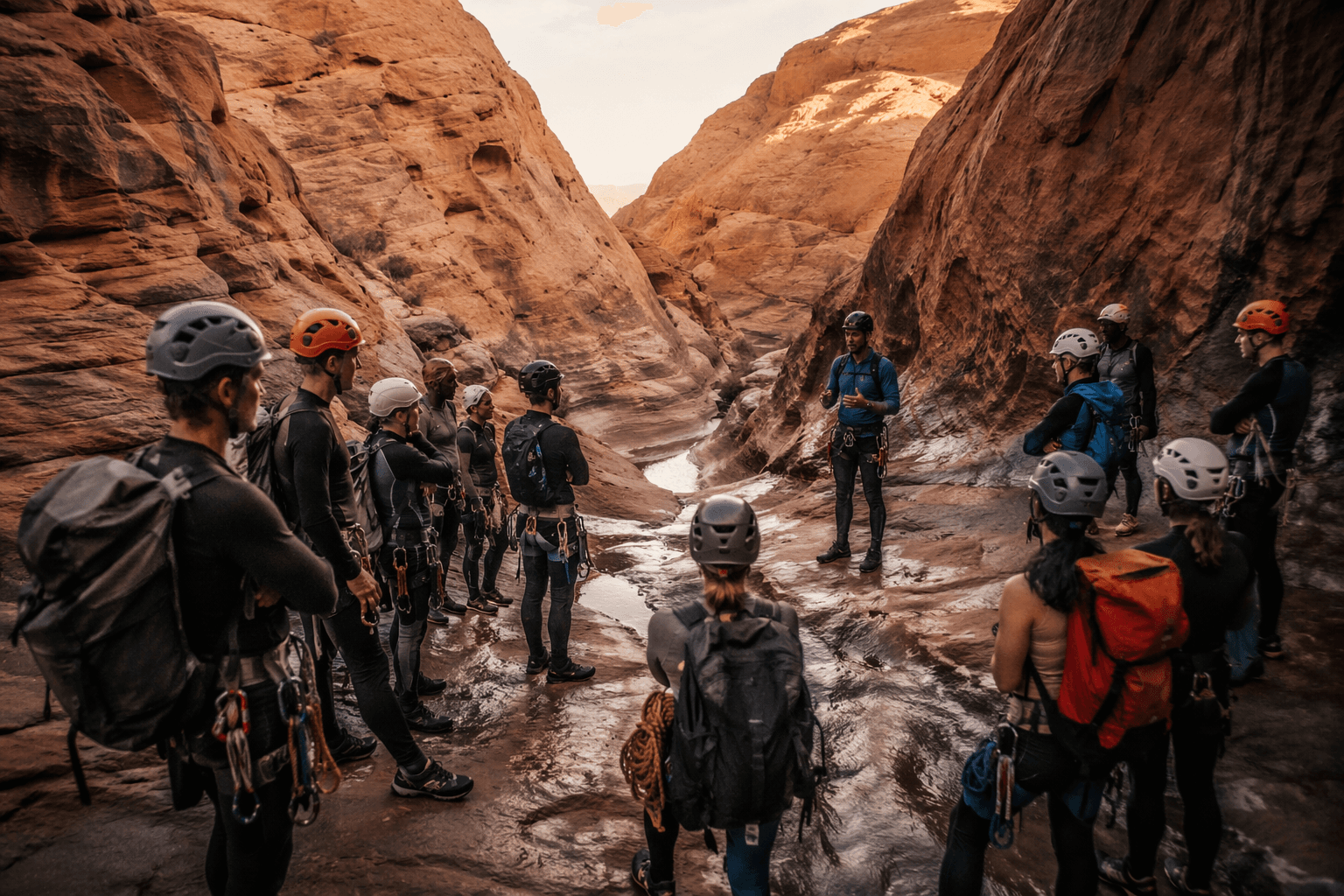
Zion recommends a minimum group size of two for technical canyons that involve rope, webbing, or other descent or ascent devices. Rescue is not a certainty, and everyone in the group should have the right equipment, the skill to use it, and the physical ability to complete the route.
Route descriptions matter because wilderness routes are not maintained trails. The correct path is not always obvious, and help may be hours away. That means you need to talk through the route before you start, confirm who is carrying which gear, and make sure everyone knows the exit plan as well as the first rappel.
At Canyonlands, inspect all fixed gear because the park does not maintain anchors.
When a guide is the right call
The clearest no-go line is simple: if you have hiking-only experience, or if the route requires anchor building, natural-anchor evaluation, or long technical rappels, book a guide. Many Death Valley routes rely on natural anchors such as pinch points between boulders or cairn anchors, and beginners should not go without someone experienced in building and evaluating those anchors.
Many Death Valley routes begin with 2,500 to 3,500 feet of hiking and scrambling to reach the canyon top, and some rappels run 200 feet while others reach 300 to 580 feet.
A guide is also the better choice if you are not confident with weather windows. Zion warns that flash floods in narrow slot canyons can be fatal, and at Grand Canyon, thunderstorms as far as 25 miles away can trigger flash floods at any time of year.
Why the rules keep getting tighter
Grand Canyon park-science literature ties a surge in canyoneering use to the growth of outdoor adventure culture and the spread of guidebooks. Managers respond with permits, group-size limits, route controls, and education.
On Nov. 29, 2021, Zion’s Technical Search and Rescue Team responded to a Heaps Canyon incident in which two canyoneers were stranded about 280 feet above Upper Emerald Pools and one person was suspended about 260 feet above the pool. On Oct. 5, 2024, a 40-year-old canyoneer died after an accidental fall near the exit of Heaps Canyon, falling an estimated 150 to 200 feet.
This article was produced by Prism’s automated news system from verified source data, official records, and press releases, then run through automated quality and moderation checks before publishing. The system is built and supervised by the people who set the standards it runs under. Read our full AI policy.
Did this article answer your question?