Colorado River Water Supply Forecast Worsens as States Respond
New modeling flagged the Colorado River outlook as "already terrible" — and getting worse, with big decisions looming for a rapidly shrinking Lake Powell.
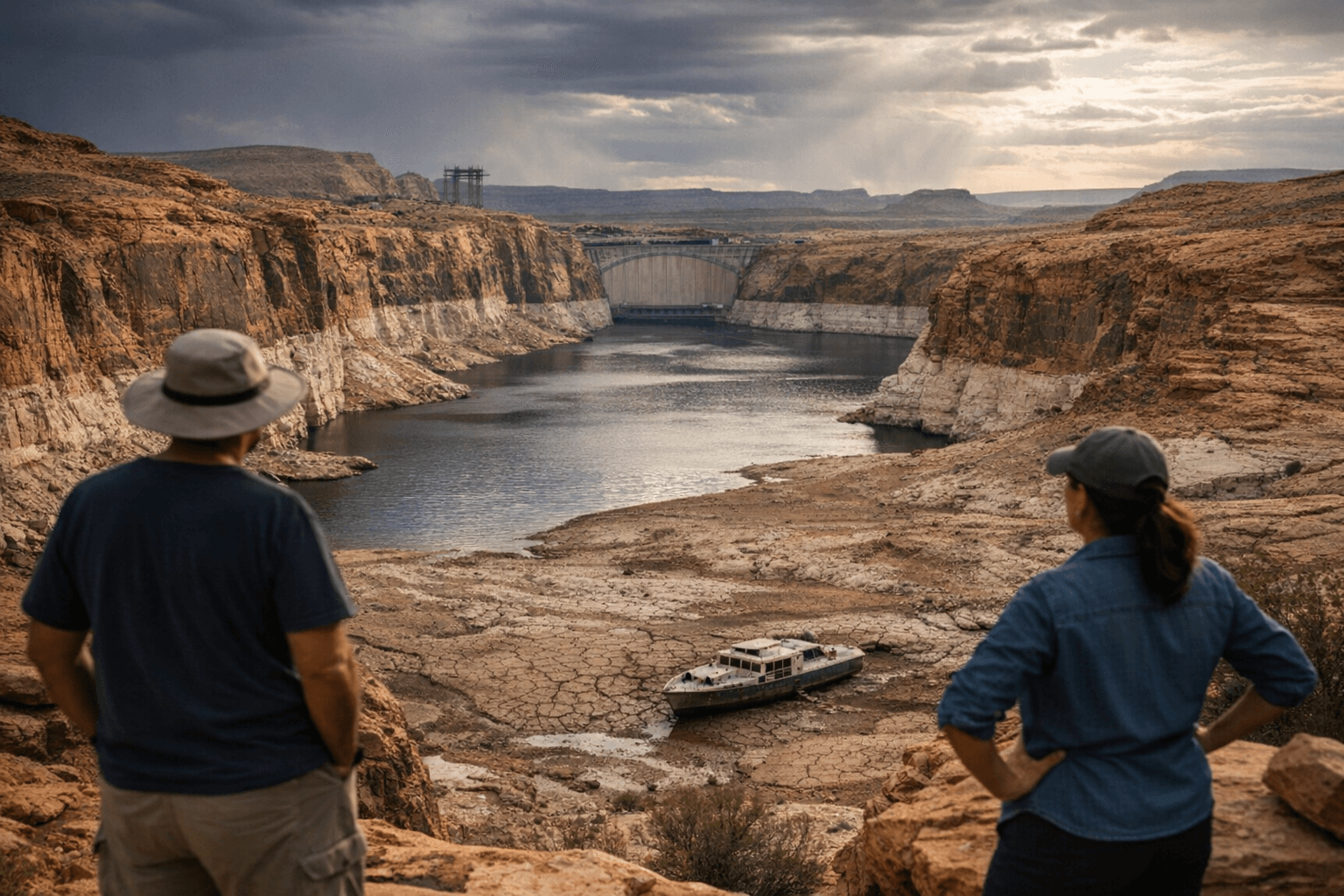
The Colorado River's near-term water-supply picture, already grim heading into spring, got darker last week when newly released modeling and reservoir operations data pointed to a worsening outlook. Brett Walton's March 9 Federal Water Tap bulletin for Circle of Blue framed it plainly: "Already Terrible, Colorado River Water Supply Forecast Worsens." Alongside that forecast summary, the bulletin highlighted what it called the federal playbook for Colorado River management, a framework now operating under increasing pressure as the system strains.
Lake Powell sits at the center of the near-term stress. A separate headline in the same bulletin, "Big Decisions Loom for a Rapidly Shrinking Lake Powell," signals that reservoir operations on the upper Colorado are reaching a point where managers will be forced to choose between difficult tradeoffs. The bulletin did not publish specific elevation projections or shortage-tier probabilities in the excerpts available, but the direction of the modeling is unambiguous.
On the project side, two decisions advanced in the same reporting cycle that underscore the competing demands on the basin's water and land. The record of decision came quickly for the Pine Valley Water Supply Project, championed by the Central Iron County Water Conservancy District. The project would pump up to 15,000 acre-feet of groundwater and deliver it to the Cedar City area via 70 miles of pipe. Conservation groups have raised concerns about harm to spring-fed ecosystems from that groundwater pumping, a tension that is unlikely to ease as Utah communities push to secure supplies independent of mainstem Colorado allocations.
In southern Arizona, Coronado National Forest published a final environmental impact statement for the Hermosa Critical Minerals Project, a proposed mine targeting manganese, zinc, lead, and silver in the Patagonia Mountains. The mine adds to a growing list of extraction projects intersecting with the Colorado River basin's broader landscape, where water demands from mining and processing operations compound existing supply pressures.
Rounding out the bulletin's scope, a State Department official was cited saying the administration is focusing on its backyard, a line that carries weight given ongoing diplomatic sensitivities around the river's reach into Mexico under the terms of existing treaty obligations.
The full federal playbook for Colorado River management, including any specific operational directives or contingency triggers tied to the worsening forecasts, was not detailed in available bulletin excerpts. The underlying Bureau of Reclamation modeling runs and any formal agency announcements tied to the March 9 reporting remain the key documents to watch as the spring runoff season develops.
This article was produced by Prism’s automated news system from verified source data, official records, and press releases, then run through automated quality and moderation checks before publishing. The system is built and supervised by the people who set the standards it runs under. Read our full AI policy.
Did this article answer your question?