Grand County economy grew despite Arches timed entry, study finds
Visitor spending rose 22.2% and tourism jobs climbed 16.3% even after timed entry began at Arches, undercutting claims it hurt Grand County.
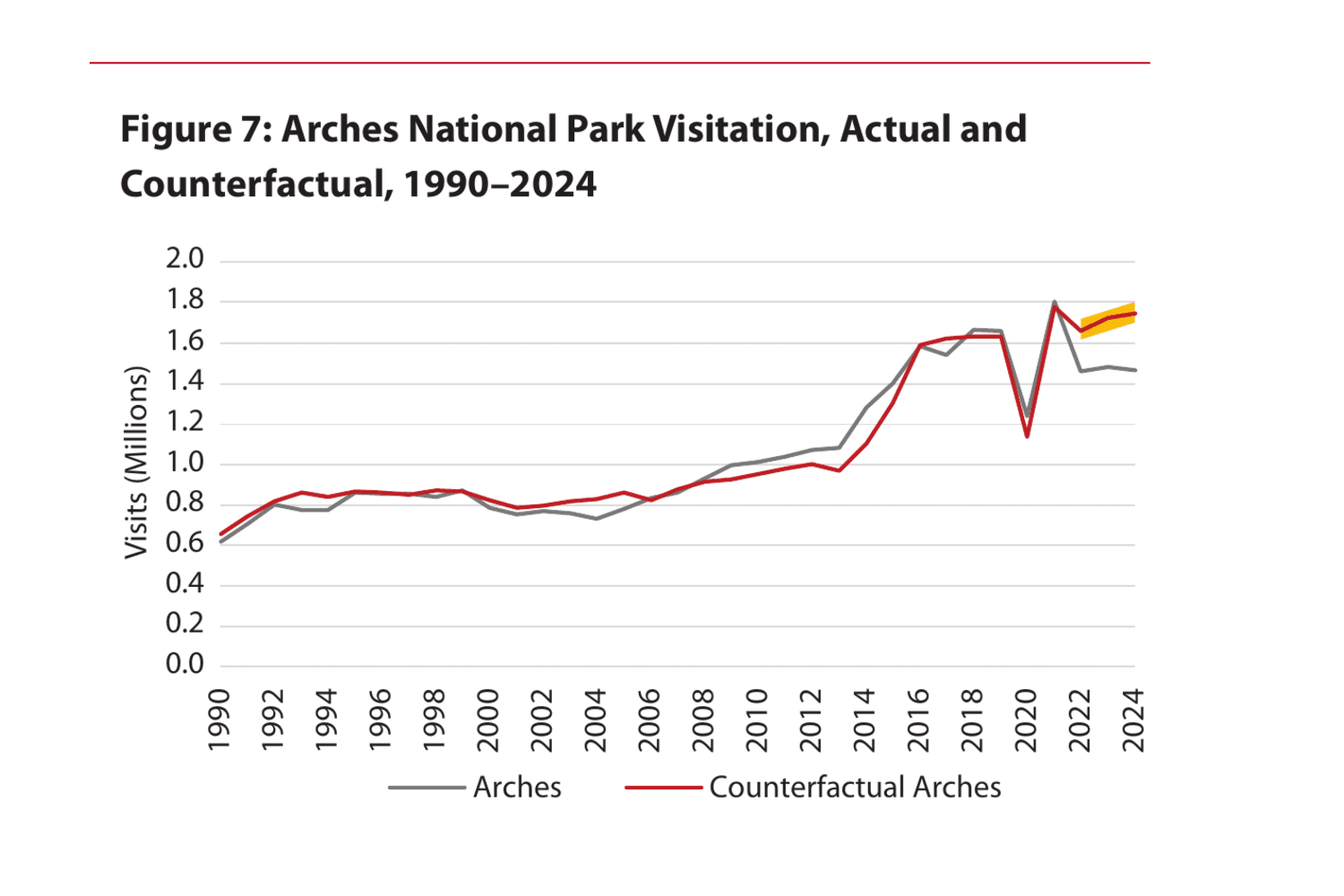
Grand County’s biggest timed-entry fight just got a blunt new answer: the local economy grew while Arches was on reservations. The Kem C. Gardner Policy Institute found that even though timed entry reduced Arches visitation, visitor spending, jobs, and tax revenue across the county still moved up.
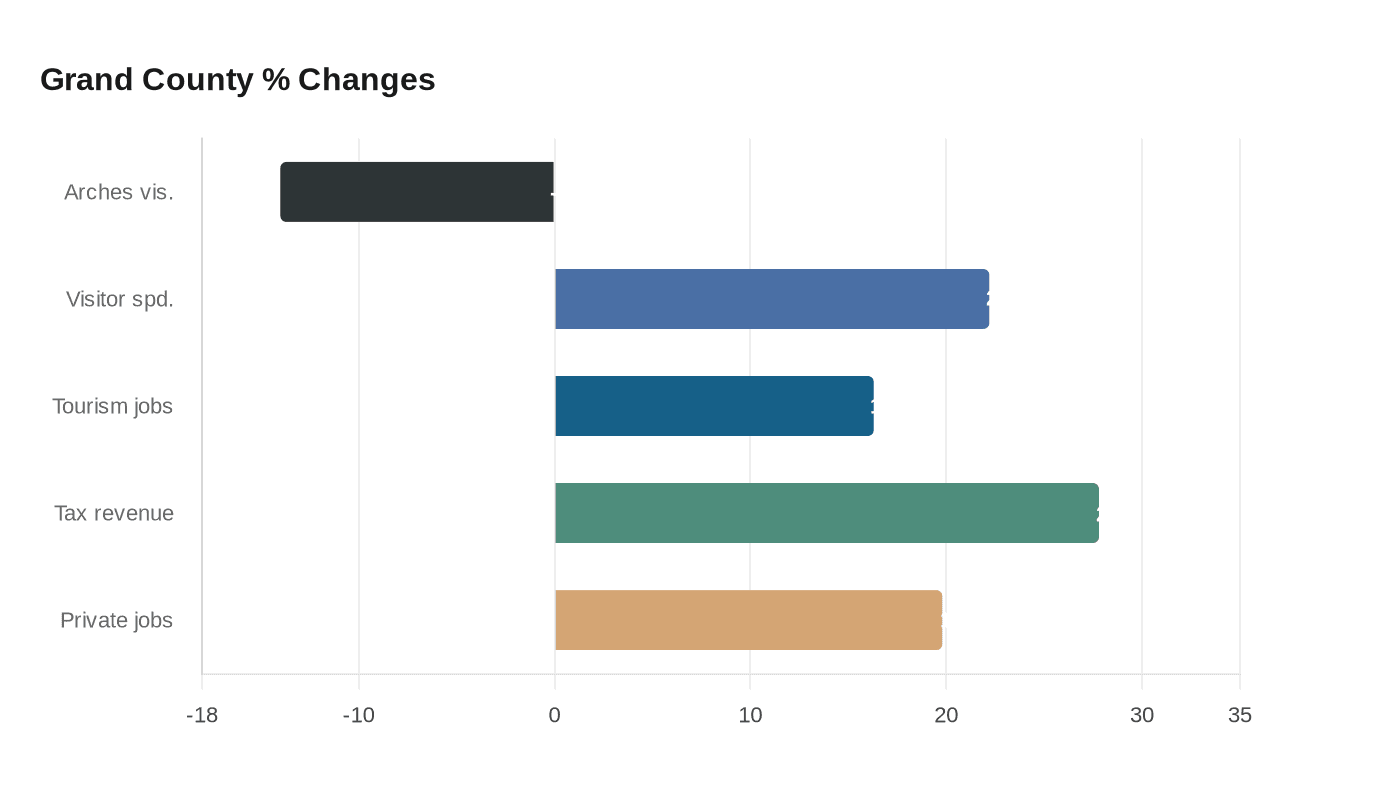
The study, delivered to commissioners on May 4, looked at the 2022 through 2024 pilot at Arches National Park. Grand County’s own summary says the reservation system cut Arches visitation by about 14% compared with a no-timed-entry baseline, but the money did not simply vanish. Inflation-adjusted visitor spending rose 22.2% between the 2017-2019 average and the 2022-2024 average. Tourism jobs increased 16.3%, state and local tax revenue tied to visitor spending jumped 27.8%, and total private-sector jobs were 19.8% higher.
That is the heart of the myth-versus-data split. Brian Martinez and Bill Winfield had argued last year that timed entry imposed an unacceptable economic hit on Grand County, pointing to outside analyses that forecast major annual losses in visitor spending. The Gardner report instead says the county experienced positive economic outcomes overall and growth in visitor-generated tax revenue after the system began in April 2022.
The county’s own study page still points to costs in the Arches corridor itself. Appendix G lists annual estimated losses of 381 to 507 jobs, $17.5 million to $23.4 million in labor income, $32.4 million to $43.3 million in county GDP, and $4.96 million to $6.62 million in local tax revenue, with a net local fiscal impact of negative $2.04 million to $2.72 million. But the broader conclusion from the Gardner work is that spending shifted rather than collapsed, which is exactly the kind of result that matters for a gateway economy built around more than one trailhead.
The commission paid $60,000 for the study with promotional transient room tax money, and it had already attached a caveat that if no negative impact was found, the cost could be shifted to the general fund. That makes the new finding more than an academic argument. It resets the political debate over whether permit systems can manage crowding without crushing the businesses that depend on visitors.
The timing matters, too. Commissioners voted 4-2 on Jan. 7, 2025, to withdraw support for making timed entry permanent, then voted 4-3 on March 20, 2025, to pursue the independent study. In February 2026, the National Park Service said Arches would not require reservations in 2026, raising fresh worries in Moab about long lines, crowded parking, and possible gate closures. Now Grand County has a data point that suggests access controls and a healthy tourism economy can coexist, even if the fight over Arches access is far from over.
This article was produced by Prism’s automated news system from verified source data, official records, and press releases, then run through automated quality and moderation checks before publishing. The system is built and supervised by the people who set the standards it runs under. Read our full AI policy.
Did this article answer your question?