Moab urges water conservation as historic low snowpack deepens drought
Moab is pushing hotels, rentals and residents to cut water use as a historic low snowpack threatens the La Sal recharge that feeds the city’s wells.
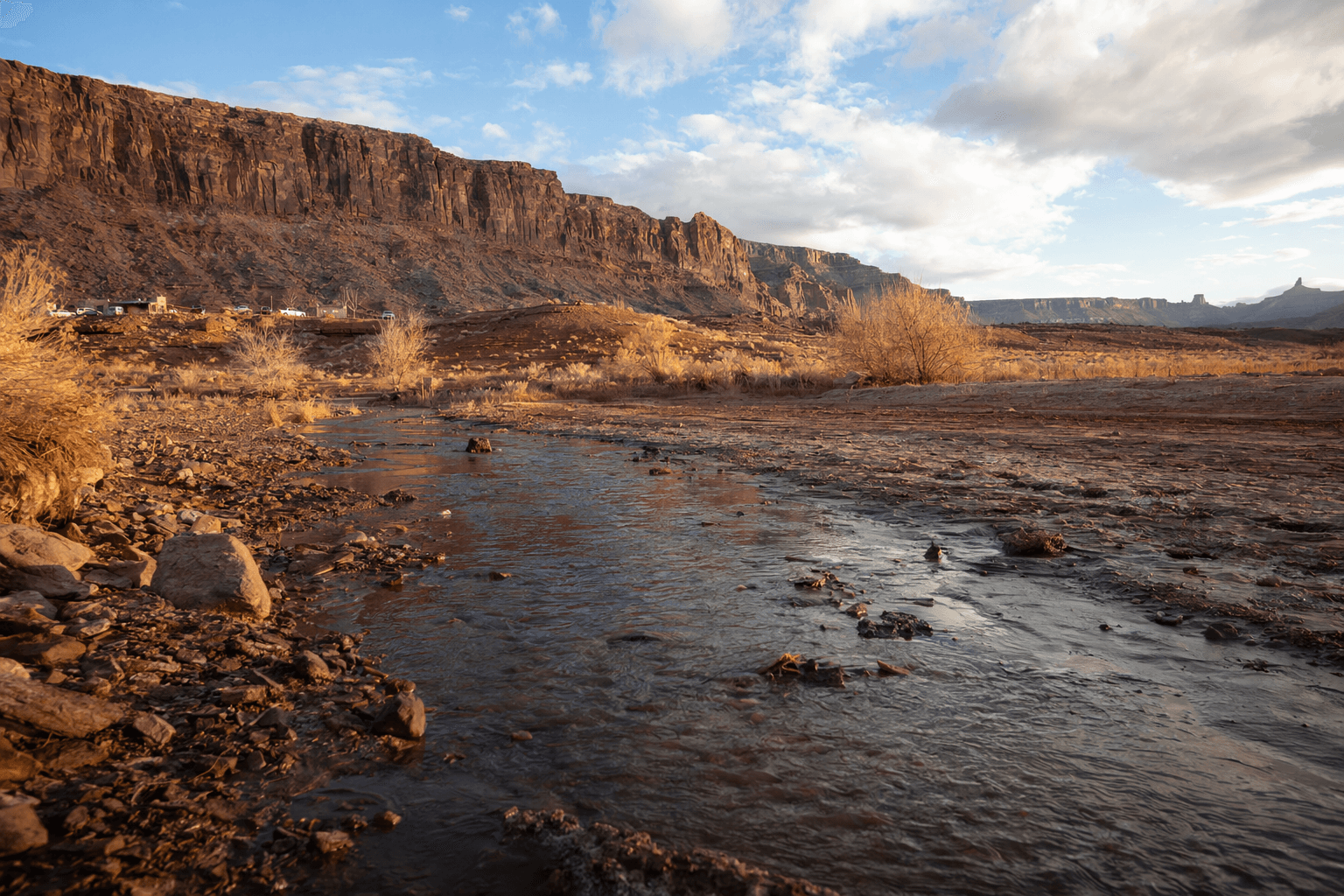
Moab’s dry winter is no longer just a backcountry talking point. The city is asking residents, hotels, rentals and businesses to tighten water use now, because the town’s drinking water comes from the Glen Canyon Aquifer, which is replenished by snowmelt from the La Sal Mountains. With this year’s snowpack historically below average, officials said the pressure is landing first on the places visitors notice most: landscaping, lodging and the daily habits that keep a desert trip running smoothly.
City spokesperson Lisa Church said culinary water was not endangered, but conservation mattered more than ever as the drought continued. Mayor Joette Langianese told the Moab City Council on April 28 that snowpack in the La Sals and across Utah had been historically low and that everyone needed to be mindful of the resource. The city’s outreach push has a $10,000 budget and will run in phases through the end of September, using workshops, flyers and social media to reach both locals and hospitality operators.
For travelers, the message was practical. Moab’s conservation materials say landscape irrigation is the biggest use of water in town, and about 60% of residential use goes outdoors. The city is asking people to prioritize trees and shrubs over turf, delay turf watering until mid-May, water only at night or early morning, switch to drought-tolerant plants where possible and check irrigation systems for leaks. Hotels and overnight rentals are being asked to promote linen-reuse programs, post water-saving signage in rooms and keep up with leak repairs. Businesses are being encouraged to use smart controllers and low-water landscaping, and officials said some of those requests could become mandatory if drought conditions worsen later in the season.
The conservation push comes as Utah officials said peak runoff had already come and gone by April 23 because of record-low snowpack and record-high temperatures. State officials say about 95% of Utah’s water supply comes from snowpack, which makes a weak winter a direct threat to spring and summer planning across Southeast Utah. Grand County was among 13 Utah counties the U.S. Department of Agriculture designated as natural disaster areas on April 30, a move that can open emergency credit through Farm Service Agency emergency loans for affected producers.
Moab’s long-term planning already assumes tighter management. The city says the average person here uses 16% less water for household tasks than in 2016, and locally adapted landscapes can use two-thirds less water than a typical yard. Its conservation plan set an initial goal of cutting culinary water consumption 25% over five years, with a longer-term target of 250 gallons per capita per day by 2030 and, if state participation rises, 230 gpcd. For anyone booking a Moab stay this spring, the takeaway is simple: expect more conservation prompts, fewer easy gallons and a town watching every drop more closely than usual.
This article was produced by Prism’s automated news system from verified source data, official records, and press releases, then run through automated quality and moderation checks before publishing. The system is built and supervised by the people who set the standards it runs under. Read our full AI policy.
Did this article answer your question?