Moab access guide explains camping rules, reservations, and public-land differences
Moab is still bookable if you know the rules: Arches has no timed-entry reservations in 2026, but campsites, permits, and dispersed-camping limits still catch visitors off guard.
Book the bed before you chase the trail
Moab trips fall apart fastest when lodging and camping are treated as an afterthought. The Bureau of Land Management’s Moab Field Office covers 1.8 million acres of public land, and the area’s mix of national parks, BLM campgrounds, state and county recreation sites, and open desert makes it easy to choose the wrong place and the wrong rule set. The safest approach is simple: lock in your campsite or permit first, then build the rest of the trip around access.
The BLM operates 26 developed campgrounds around Moab, and many of the popular spots fill early on weekends and during spring and fall peak season. That matters because Moab is not a place where you can assume something will open up at the last minute, especially if you are arriving for a long weekend or a shoulder-season push on the Colorado Plateau. If you want a predictable basecamp, the developed campgrounds are the most straightforward option.
Know which public land you are actually on
Moab’s biggest planning mistake is assuming all public land works the same way. It does not. Arches National Park, Canyonlands National Park, Sand Flats Recreation Area, and BLM-managed lands each have their own rules, fees, and reservation systems. If you move from one to another without checking, you can end up in a place where your pass does not apply or your camping style is not allowed.
Sand Flats is the clearest example of that split. The 9,000-acre recreation area is managed through a unique partnership between Grand County and the BLM, and Grand County says it sees more than 250,000 visitors a year. It has 140 first-come, first-served individual campsites and 6 reservable group sites, and it was developed in 1995 through collaboration among AmeriCorps, the BLM, Grand County, and the Moab community. The area also includes the famous Slickrock riding zone, so it is both a destination and a pressure point for access.
Grand County also notes that Sand Flats does not accept most federal and state passes, except the federal Access Pass. That one detail is enough to derail a budget trip if you assume your standard pass will cover the day-use fee or campsite entry.
Dispersed camping is legal in places, but the rules are exact
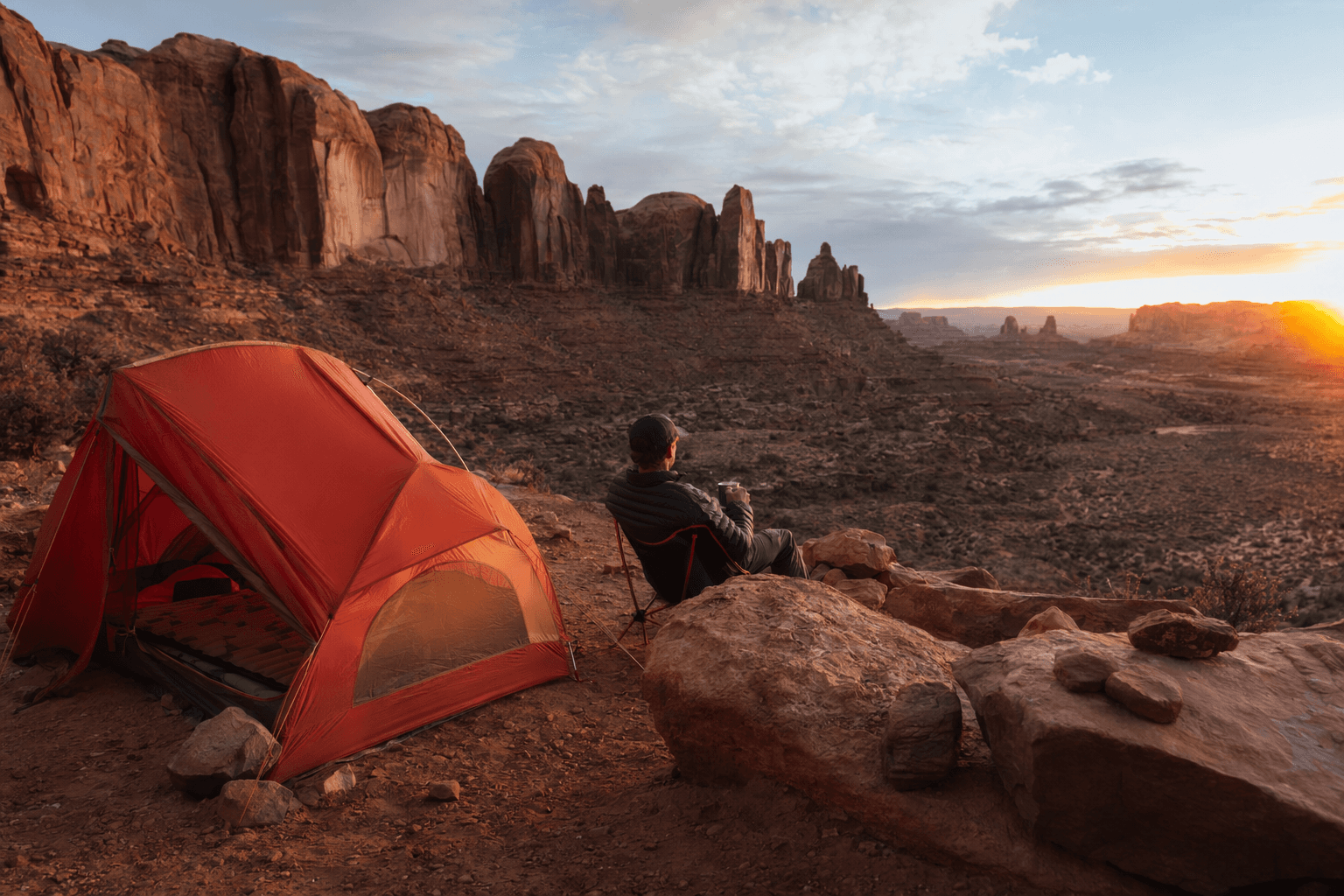
For travelers trying to save money, dispersed camping is the biggest Moab advantage, but it only works if you do it by the book. On BLM Utah-managed lands, dispersed camping is free where allowed, but it is generally limited to 14 days in any 28-day period. The site should be a previously disturbed location, not a fresh scar in the desert, and your vehicle needs to stay on designated roads and trails.
The spacing rules matter too. BLM guidance says dispersed camps should be at least 200 feet from lakes and streams and at least 300 feet from range improvements. You also should not trench, level, or cut vegetation at the site. Those may sound like small details, but they are exactly the kind of mistakes that can turn an otherwise normal camping trip into a resource-damage problem.
- Stay out of campgrounds unless you have paid or reserved a site.
- Pack out every bit of trash.
- Check fire restrictions before lighting anything.
- Do not sleep in vehicles inside city limits.
A few other rules are worth keeping in your head before you head out:
In Moab country, dispersed camping is not a free-for-all. It is a set of rules that only works when visitors treat the desert like a fragile shared space, not an open parking lot.
Arches is easier to enter, but not easier to ignore
Arches National Park will not require advanced timed-entry reservations in 2026, which removes one of the most common trip-planning hurdles. Visitors may enter at any time during operating hours, but that does not mean access is friction-free. The park says entrance lines and limited parking can still happen during peak periods, and vehicles may be diverted when congestion gets too high.
That makes Arches more flexible than it has been in recent seasons, but not necessarily more casual. If you are aiming for sunrise, a holiday weekend, or a high-traffic day in spring or fall, the main issue may shift from getting a reservation to finding a place to park.
One more crucial detail: Devils Garden Campground is the only campground in Arches, and it is reserved from March through October. If you want to sleep inside the park, you need to plan ahead. Fiery Furnace is even more controlled, since hikes there require either a ranger-led tour reservation or a self-guided exploration permit.
Canyonlands still demands backcountry planning
Canyonlands does not require timed-entry reservations to enter the park, which makes the front gate less complicated than many first-timers expect. But the backcountry side of the park is still tightly managed. Overnight backcountry trips in Canyonlands National Park or the Orange Cliffs Unit of Glen Canyon National Recreation Area require permits.
There are also different rules depending on how you move through the landscape. Mountain bikers and four-wheel drivers must stay on designated roads and camp in designated sites. Backpackers have a little more flexibility, with designated campsites or at-large zones available depending on the route and permit structure. That distinction matters because the park is not just trying to control numbers. It is trying to prevent scattered impacts in places where the desert takes a long time to recover.
If your trip includes multiple modes of travel, this is where people get tripped up. A driving route, a bike route, and a backpacking route can all sit in the same broad landscape while still carrying different permit needs and camping limits.
The practical Moab playbook
If you are deciding whether you can still pull off a Moab trip this season, the answer is yes, but only if you plan around access instead of hoping for luck. The biggest last-minute traps are easy to name: assuming a pass works everywhere, assuming dispersed camping means no rules, and assuming park entry equals campsite availability.
- Reserve developed campsites early, especially on weekends and in spring or fall.
- Check whether your target land is BLM, national park, Sand Flats, or something else.
- Use dispersed camping only where allowed and only on previously disturbed sites.
- Confirm whether your plan needs a park permit, a campground reservation, or a day-use fee.
- Expect congestion in Arches even without timed-entry reservations.
Start with these checkpoints:
Moab remains one of the West’s most accessible adventure bases, but its access depends on knowing exactly where you are sleeping, driving, and hiking. The people who have the smoothest trips are usually the ones who treat the rules as part of the itinerary, not as fine print at the end.
This article was produced by Prism’s automated news system from verified source data, official records, and press releases, then run through automated quality and moderation checks before publishing. The system is built and supervised by the people who set the standards it runs under. Read our full AI policy.
Did this article answer your question?