Moab survey finds residents want quieter OHVs, not just slower speeds
Moab’s OHV survey points to a noise problem, not just a speed problem: 378 respondents split on the 15 mph limit, but nearly four in five never ride in town.
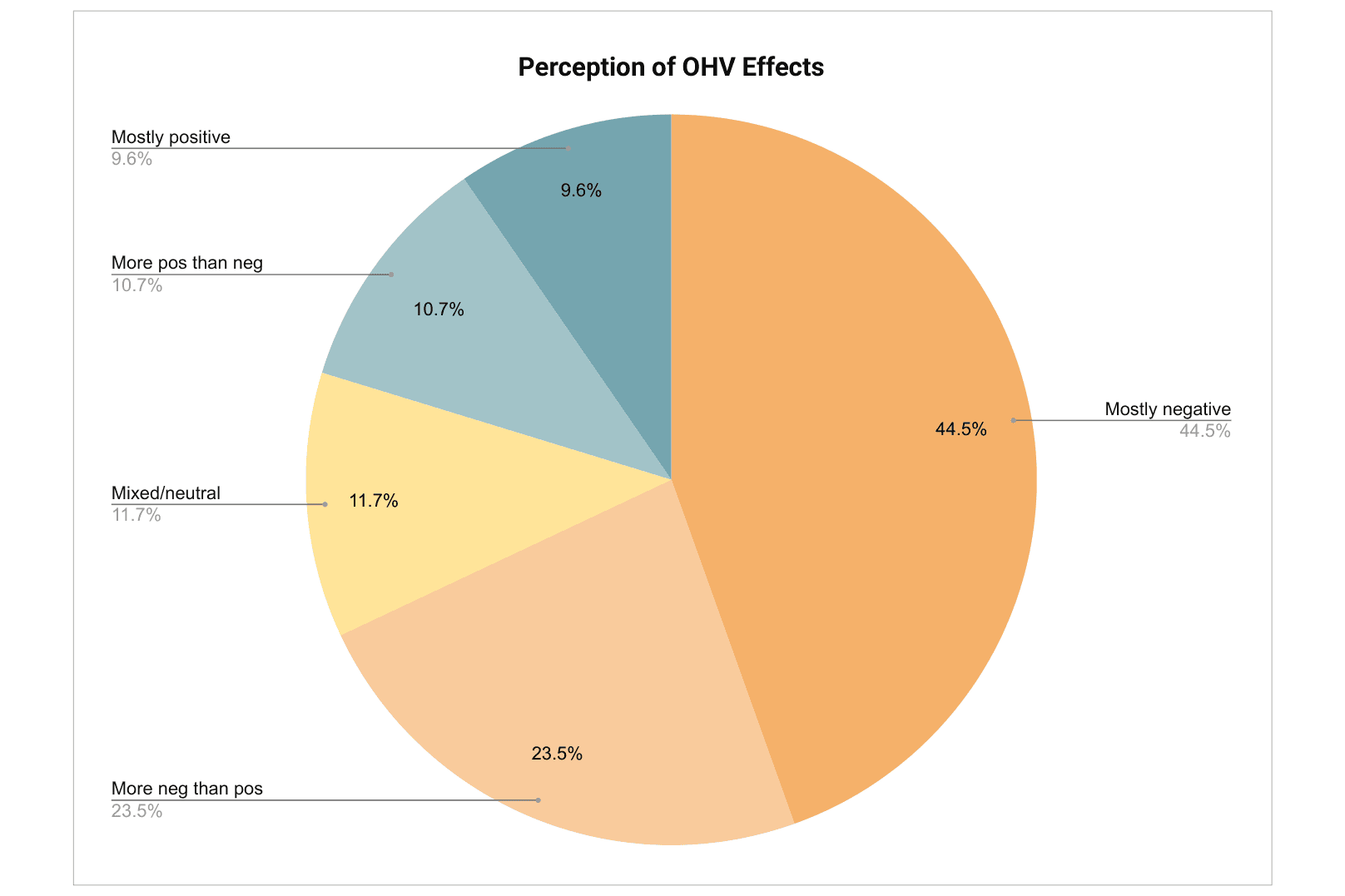
The latest Moab survey says the fight is really about noise. Among 378 people who opted into the online questionnaire on off-highway vehicles and city speed limits, nearly four in five said they never operate an OHV in Moab, and the answers leaned hard toward quieter streets rather than simply slower ones.
That distinction matters because the city’s own residents are not lining up neatly behind the same fix. On the 15 mph OHV limit adopted in 2020, 169 respondents wanted to keep it and 139 wanted it removed. That split showed there is no clean consensus, even among people motivated enough to weigh in on a problem that touches daily life in a tourist town where recreation, commuting and business traffic all collide.
The survey report, prepared June 7 by Councilmember Kaitlin Myers, landed in the middle of a broader policy reset. On June 9, the Moab City Council voted unanimously to table a package of speed-limit changes until September, including the contested OHV rule. City materials say Utah law allows street-legal OHVs through town and on to backcountry trailheads, but also describe noise from those machines as a significant concern. The 15 mph limit was adopted as a noise-reduction measure after the city cited a sharp rise in motorized tourism and the resulting noise impacts to residents at all hours.
Moab has been talking about this long before the current round of council debate. The city’s 2021 noise ordinance called excessive noise and vibration serious hazards to public health, welfare, safety and quality of life. A city FAQ says Moab, working with Grand County, the Moab Area Travel Council, law enforcement, State Parks, and ATV and motorcycle business owners, spent more than five years educating the public on vehicle noise and street-legal equipment and licensing rules before moving to stronger regulation.
The geography makes the argument louder, not quieter. City materials say the narrow Moab Valley and surrounding sandstone cliffs send OHV noise echoing valley-wide, and that several major trail systems are accessed through residential neighborhoods. That is why the conversation has shifted away from a simple speed-limit fight and toward the practical question of what actually calms things down. City records show Ordinance No. 2026-12 repealed and replaced the 2020 ordinance and updated how speed limits are set for street-legal vehicles, including street-legal ATVs, while staff pointed to enforcement problems and ambiguities in state law. In Moab, the real divide is no longer fast versus slow. It is whether the city can regulate the sound of the desert without choking off the way people use it.
This article was produced by Prism’s automated news system from verified source data, official records, and press releases, then run through automated quality and moderation checks before publishing. The system is built and supervised by the people who set the standards it runs under. Read our full AI policy.
Did this article answer your question?