Monument Valley warns visitors, rough loop drive needs right vehicle
Monument Valley’s loop is not a casual scenic drive. Expect rough sand, strict vehicle rules, and Navajo Nation authority from the moment you enter.

A postcard landscape with real limits
Monument Valley looks effortless from a distance, but the 17-mile loop drive is a rough desert route where the wrong vehicle can turn a dream stop into a breakdown or a dead end. The park says entry is at your own risk, and that warning matters here more than it would at a typical overlook.
This is Monument Valley Navajo Tribal Park, managed by Navajo Nation Parks & Recreation, not a U.S. National Park Service site. That difference shapes everything from fees and permits to who sets the rules on the ground.
Why the road catches visitors off guard
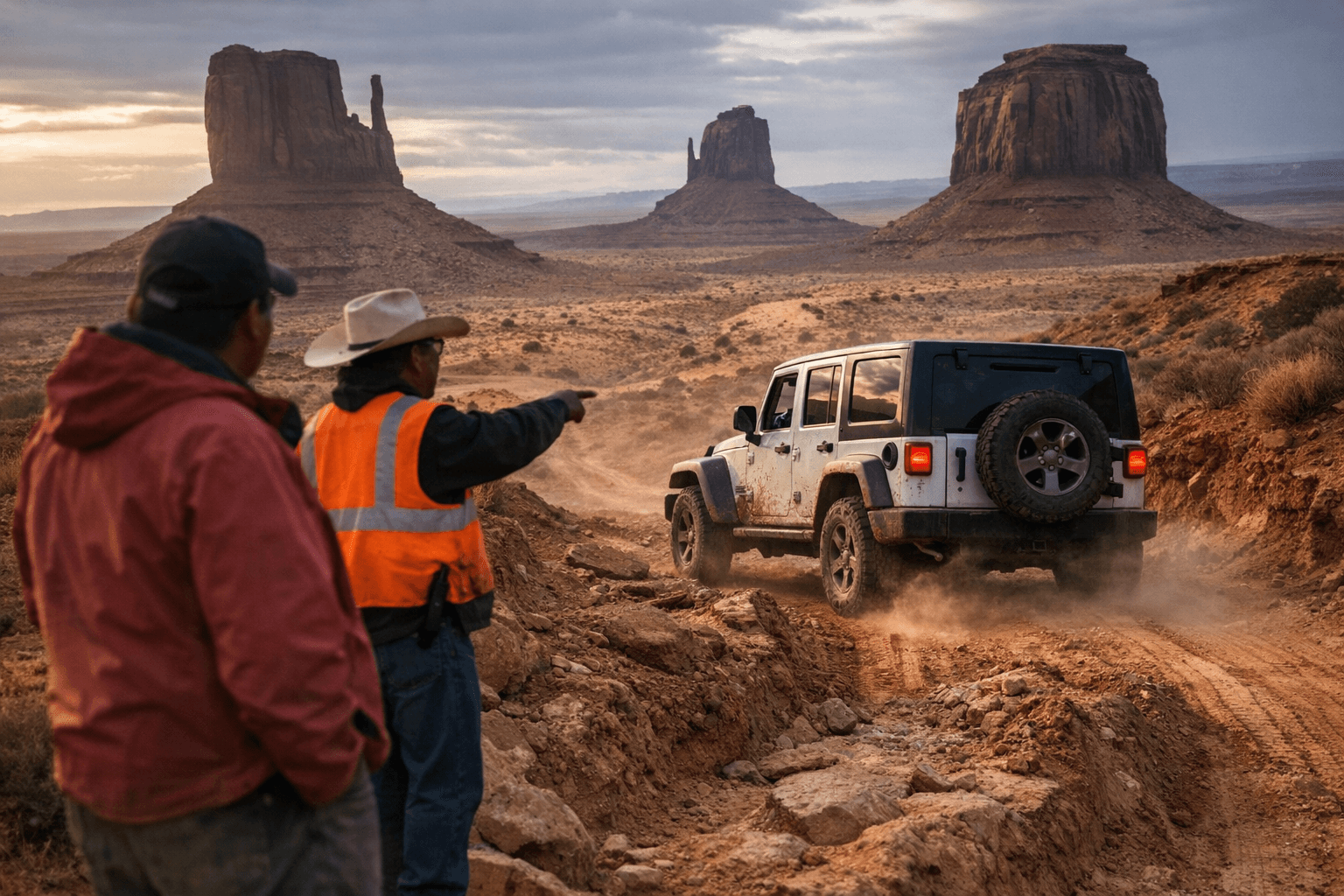
The official park guidance says the valley drive has very rough terrain, with deep sand dunes during monsoon season. The park also says an SUV or truck is preferable because of the conditions, which is a clue that this is not a place to roll in with a low-slung rental and hope for the best.
The biggest mistake travelers make is treating the loop like a quick pull-off between other Four Corners stops. Monument Valley is remote, the surface changes with weather, and the drive itself is part of the experience. If you are not set up for rough desert travel, you may spend more time worrying about traction than looking at the buttes.
Vehicles that do and do not belong on the loop
The park is explicit about what is not allowed. Motorcycles are prohibited on the loop drive, and RVs are prohibited as well. The tour-operators page goes further, saying RVs, camper vans, motorcycles, large SUVs, and off-road vehicles are prohibited on the valley drive, which means not every high-clearance vehicle is automatically a fit.
That distinction is useful because “SUV” does not mean “anything with big tires.” The park says an SUV or truck is preferable because of the terrain, but visitors still need to match their vehicle to the official restrictions and the road conditions of the day. The safest assumption is simple: if your vehicle is oversized, specialized, or not built for rough desert surfaces, it probably does not belong on the loop.
What the guided side of Monument Valley adds
Navajo Nation Parks & Recreation works closely with tour guide operators in Monument Valley, Antelope Canyon, and Canyon de Chelly, and the department says those guides provide a brief history and information about the places they lead. That matters because Monument Valley is not just a place to drive through, it is a landscape with Navajo context that changes how you read what you are seeing.
The park’s guided-tour setup gives visitors a way to move beyond the paved viewpoints and understand why the formations matter. For travelers deciding between self-drive and a guided visit, the choice is not only about convenience. It is also about how much interpretation you want, how much of the landscape you want to access, and how deeply you want to understand the place you are entering.
What to know before you go
A few rules trip up visitors most often, and Monument Valley is clear about all of them:
- The 17-mile loop is vehicle-only.
- Motorcycles are prohibited.
- RVs, camper vans, large SUVs, and off-road vehicles are prohibited on the valley drive.
- Dogs are prohibited at Navajo Tribal Park locations.
- Designated hiking trails are at your own risk.
- Trail hours are 8 a.m. to 5 p.m.
Those details are not fine print. They are the difference between a smooth visit and a wasted one. If you are traveling with pets, planning to wander off the vehicle route, or arriving late in the day, the park’s rules can change your plans fast.
Fees, permits, and tribal authority
Entry, permits, and ticketing are handled by Navajo Nation Parks & Recreation, which is another reason Monument Valley should be treated as a sovereign tribal destination rather than a standard park stop. The rules come from the Navajo Nation, and visitors are expected to follow Navajo Nation regulations while on site.
That structure reflects the park’s purpose. Navajo Nation Parks & Recreation says its mission is to protect, preserve, and maintain Navajo Tribal Park locations, and its vision emphasizes stewardship for the long-term benefit of the Navajo people. In other words, the restrictions are not just about traffic control. They are part of protecting the landscape and sustaining the visitor experience on Navajo land.
Why the place feels so singular
Monument Valley Tribal Park was established in 1958, and it was the first tribal park of its kind. That history helps explain why it has its own access model and why the rules feel more specific than what many road-trippers expect elsewhere in the Southwest.
The setting itself is part of the reason it draws such intense attention. The official Monument Valley page describes it as one of the most photographed places on earth, with sandstone formations that rise roughly 400 to 1,000 feet above the desert floor. That scale is what makes people pull off the highway in the first place, but the park’s rules are what keep that visit manageable.
How to plan a respectful visit
If Monument Valley is on your Four Corners route, treat it as a destination that rewards advance thinking. Check your vehicle before you arrive, assume the loop surface will be rough, and do not count on a casual drive in anything that is not clearly suitable for the road and allowed by park rules.
A good visit here usually comes down to three choices: the right vehicle, the right expectations, and the right level of guidance. Get those right, and Monument Valley delivers the full scale of the place, from its towering sandstone forms to the Navajo interpretation that gives the landscape its deepest meaning.
This article was produced by Prism’s automated news system from verified source data, official records, and press releases, then run through automated quality and moderation checks before publishing. The system is built and supervised by the people who set the standards it runs under. Read our full AI policy.
Know something we missed? Have a correction or additional information?
Submit a Tip