Record-Breaking March Heat Wave Scorches Four Corners and Western U.S.
Utah hit 95°F and Colorado nearly touched its all-time March record as a heat dome parked over the Four Corners pushed temps 30 degrees above normal still not letting go.
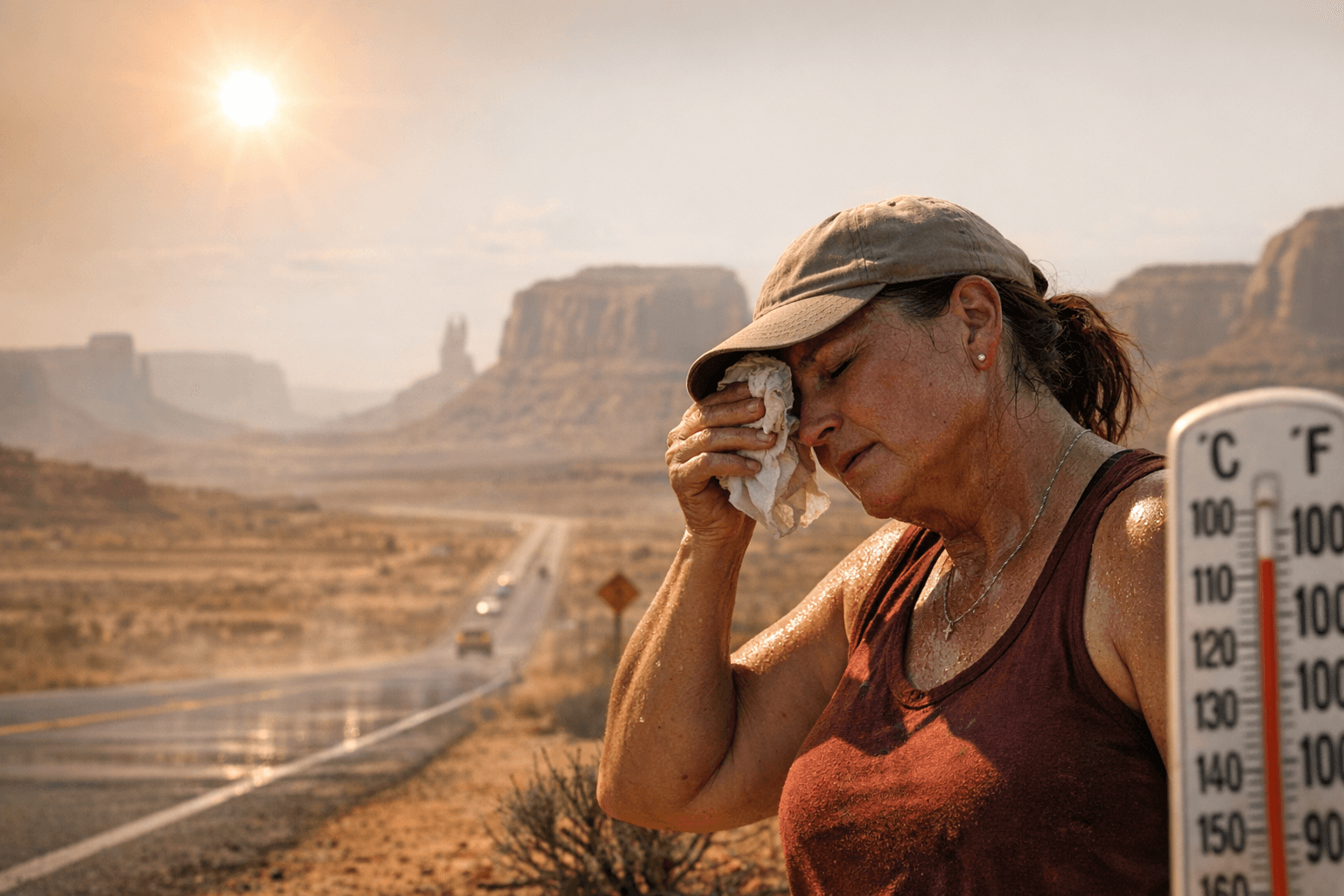
Just days into spring, Colorado absorbed summer-like heat and Denver shattered its all-time temperature record for a March day. That was only part of the story for the Four Corners. The most anomalous heat targeted the Intermountain West, Rockies, Southwest, and Four Corners regions, where highs ran around 15 to 30 degrees above normal.
The heat wave was driven by a strong, slow-moving high-pressure system, commonly known as a heat dome, trapping hot and dry air over the region. It was the strongest high-pressure area ever observed over the Southwest in March. For anyone who planned a late-season ski day, a desert canyon run, or a river put-in during the week of March 20, the thermometer told a story that had no precedent.
Denver International Airport recorded 87 degrees around 3 p.m. on Wednesday, the hottest temperature ever measured in the city in March. National Weather Service meteorologist David Barjenbruch noted that Denver had never hit 80 degrees or more for four consecutive days in March. "Those kinds of temperatures for this time of year just haven't happened before in our recorded history," he said. Grand Junction, the gateway to canyon country and a key hub for Four Corners adventurers, was approaching 90 degrees on that same day. Valley locations around Dillon and Silverthorne were pushing the 70-degree mark for daytime highs, stranding anyone hoping to find skiable conditions in the high country.
In Utah, St. George, Zion Canyon, and San Juan all hit 95°F on March 20, smashing the old state March record of 93°F. New Mexico tied its March record at 99°F. Yuma, Arizona, hit 112°F to set a new record for the hottest March temperature ever recorded in the United States. Phoenix ran five straight days of record-breaking highs at 100 degrees or more, having previously reached 100 in March only once in its entire history.
The scale of the record-breaking was staggering. Record high temperatures outpaced record lows by a 10-to-1 margin, and the National Centers for Environmental Information reported nearly 1,200 record highs set over a single seven-day stretch. Weather historians confirmed the dome smashed statewide March records in 14 states.
For the Four Corners backcountry, the heat dome's legacy reaches well beyond comfort. High temperatures accelerated snowmelt across the mountains of Colorado, where snowpack was already at its lowest level since 1981 due to the preceding warm winter. April 1 snowpack may well be the worst on record across many, if not most, Western U.S. watersheds. These conditions raise the potential for water shortages and hydropower impacts, especially across the Colorado River Basin.
Climatologist Daniel Swain pointed to an early and intense start to fire season in the Four Corners region specifically, citing record-low snowpack and a record-warm winter compounded by 10 to 14 days of exceptional heat and dryness. From the Four Corners, Southern Rockies, and into Southern California, the possibility of wildfire events was already rising steadily as record heat and dry conditions spread.
A rapid attribution study found the heat ran about 4.7 degrees Fahrenheit higher than it would have in a preindustrial world, and a heat wave on this scale is still expected to occur only about once every 500 years at any given spot. Climate scientists at World Weather Attribution concluded the event would be "virtually impossible for this time of year in a world without human-induced climate change." The heat dome showed no intention of releasing its grip quickly: more records were expected to fall through the week of March 24 to 27.
Know something we missed? Have a correction or additional information?
Submit a Tip