27 mandala tattoo ideas, from floral hands to geometric sleeves
Mandala tattoos land best when the geometry fits the body. Small hand pieces need restraint, while shoulders and sleeves reward denser radial structure.
1. Floral hand mandala
Hands demand restraint: a floral mandala works best when the petals are simplified and the center stays unmistakable. Thin lines and open spacing keep the design readable instead of turning the knuckles into visual noise.
2. Minimal back-of-hand mandala
A compact radial build sits well on the back of the hand because it can be read at a glance. Keep the stencil crisp and the outer ring clean, or the symmetry will blur the moment the hand moves.
3. Palm-edge wrist mandala
Wrap the geometry around the wrist like a bracelet and let the pattern taper at the edges. This gives you decorative symmetry without forcing the design to fight the joint.
4. Small palm mandala
A palm-adjacent mandala needs a tighter structure than a forearm piece, so the spacing has to do real work. The best versions stay simple enough to survive motion while still feeling ornamental.
5. Inner forearm medallion
Forearms are where mandalas start to breathe, and a centered medallion gives the eye a stable anchor. The arm’s length helps repeated rings stay legible, which makes this one of the most reliable placements for clean geometry.
6. Outer forearm compass mandala
A compass-like build leans harder into geometry than florals do, with sharper divisions and a more directional feel. The outer forearm is a strong canvas for that kind of linework because the long sightline keeps the structure easy to read.
7. Concentric forearm stack
Stacked circles and repeating petals make the forearm feel fuller without sacrificing the mandala’s center logic. This is a smart build when you want detail, but still need enough negative space for the pattern to breathe.
8. Elbow-cap ring mandala
The elbow is a test of stencil precision because the skin shifts constantly, so a ring-based mandala works best here. Simpler outer geometry usually holds up better than overpacked detail on a moving joint.
9. Shoulder cap mandala
Shoulders can handle denser detail than hands or forearms, which is why layered petals and nested circles look so natural there. The rounded cap gives the mandala a built-in frame and helps the design sit cleanly on the body.
10. Upper-arm medallion
An upper-arm medallion gives the center room to expand without overwhelming the placement. It is one of the best spots for adjusting the geometry, since the larger surface can absorb small changes without losing balance.
11. Vertical bicep mandala
A vertically stretched mandala follows the muscle line and keeps the composition from feeling too static. That shape also helps the design read strongly from the side, which is useful when the arm is in motion.
12. Half-sleeve radial repeat
Half sleeves are where mandalas start to behave like architecture. Repeated circles, petals, and borders can stack into one cohesive field if every repeat stays tied to the same center logic.
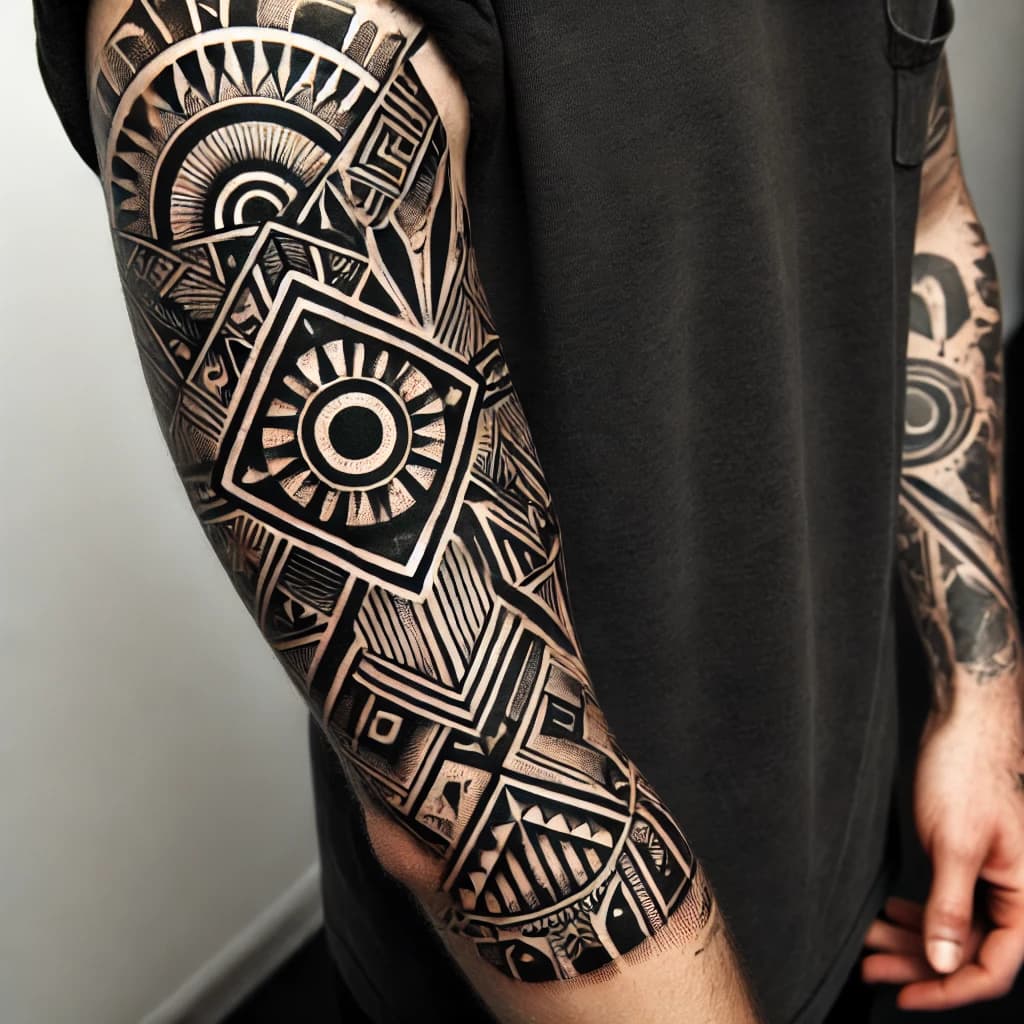
13. Full geometric sleeve
A full sleeve lets the mandala become a system instead of a single motif. This is the best canvas for repeated rings, nested shapes, and heavier line choreography, but the whole piece only works if the spacing stays disciplined.
14. Floral mandala with softened petals
Adding floral petals softens the geometry without dissolving it. The trick is to keep the radial structure clear so the piece still reads as a mandala first and a floral pattern second.

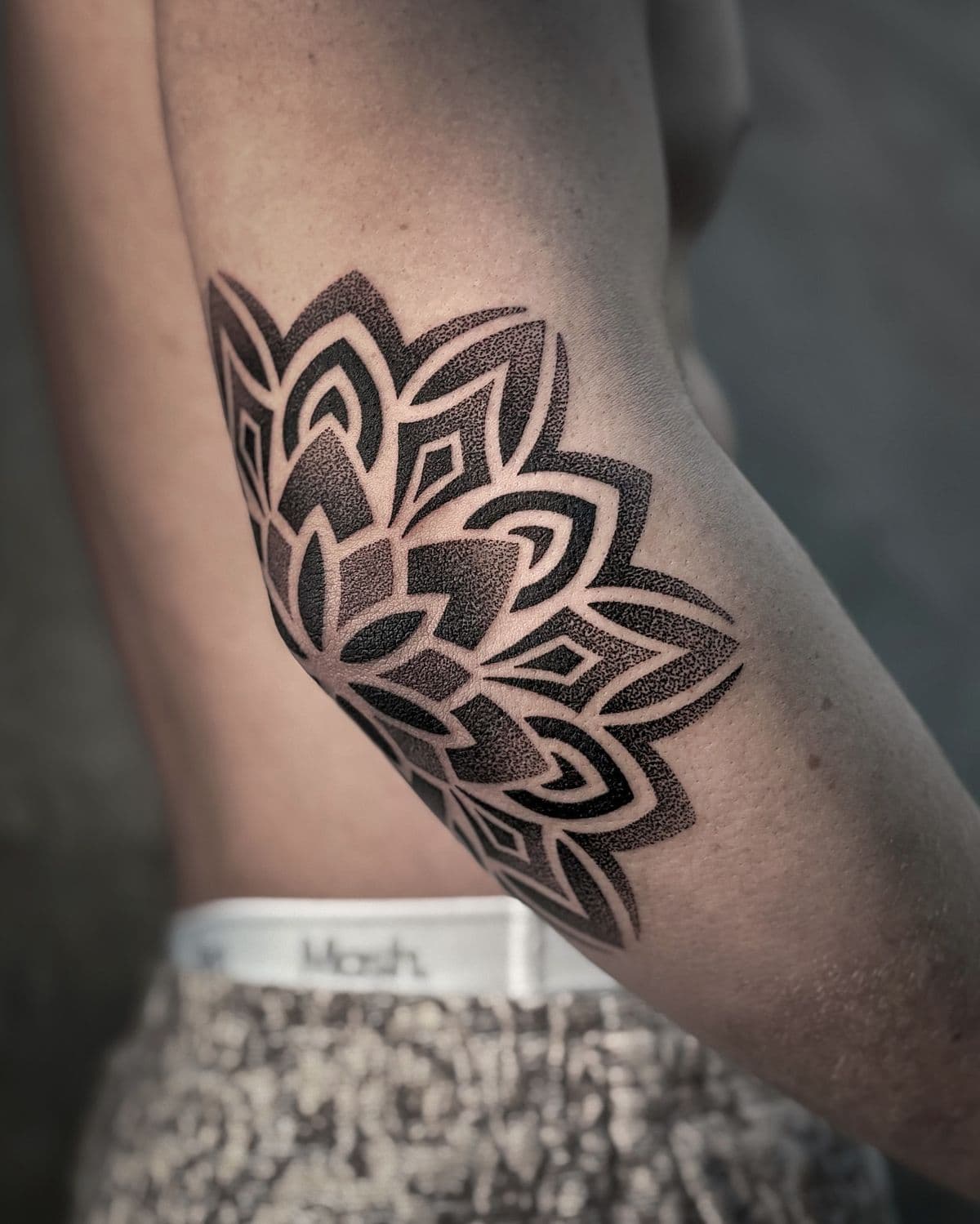
15. Dotwork mandala
Dotwork is ideal when you want texture without losing the architecture of the design. It adds depth and gradation while keeping the stencil skeleton visible, which matters in a form built on symmetry.
16. Fine-line mandala
Fine-line builds can look delicate, but they only work when the spacing is exact. On smaller placements, thin lines keep the tattoo airy instead of heavy, especially on hands and forearms.
17. Blackwork mandala
Blackwork pushes contrast harder, so the symmetry reads instantly from across the room. It works best when the negative spaces are planned as carefully as the filled shapes, not added after the fact.
18. Negative-space mandala
This version uses skin as part of the design, which keeps the pattern from collapsing into visual noise. Negative space is especially useful when you want to customize the geometry and still preserve balance.
19. Lotus-centered mandala
A lotus center gives the mandala a clear focal point and keeps the eye from drifting. It is a classic way to make the structure feel intentional without overcomplicating the outer rings.
20. Sunburst mandala
Sunburst rays bring more energy to the radial structure while staying true to the form. The design reads strongest when the rays are evenly paced and not allowed to crowd the perimeter.
21. Stacked-petal mandala
Stacked petals create depth through repetition, which is why this build works so well on shoulders and sleeves. The rhythm of each layer matters more than extra decoration, especially when the goal is clean readability.
22. Ornamental-frame mandala
A frame around the mandala helps a larger composition feel finished and contained. It is a smart move when the design needs to bridge from a compact center into a broader arm layout.
23. Micro-mandala cluster
Several small mandalas can behave like one larger composition if the spacing stays controlled. The approach keeps the piece light and gives you flexibility on wrists, forearms, or as a transition into bigger work.
24. Layered circle mandala
Layered circles are the backbone of many strong mandala tattoos because they pull the eye inward and outward at once. When the circles are evenly built, the design stays balanced even as the detail increases.
25. Symmetry-forward custom mandala
A custom mandala can stretch, compress, or simplify the geometry as long as the center stays stable. That flexibility is what lets the form adapt from hand to shoulder without losing its identity.
26. Soft-to-bold contrast mandala
Mixing delicate linework with stronger outer borders gives the design a clear hierarchy. That contrast helps a mandala read cleanly on skin and keeps the pattern from flattening out as it grows.
27. Large-scale sleeve mandala system
At sleeve scale, the mandala stops behaving like a single emblem and starts acting like a geometric language. The strongest versions keep one clean center, repeat the radial logic, and use placement to make the whole arm feel structured rather than crowded.
This article was produced by Prism’s automated news system from verified source data, official records, and press releases, then run through automated quality and moderation checks before publishing. The system is built and supervised by the people who set the standards it runs under. Read our full AI policy.
Did this article answer your question?