Snapchat flash book shows geometric tattoos in a broad style mix
A blue flash book on Snapchat shows geometric tattoos winning attention by playing well beside florals, butterflies, and quotes. The real draw is range, not a single style.
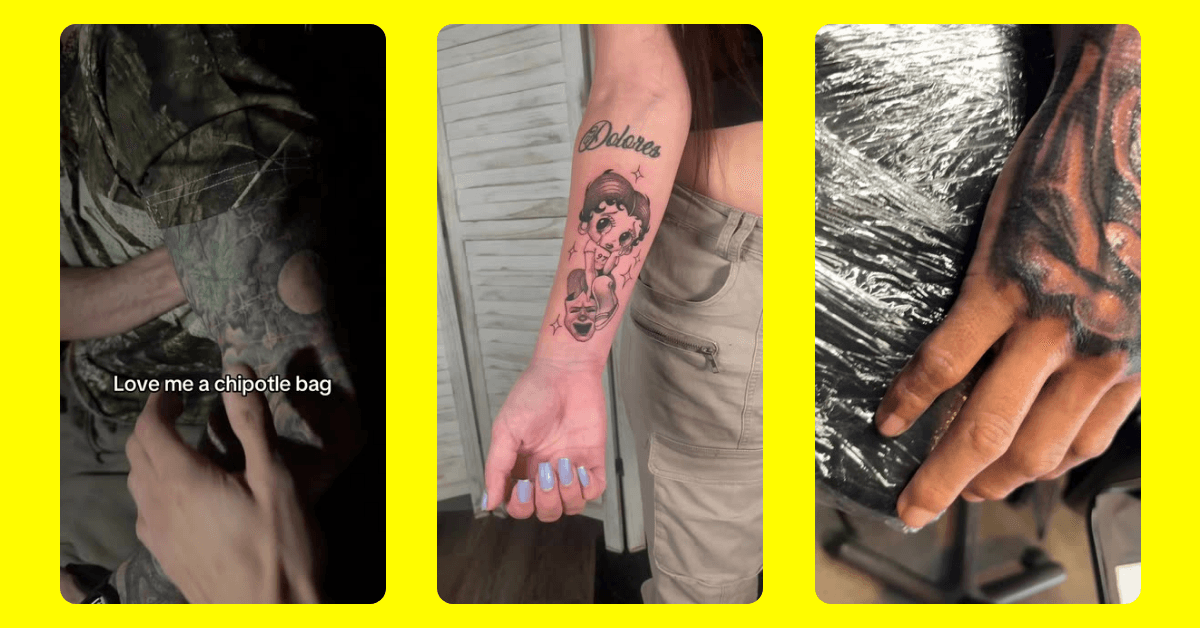
In Antho Tattoo’s Snapchat Spotlight, a blue binder of flash art flips past geometric sheets, floral arrangements, butterflies, jellyfish, hearts, and inspirational quotes. The book shows how clients browse now: fast, visually, and with one eye on whether a style feels like them.
Flash books as the first filter
Flash sheets still work because they solve the hardest part of the tattoo decision: getting from “I want something” to an actual design. Flash sheets are pre-drawn collections that clients choose from when they need help coming up with an idea, and the sheets often share a similar color palette so the book feels cohesive instead of chaotic. That makes the binder a practical sales tool as much as a creative one, especially when the artist wants to show range without losing a recognizable hand.
That logic fits the Snapchat post exactly. Antho Tattoo’s binder is not built around a single look or a single mood. It is built to help someone flip, compare, and settle on a direction that already feels workable, whether they came in thinking about something soft and floral or something sharper and more architectural.
Pricing also helps explain why flash remains such a strong entry point. Tattooing 101 puts flash sheet pieces at roughly $50 to $200 per piece, and flash days commonly use the same range for pre-drawn designs. That lower-friction structure makes flash feel approachable, especially for clients who want a finished design without going through a full custom build from scratch.
Why geometric work holds attention beside softer styles
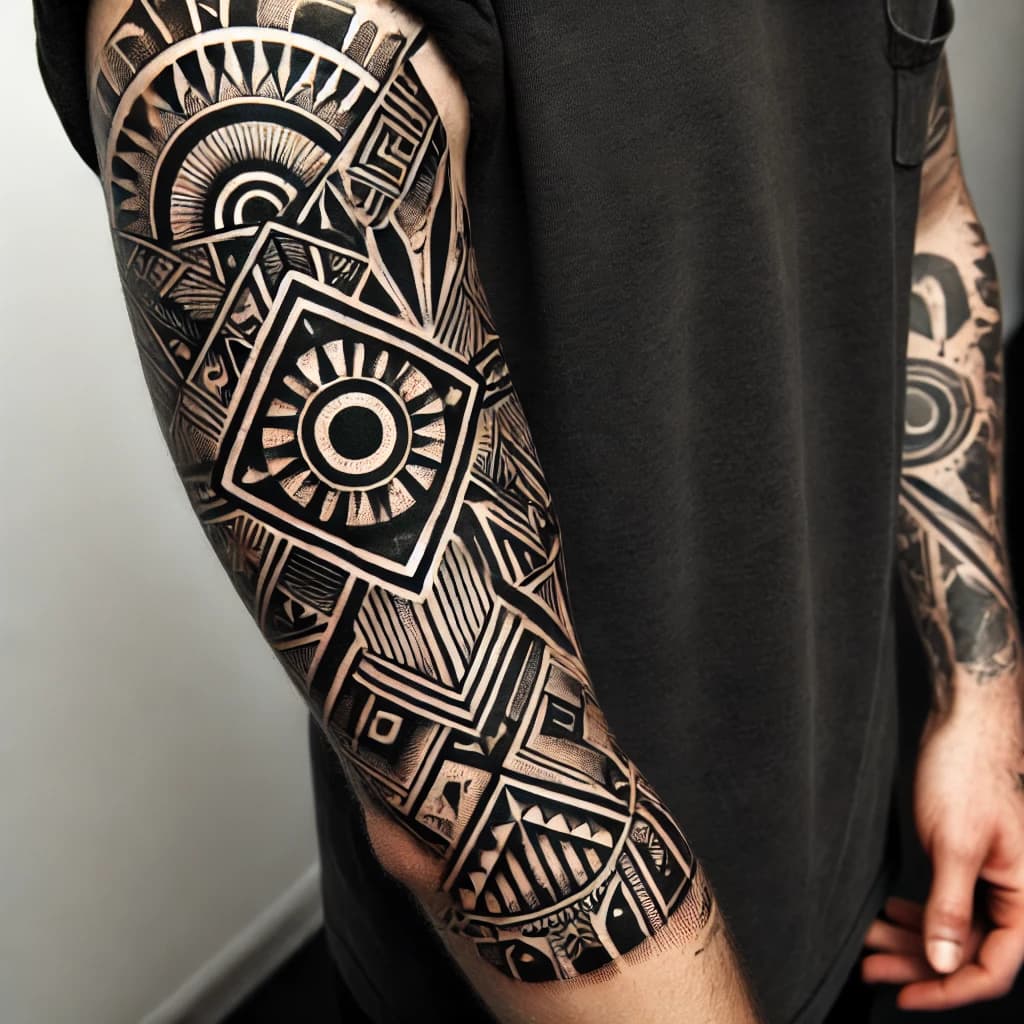
The geometric pages in a mixed flash book are doing a different kind of work than florals or illustrative pieces. Geometric tattooing centers on clean lines, bold shapes, symmetry, and pattern, which gives it immediate visual order on the page. In a binder that also includes organic subjects like flowers and butterflies, that structure reads as a clear stylistic option rather than a niche corner of the book.
A client who arrives undecided may not know whether they want something ornamental, floral, or geometric, but a well-built flash book lets those options sit side by side until one of them clicks. Geometric work often wins that moment because it feels controlled and modern, while still leaving room for meaning, placement, and scale to be adjusted around the body.
Tattooing 101 says sacred-geometry tattoos are popular right now. That helps explain why geometric sheets belong in the same binder as more familiar motifs: the style has enough recognition to stop the scroll, but enough flexibility to work as a base language for bigger compositions.
Ornamental and geometric pieces share the same visual grammar
Geometric tattoos do not sit alone in a vacuum. Ornamental work uses decorative patterns, fine lines, symmetry, and geometric figures, which places it close enough to geometric tattooing that the two styles can reinforce each other in a flash book. That overlap matters because many clients are not shopping by technical category; they are shopping by feel, balance, and how a design might sit on the body.
A client who likes floral softness might still be drawn to geometric framing, while someone who comes in wanting symmetry may realize they want a more decorative ornamental treatment once they see the page. Antho Tattoo’s mix suggests an artist who understands that those style lines are porous, and that presenting them together can widen the pool of people who see themselves in the work.
Placement is part of the appeal
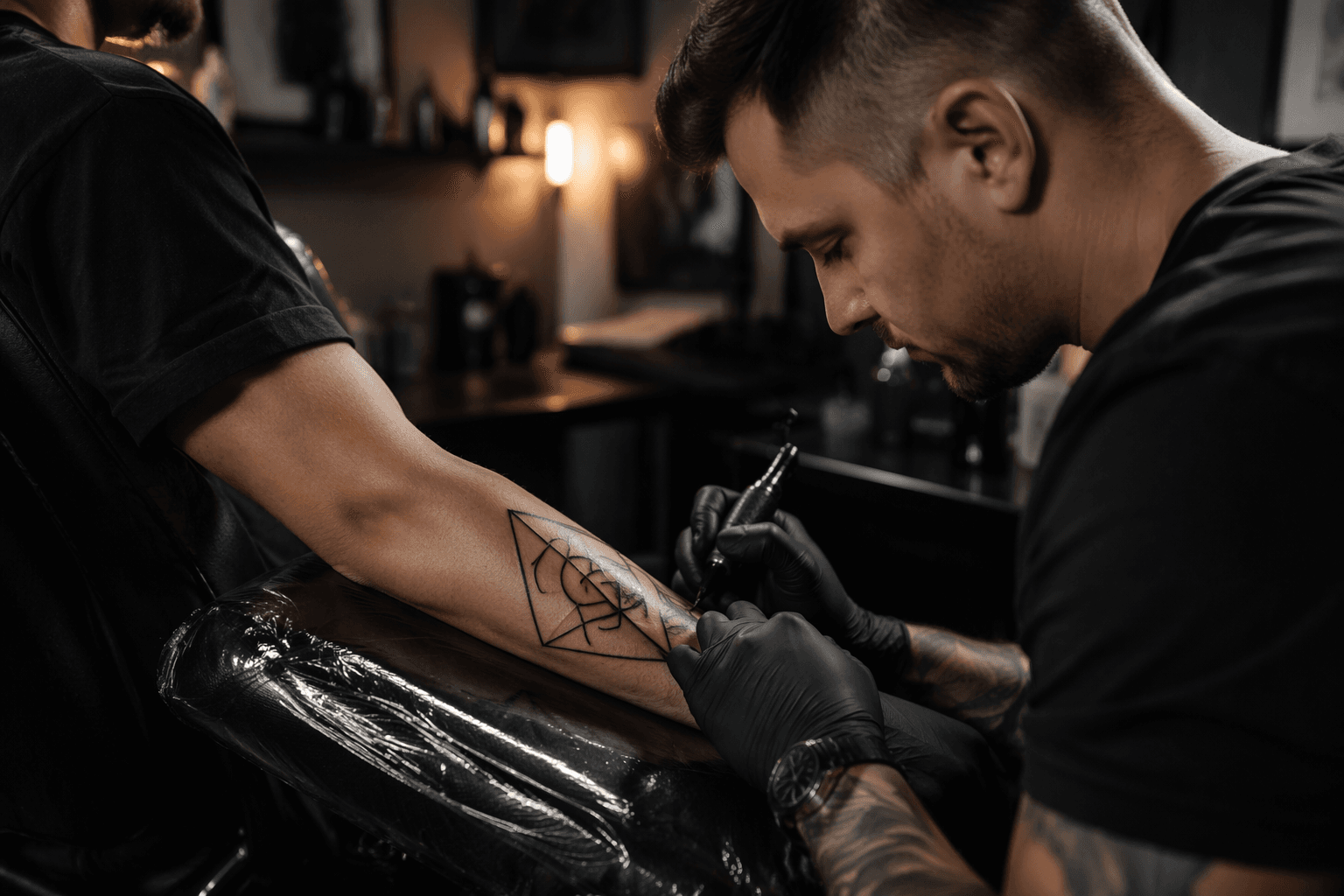
Geometric tattoos also benefit from how they move across the body. The forearm is a popular placement, and geometric designs can be shaped to follow the natural flow of the forearm. That makes geometric sheets especially useful in flash books, because the design can be shown as a finished idea while still leaving room to adapt it to a specific placement.
A floral piece may carry softness, a butterfly may carry motion, and a geometric design can carry structure and rhythm. Put them in one binder and the client can start to compare not just subject matter, but how each style would actually live on skin, whether on the forearm or another visible area where line direction matters.
The binder format helps the artist steer that conversation without losing momentum. When a client pauses on a geometric sheet, the design is already doing part of the work: it suggests placement, proportion, and a visual flow that can be discussed immediately instead of imagined from scratch.
A modern format with an old tattoo-shop backbone
The flash book sits inside a much older tattoo tradition. Smithsonian Magazine has written that tattoos have existed for thousands of years across cultures and have carried religious, protective, class-based, and commemorative meanings. Flash is a longstanding shop tradition of pre-drawn designs shown quickly to clients, which is why the binder still feels so recognizable even in a Snapchat Spotlight.
This article was produced by Prism’s automated news system from verified source data, official records, and press releases, then run through automated quality and moderation checks before publishing. The system is built and supervised by the people who set the standards it runs under. Read our full AI policy.
Did this article answer your question?