Why tattoo size and needle choice matter for geometric tattoos
In geometric tattoos, size and needle choice are one call: they decide whether symmetry, negative space and fine linework heal cleanly or blur.

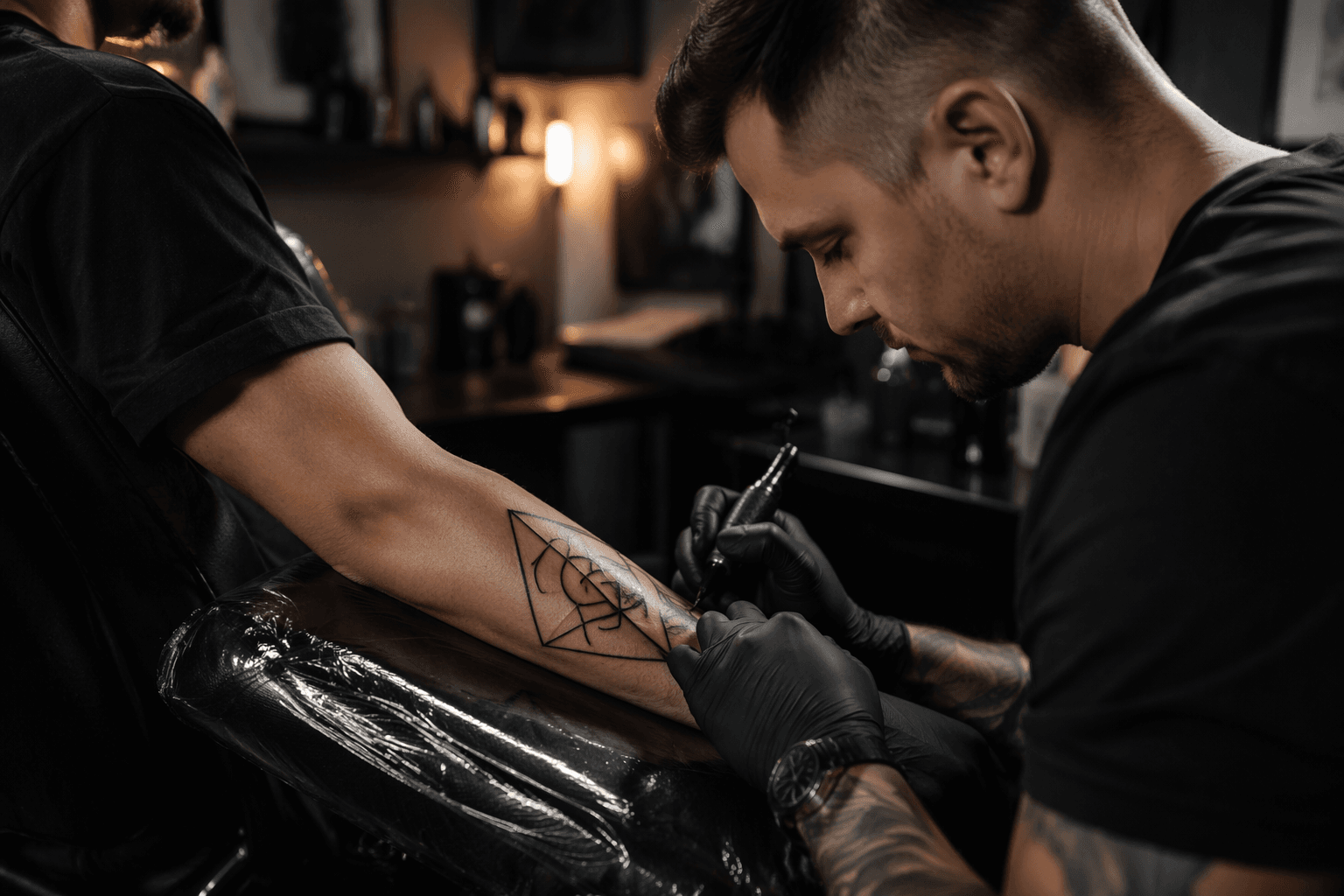
A tiny geometric tattoo leaves very little margin for wobble, crowding, or ink spread. The same lattice, mandala, or line-built pattern that looks razor-sharp on paper can collapse on skin if the scale is too tight for the detail, or if the needle setup deposits more ink than the structure can hold. Size and needle choice belong in the same conversation from the start.
Scale sets the limits of the design
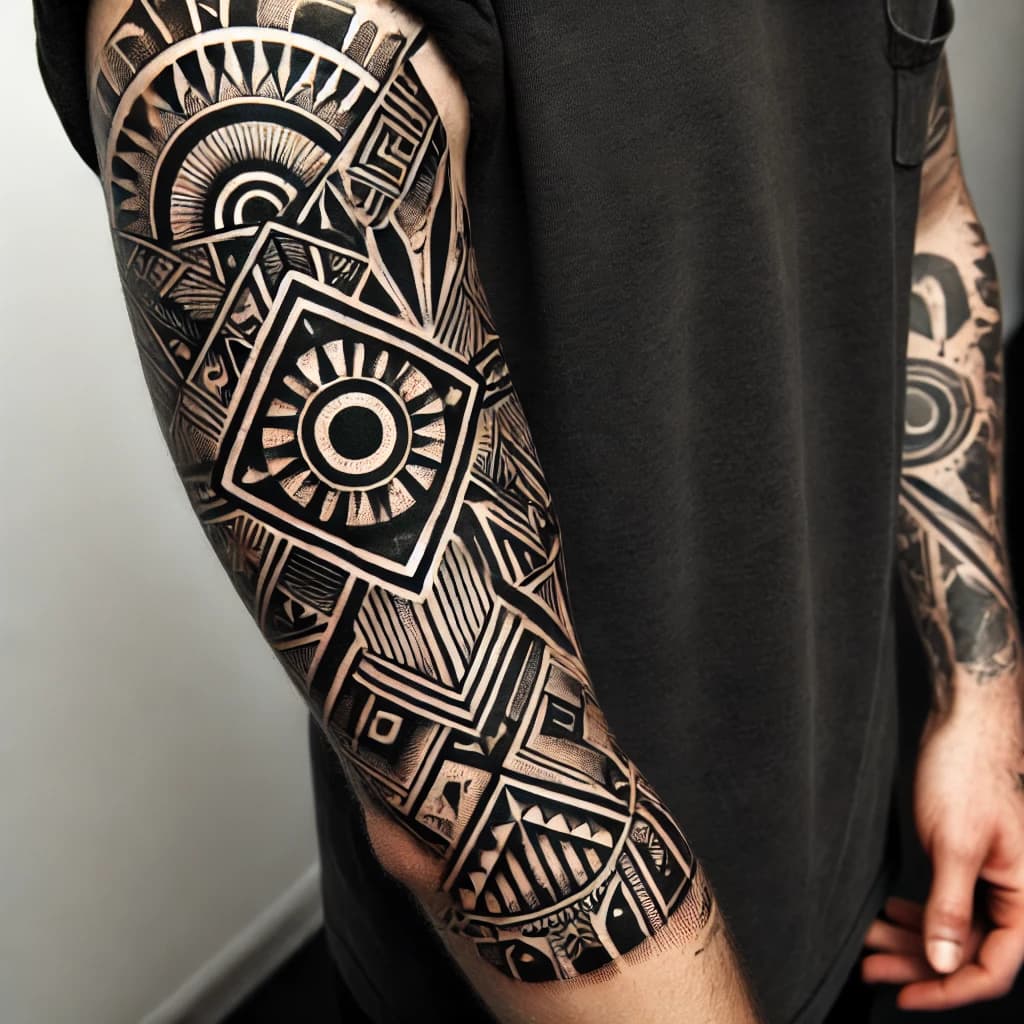
Geometric work depends on clean spacing, repeated angles, and symmetry that still reads after healing. Every line, dot, and gap sits close to the next one, so scale determines how much detail the design can carry. A larger piece gives the artist more room for controlled linework and smoother transitions, which makes it easier to preserve negative space and keep the composition legible over time.
The more intricate the geometry, the more breathing room it needs. Thin intersections, stacked shapes, and delicate empty space are the first details to suffer when a design is scaled down too aggressively. If the concept depends on repeated angles or a fine internal grid, the tattoo needs to be sized so the structure can survive on real skin, not just in the stencil.
Needle choice is part of the composition
Needle selection changes how a line lands, how saturated it looks, and how much spread the skin can show once the tattoo settles. Round liners are used for linework and fine detail, while magnums are used more for shading and color packing. Smaller needle diameters can produce finer lines with less ink spread, while larger counts and diameters tend to create heavier, more saturated strokes.
For geometric tattoos, that distinction matters because the style is built on precision. Artists often lean on small round liner groupings when the goal is crisp edges, delicate intersections, and exact symmetry. Magnum configurations make more sense when the design calls for broader fill, shadow, or a larger field of saturation, but they can overwhelm a design that depends on airy spacing and hairline structure.
A useful way to think about it before you book:
- Small tattoos work best with simple geometry, fewer repeated lines, and negative space that is not too fragile.
- Medium tattoos can hold more symmetry, more line density, and more layered geometry without crowding as fast.
- Large tattoos are where dense lattices, repeated motifs, and smoother transitions can breathe, especially when the artist needs room to build cleanly.
The needle choice has to match the amount of detail the scale can realistically support. If the artist has to force a fine, complex drawing through a setup meant for heavier saturation, the final piece can look crowded before it even leaves the chair.
Healing changes the final read
Healing time depends on tattoo size and location, and larger tattoos may take a few months to fully heal, Cleveland Clinic says. The crispness of the final read depends on how the skin settles, not just how the stencil looked on day one.
A design packed too tightly can heal looking heavier than expected, with lines that feel less crisp and spacing that reads tighter than the original plan. Larger pieces may take longer to settle because there is simply more skin involved, more surface area to manage, and more opportunity for the piece to change as it heals.
Safety sits underneath the aesthetics
The FDA says tattoos and permanent makeup may involve risks including infections and allergic reactions, and it has issued final guidance on tattoo inks to help prevent microbial contamination.
CDC investigations into tattoo-associated nontuberculous mycobacterial skin infections found contaminated inks in two of five identified clusters, with cases reported from Washington, Iowa, and Colorado. CDC research has also treated tattooing and body piercing as settings covered by OSHA bloodborne pathogen standards, and a 2010 CDC-published study examined how those standards were being followed in the industry.
Why geometric artists talk about precision first
Dillon Forte, Renato Vision, Misha Nechaev, Tae, Mr J Fineline, and Evan Summers describe geometric tattooing in terms of precision, delicacy, elegance, and mathematical structure, with lines, dots, and simple shapes arranged through careful collaboration with the client.
If your concept depends on thin intersections, repeated angles, or delicate negative space, the artist needs enough room and the right needle configuration to keep those elements readable. If the design asks for heavier saturation or broader shading, it should be built with that in mind instead of squeezed into a setup meant for finer linework.
This article was produced by Prism’s automated news system from verified source data, official records, and press releases, then run through automated quality and moderation checks before publishing. The system is built and supervised by the people who set the standards it runs under. Read our full AI policy.
Did this article answer your question?