30 geometric sleeve tattoos that bring structure and style to men
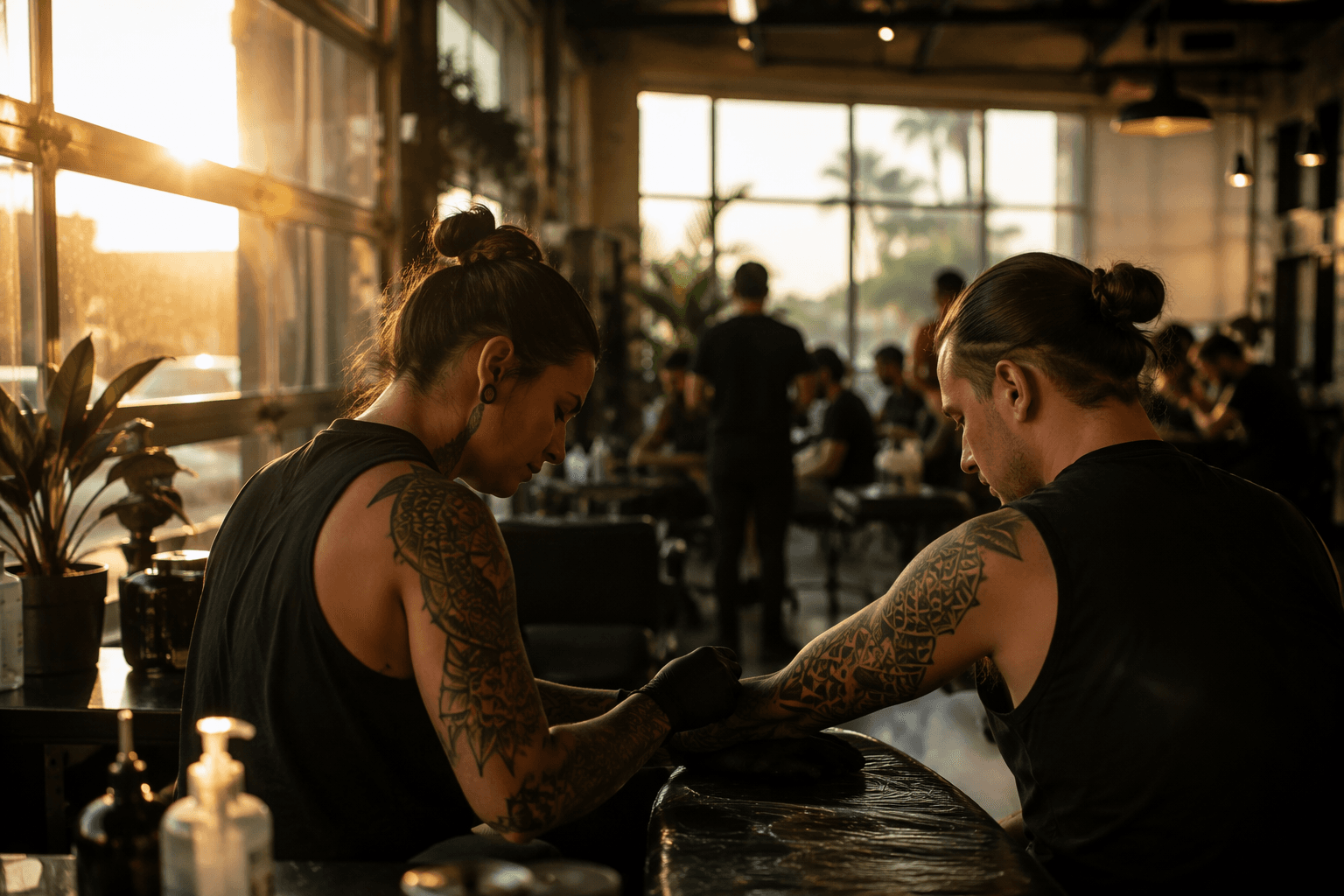
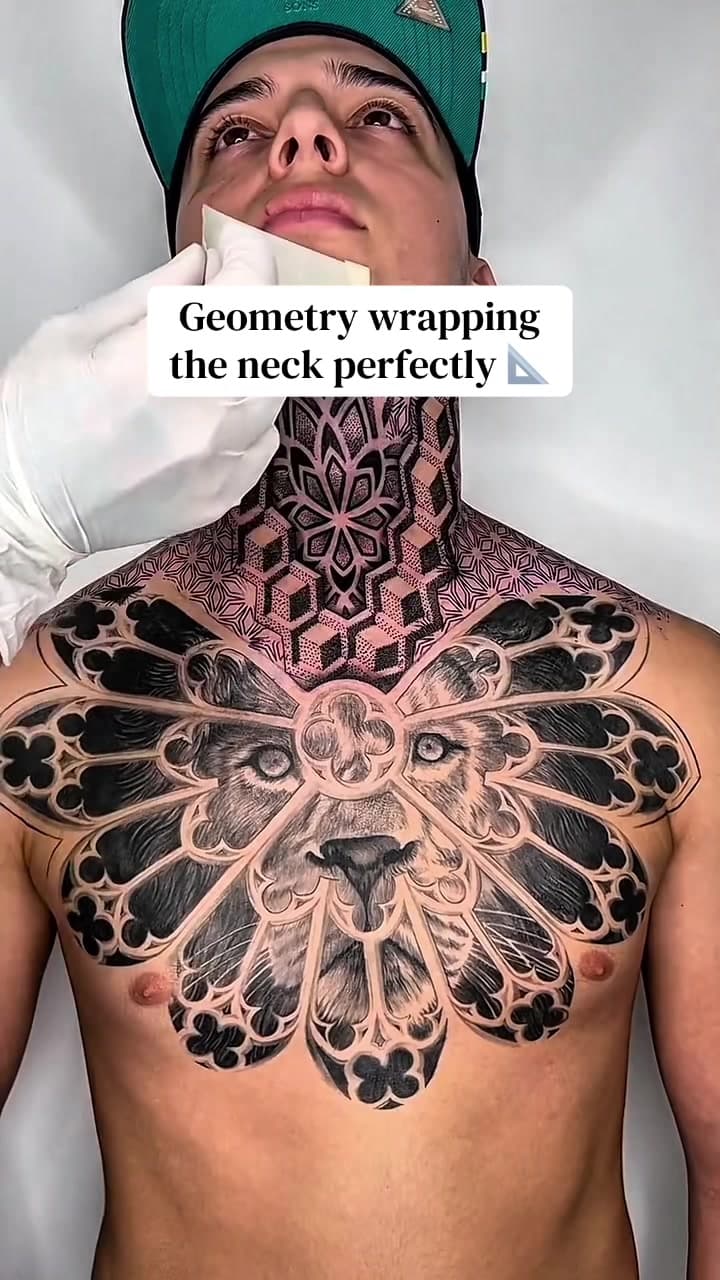
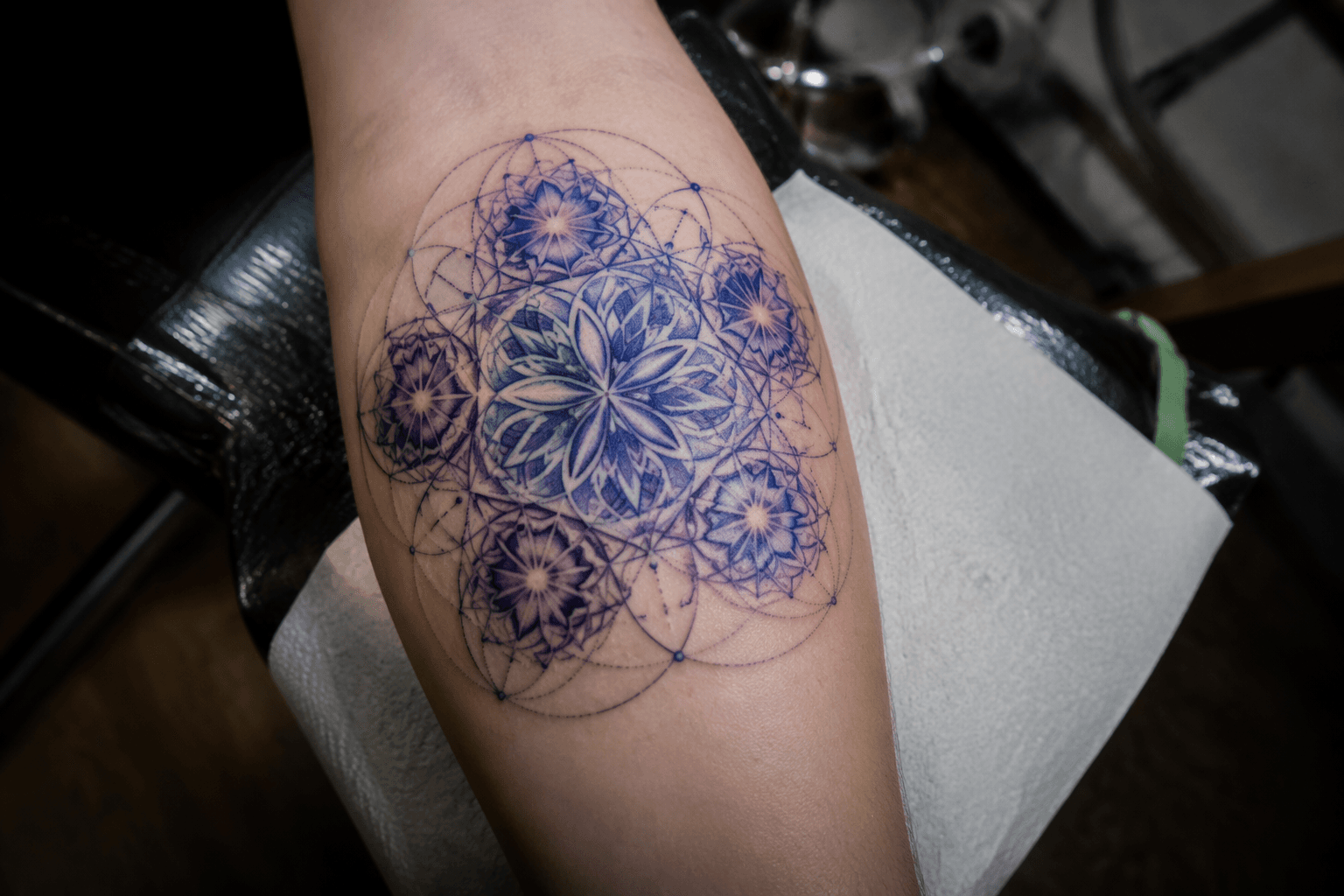
These 30 sleeve ideas treat geometry as one flowing composition, using line, negative space, and body movement to keep every panel connected.
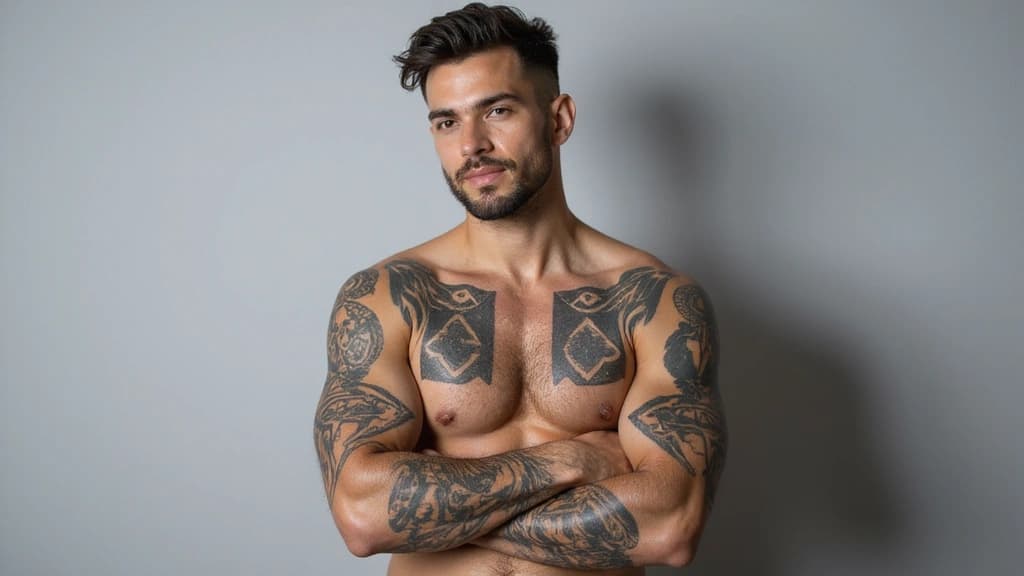
Pine Moon Ink’s gallery shows a full-arm sacred geometry lattice from shoulder to wrist.
1. Full-arm sacred geometry lattice
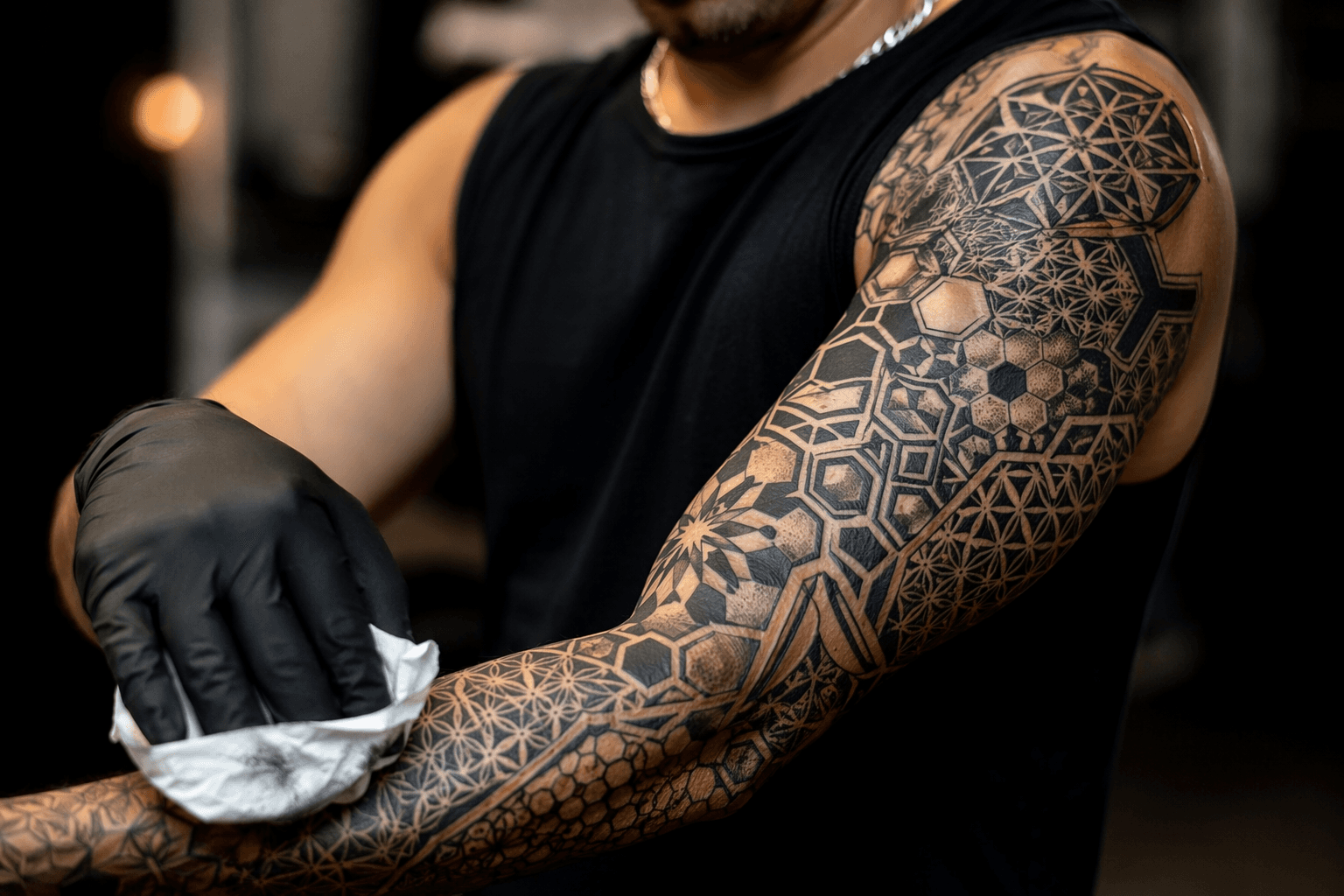
Build the sleeve as a complete lattice so the eye reads one structure instead of scattered motifs. This approach suits geometric work because symmetry, proportion, and balance carry the design more than color or heavy shading.
2. Mandala shoulder cap
Anchor the top of the sleeve with a mandala-style shoulder cap and let its symmetry set the tone for the rest of the arm. The shoulder gives the artist room to establish a central focal point before the design moves down the bicep.
3. Hexagon chain forearm
A chain of hexagons across the forearm brings crisp structure without turning the arm into a rigid grid. The repeating geometry can stay clean while still following the natural taper of the forearm.
4. Triangle and chevron stack
Triangles and chevrons create a sharp, forward-moving rhythm that feels athletic and direct. Used in layers, they give the sleeve a sense of motion while keeping the overall composition controlled.
5. Concentric ring sleeve
Concentric rings work well when you want the arm to feel centered and balanced from every angle. They also give the artist a clear way to build depth without relying on realism.
6. Dotwork gradient sleeve
Dotwork can soften the transition between hard-edged shapes and open skin, which keeps the sleeve from feeling heavy all the way around. The lighter touch also helps the geometry breathe on a larger canvas.
7. Interwoven line sleeve
Thin interlocking lines let the sleeve feel technical and precise, almost like a blueprint wrapped around the arm. This is the kind of structure that benefits from larger-scale placement, where the lines have enough room to read cleanly.
8. Blackwork block geometry
Solid black blocks give a geometric sleeve real visual weight, especially when balanced with negative space. The contrast can make the design feel bold without needing complex imagery.
9. Negative-space corridor sleeve
Leave open corridors between the shapes so the skin itself becomes part of the architecture. That breathing room is what keeps a large geometric piece from looking overcrowded.
10. Asymmetry-balanced sleeve
A sleeve does not need perfect mirror symmetry to feel intentional, and that is where the arm’s natural shape matters. Anatomy often matters more than symmetry.
11. Elbow-centered mandala
Centering a mandala around the elbow turns a difficult joint into the sleeve’s visual hinge. The design can radiate upward and downward from that point, giving the whole arm a sense of order.
12. Bicep-to-wrist taper sleeve
A tapering composition helps the sleeve follow the arm’s natural narrowing from bicep to wrist. When the shapes scale down gradually, the entire piece feels tailored instead of pasted on.
13. Contour-following sleeve
Let the geometry wrap around the curves of the arm instead of fighting them. Posture, muscle tone, fat percentage, mobility, and daily activities matter here.
14. Motion-first sleeve
Design the sleeve so it still reads well when the arm flexes, rotates, or hangs at rest.
15. Dillon Forte-style sacred geometry sleeve
A Dillon Forte-style sleeve leans into exacting sacred geometry, with precise repetition and a disciplined overall rhythm.
16. Corey Divine-style interwoven pattern sleeve
Corey Divine’s large-scale interwoven patterns point to a sleeve that feels meticulous but still expansive.
17. Polynesian-inspired geometric sleeve
Polynesian tattoo traditions developed over millennia and included highly elaborate geometric designs that could cover the whole body. Bringing that influence into a sleeve creates a strong connection between modern structure and older geometric language.
18. Iceman-inspired dot-and-cross sleeve
The Iceman’s tattoos, carbon-dated to around 5,200 years old, featured dot-and-cross markings that researchers linked to areas of strain. A sleeve inspired by that idea can use small, repeated marks to feel both precise and grounded.
19. Minimal architecture sleeve
Keep the forms spare and clean so the sleeve feels like architecture rather than ornament. This is a strong option if you want structure without crowding the arm with too many elements.
20. Dense pattern sleeve
A dense sleeve can work when the spacing is deliberate and the artist controls how the motifs stack. The key is harmony among the elements, so the density feels designed rather than jammed together.
21. Armor-panel sleeve
Panel-like geometry can give the arm the feeling of armor, which makes the piece read as assertive and organized. The design works best when each panel still connects to the next through line or shared spacing.
22. Fractal repetition sleeve
Repeating a motif at different scales gives the sleeve a layered rhythm that feels alive across the full arm. This also suits larger canvases, where the artist has more freedom to expand a single idea into a full composition.
23. Cube-and-grid sleeve
Cubes and grids bring a hard-edged, almost engineered look that suits men who want something clean and modern. The structure can stay visually strong without needing extra decoration.
24. Spiral flow sleeve
A spiral geometry sleeve uses curved motion to soften the strictness of the shapes. That contrast helps the piece feel more organic while staying inside a controlled framework.
25. Symmetry-with-breathing-room sleeve
This approach keeps the symmetry but refuses to pack every inch of skin with ink. The negative space matters just as much as the shapes, because it keeps the sleeve readable at a distance.
26. Healing-aware sleeve
Larger geometric sleeves generally take longer to heal, so the design should be planned with that in mind. Fine structure and tight spacing can look sharp, but they also demand careful aftercare and patience.
27. Body-change-resilient sleeve
Because tattoos can stretch with body changes and placement, a sleeve should be built to age with the arm. Strong geometry works best when the main lines and anchors can survive that kind of movement over time.
28. Artist-freedom composition sleeve
A sleeve gives the tattooer more artistic freedom than a small isolated symbol, and geometry benefits from that scale. When the composition is allowed to breathe, the final piece can feel deliberate rather than repetitive.
29. Modern-clean sleeve
This version keeps the lines crisp, the shapes simple, and the overall effect polished.
This article was produced by Prism’s automated news system from verified source data, official records, and press releases, then run through automated quality and moderation checks before publishing. The system is built and supervised by the people who set the standards it runs under. Read our full AI policy.
Did this article answer your question?