WescheTattoo reveals blue-purple geometric tattoo built from five centers
WescheTattoo shows a blue-purple mandala built from five centers, not ten. That smaller scaffold tightens symmetry, opens spacing, and keeps the pattern readable in color.
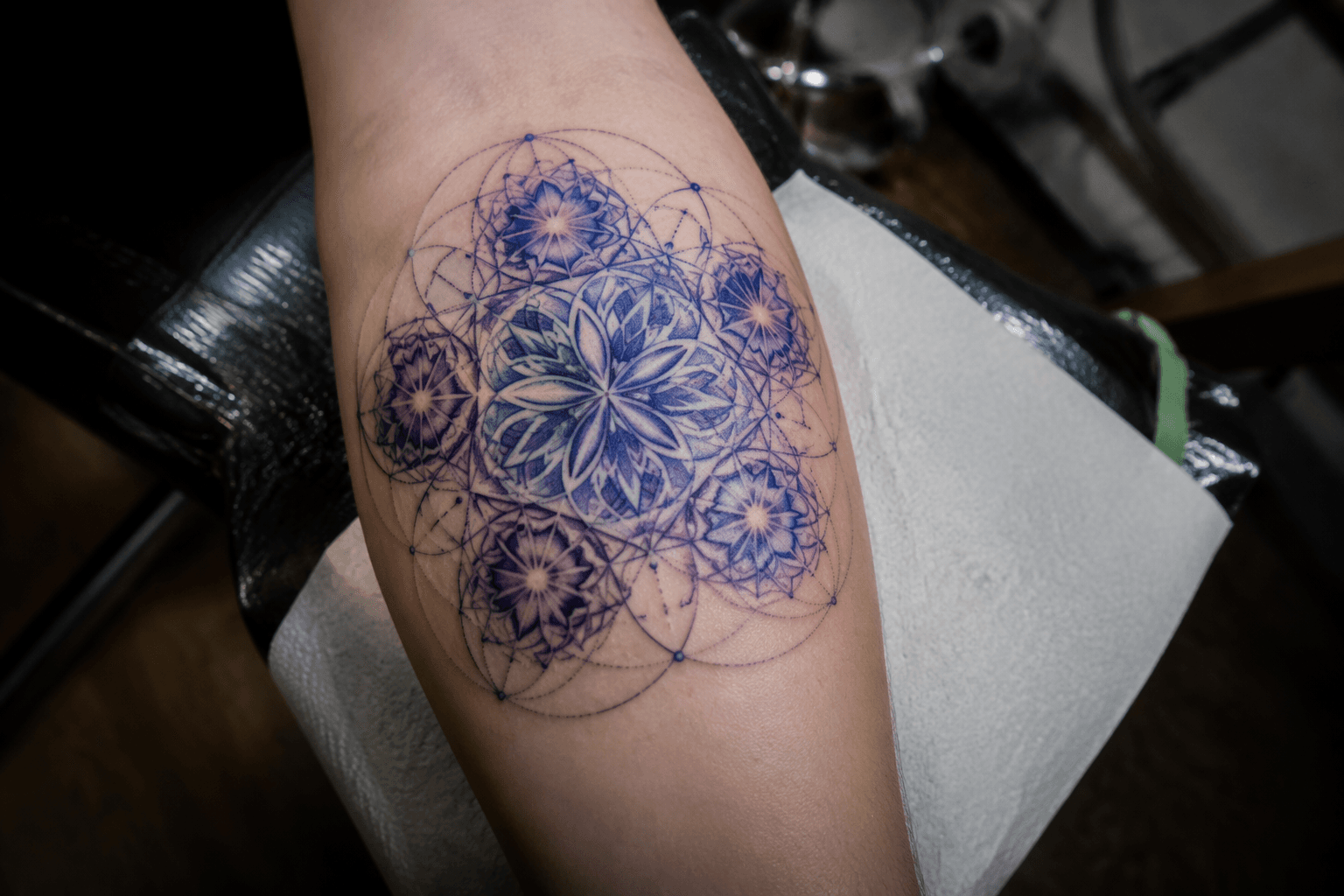
WescheTattoo’s latest video centers on a blue-purple geometric tattoo built from five centers instead of ten, and that one construction choice changes the whole read of the piece. The caption says it is the second back-to-back day, which signals a consecutive-session workflow and a design being pushed forward while the structure is still being refined.
The five-center setup matters because it changes how the eye moves through the mandala. With fewer centers, the pattern gets cleaner and less crowded, and the symmetry lands with more breathing room between rings, petals, and polygonal segments. In geometric tattooing, that extra spacing is not cosmetic; it is what keeps a mandala from collapsing into visual noise once the lines, dots, and repeated shapes stack up across the skin.
That is also why the same idea applied to the mandala itself is the most useful detail in the post. A ten-center build can create denser radial repetition, but it can also make the interior read busier, especially when the design wraps over the curves of the back. Five centers give the artist more control over the spread of the pattern and make the structure easier to place so the design resolves on the body instead of just on a flat stencil or sketch.
The blue-and-purple palette adds another layer to that decision. A lot of geometric work still lives in black and gray, especially when artists are leaning on dotwork and linework for maximum sharpness. Here, color does different work: it softens the harder framework, helps separate overlapping sections of the mandala, and gives the piece depth without blurring the geometry. The contrast between the two hues also helps the centers read distinctly, which matters when the whole design depends on counted repetition.
What makes the post useful is that it feels like a field note from the bench, not just a finished glamour shot. It shows the kind of micro-choice that determines whether a large geometric tattoo stays legible over time: fewer centers, cleaner spacing, and a color plan that supports the symmetry instead of fighting it. In a back piece like this, five centers do more than simplify the math. They give the mandala room to breathe.
This article was produced by Prism’s automated news system from verified source data, official records, and press releases, then run through automated quality and moderation checks before publishing. The system is built and supervised by the people who set the standards it runs under. Read our full AI policy.
Did this article answer your question?