Advanced Needle, Pigment, and Stencil Techniques for Precision Geometric Tattoos
Mastering geometric tattoos means controlling every variable from needle grouping to stencil projection - artists who document healed results at 12 months build the most durable reputations.

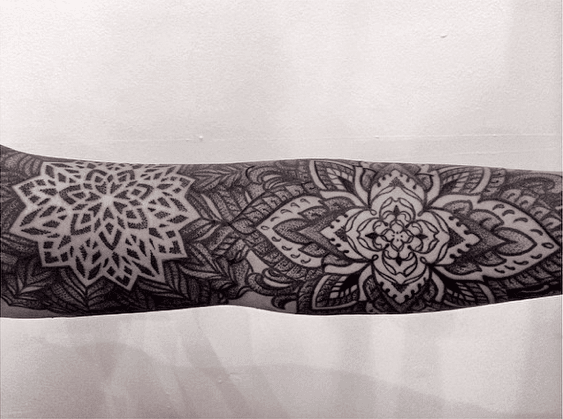
You're not starting clean. Every geometric piece arrives on skin that curves, scars, stretches, and heals differently than the flat reference you drafted. The difference between a mandala that holds its precision for years and one that blurs into gray fog within eighteen months comes down to decisions made before the machine even touches skin: which needle configuration, which pigment, how the stencil was projected, and how many passes you allowed the tissue to absorb. This guide consolidates the workflow decisions that matter most for geometric, sacred-geometry, and precision dotwork work.
Needles: Choosing Configurations That Hold a Line
Geometric tattooing lives and dies by edge consistency. For crisp, stable outlines, a tighter liner grouping in the 3–7RL range is the reliable choice, calibrated to the client's skin type. Thicker, oilier skin can handle slightly larger groupings without bleeding; thinner or drier skin rewards a more conservative needle count.
For ultra-fine architectural lines, single-needle or 3RL configurations are the tools of choice, but they demand disciplined execution: run slowly, maintain controlled hand speed, and never drag. Dragging is what turns a razor-sharp vector into a scratchy, uneven deposit. Machine tuning matters just as much as needle selection. Whether you're running a coil or rotary, inconsistent stroke length or erratic hand speed produces variable line depth and healed width that no amount of touch-up fully corrects. Build the habit of checking your tuning before every session, not just when something goes wrong.
Pigment: Stability, Carbon Blacks, and Dilution Strategy
Not all blacks are equal under the skin. For intense blackwork that holds its depth long-term, carbon-based blacks and high-quality iron-oxide formulations pack reliably and resist premature shift to gray. Cheap filler pigments are the single most common reason a bold geometric piece loses its contrast within two years. Use pigments with documented stability and supplier transparency; if you can't trace the batch, that's a signal worth heeding.
Dotwork gradients require a different approach entirely. Rather than loading a single heavy pass to suggest shadow, build controlled gray tones through dilution adjustments and layered dot passes. Each pass adds density incrementally, giving you fine control over the gradient curve and reducing the risk of overworking tissue. This method also distributes trauma more evenly across the session, which matters when you're covering a large field of stippling.
Stencil Strategies: Projecting Flat Geometry onto a Three-Dimensional Surface
A geometric stencil that looks perfect on paper can fall apart the moment it wraps around a shoulder or chest. Custom projection means translating planar geometry into a body-projected stencil that compensates for anatomical curves. For large mandalas or full chest pieces, measurement marks and central axes are non-negotiable reference points; they're what allow you to realign if the stencil shifts or needs reapplication.
Complex sleeves introduce a registration problem that a single stencil can't solve. The solution is a multi-stencil approach: produce a series of interlocking stencils (anchor, mid, and finish) designed to be applied sequentially across sessions. Each stencil locks into the previous set of reference points, maintaining alignment across the entire sleeve even when weeks or months separate appointments. This is the kind of planning infrastructure that separates artists who can execute large-scale geometric work from those who struggle to keep it cohesive.
Layering Passes: Building Dotwork from Structure to Texture
The sequence of passes is a structural logic, not just an aesthetic preference. Begin with primary lines and structural anchors to establish the skeleton of the piece. From there, lay primary dotwork fields to fill the compositional space, then complete the work with fine texture layers that add depth and tactile complexity. Rushing the sequence by jumping to texture before the structure is solid produces muddiness that becomes more visible as the piece heals.
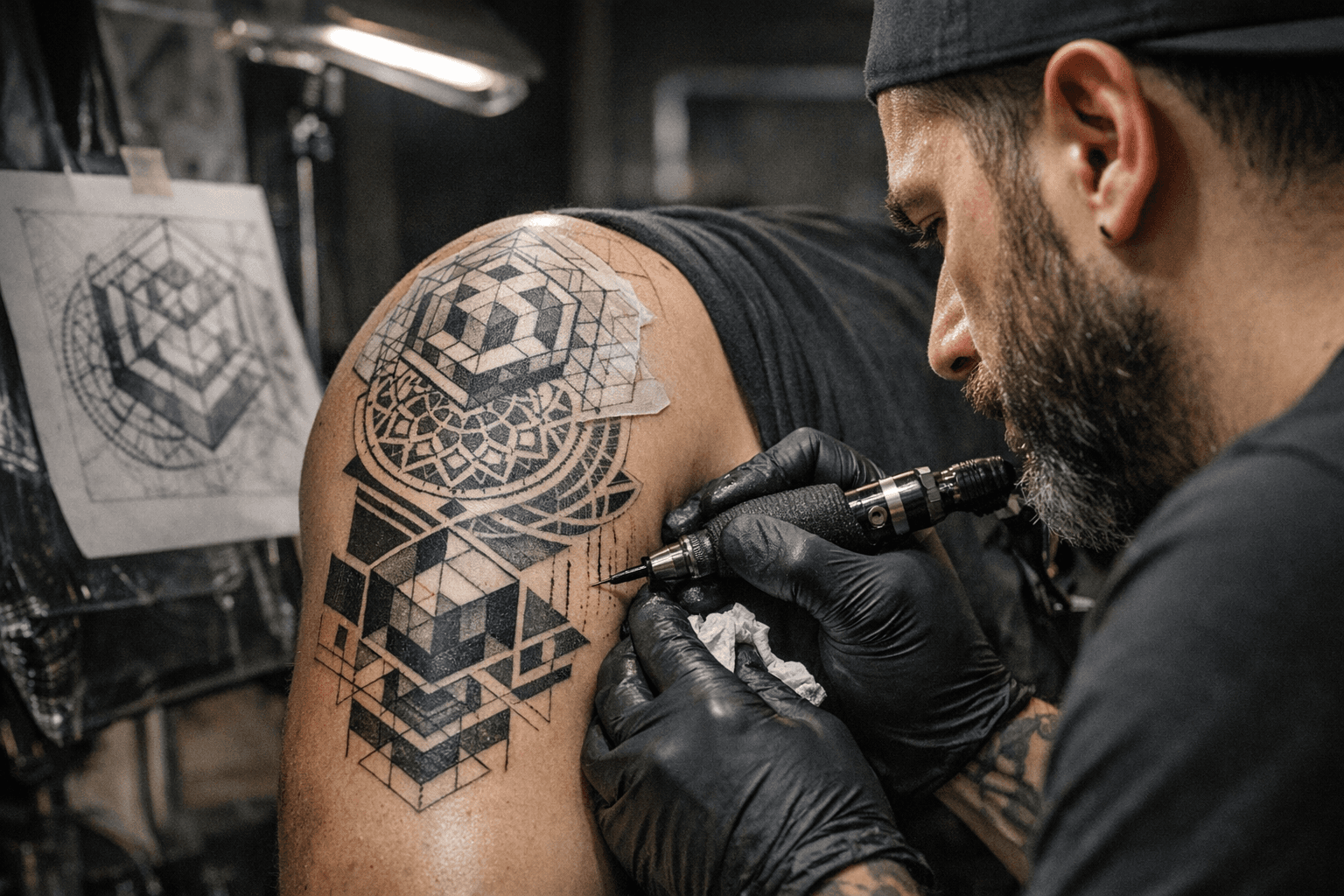
Inter-pass timing within a single session deserves the same deliberate attention. Excessive layering without rest periods creates compounding swelling that distorts tissue and compromises pigment placement accuracy. If density requires multiple passes in one session, allow short rest intervals between them and monitor tissue reaction. Puffed, reactive skin is telling you it needs time, and pushing through that signal rarely produces better results.
Client Skin and Healing Variables
No two clients present the same canvas. Thicker, oilier skin accepts pigment differently than thin, dry skin, which means needle depth and machine settings need to be tailored per client, not locked to a universal default. Treat your intake process as a technical assessment: examine the skin you're working on, ask about healing history, and adjust accordingly.
Scar tissue and stretch marks require pre-planned strategy rather than improvisation. Map out cover-up approaches or compensatory contrast work before beginning, and make healed examples of similar work central to the client consultation. A client who understands how scar tissue affects healing outcomes is a better collaborator and has more realistic expectations about the result.
Documentation, Traceability, and Safety
Keeping records is professional discipline with real protective value. Log ink brands, lot numbers, and needle types used per client. If a product recall occurs or a client experiences an adverse reaction, that documentation is the difference between a traceable response and a guessing game. Source pigments and needles from trusted suppliers, verify lot testing where possible, and follow manufacturer recommendations for cold-chain or storage conditions. These aren't bureaucratic formalities; they're the foundation of a practice that can stand behind its work.
Portfolio Discipline and Pricing for Precision Work
Fresh photos are almost useless as quality evidence in this discipline. What demonstrates real craft is a healed sequence: images taken at one, six, and twelve months after completion. That sequence shows whether your lines held, whether your blacks stayed rich, and whether your dotwork gradients maintained their gradation. Curating that archive is one of the most powerful things you can do for your reputation as a specialist.
Pricing precision geometric work at commodity rates is a structural mistake. The planning hours involved in stencil development, projection, and layout for a complex piece are real labor and should be reflected in higher hourly rates or itemized as part of the total cost. Clients who understand the technical investment behind precision work are generally willing to pay for it; the conversation just needs to happen.
Continuous Learning as Professional Infrastructure
Geometric tattooing rewards cross-pollination. Study architectural drafting, pattern-making, and optical symmetry; the vocabulary of those disciplines maps directly onto the problems you solve on skin every day. Practice new approaches on synthetic skins before committing them to clients, collaborate with peers for critique, and treat this primer as a living checklist rather than a fixed endpoint. Equipment improves, pigment technology evolves, and the artists who keep updating their technical foundation are the ones whose work continues to improve decades into their careers.
Know something we missed? Have a correction or additional information?
Submit a Tip