INKSOUL guide highlights precise matching geometric couple tattoos
Matching geometric couple tattoos work when the design is built for two bodies, not just two names. The payoff comes from precision, placement, and knowing when identical is the wrong answer.

Two very different directions at once
The smartest part of INKSOUL’s couple-tattoo guide is that it treats matching tattoos like a design problem, not a romance shortcut. The real choice is not whether to get something “matching,” but whether the pair should be identical, mirrored, or complementary, because those three options do very different work on skin.
That matters most in geometric tattoos, where one off line or one awkward angle can ruin the whole read. INKSOUL’s point is simple and useful: a good concept is not enough. The tattoos have to hold up as a pair, and each piece still has to look deliberate on its own.
Why geometric tattoos raise the bar
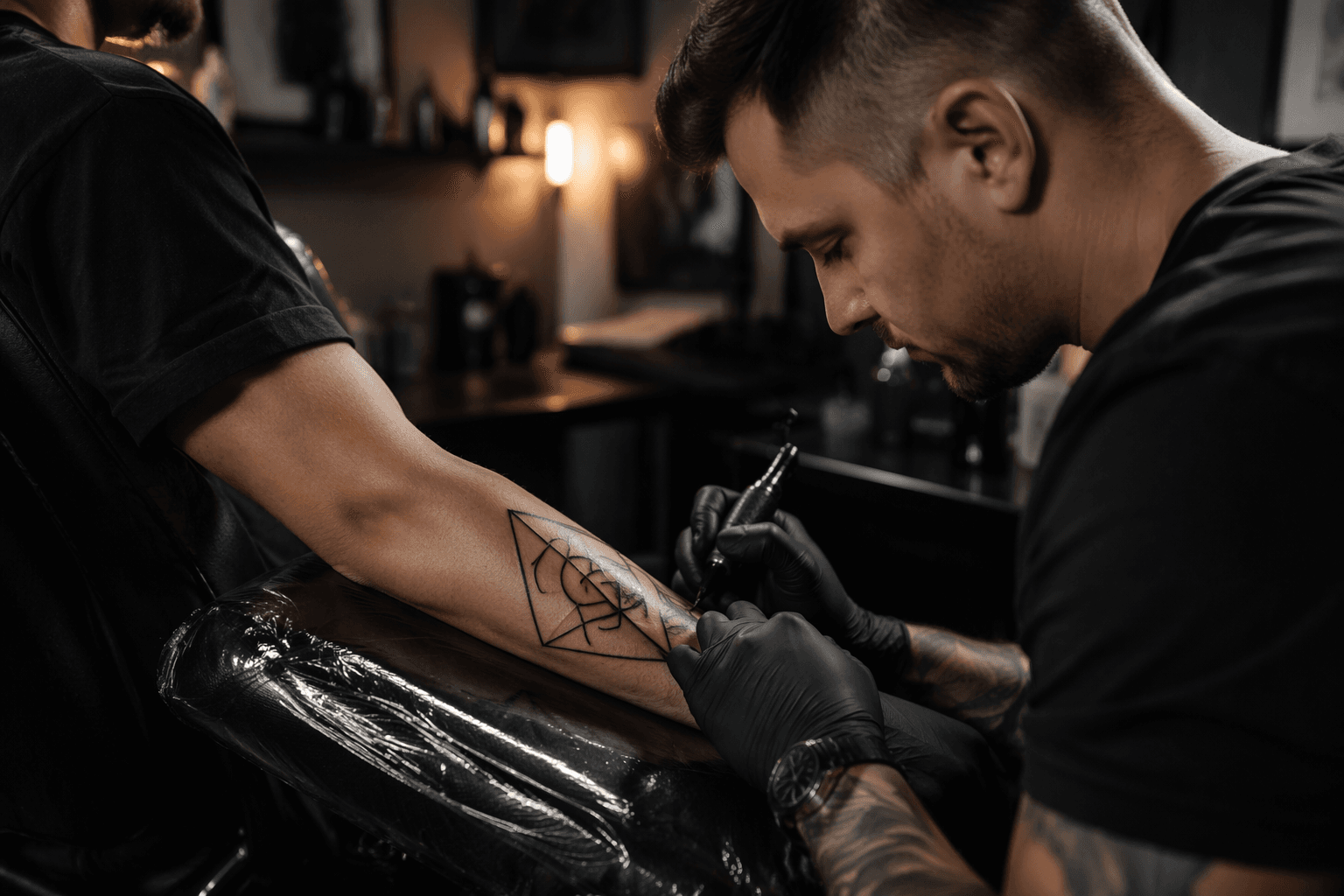
Geometric work is unforgiving because line clarity is the design. A mandala, a coordinate grid, or a split animal shape does not have a lot of visual noise to hide behind, so every decision about line work, shading, and placement shows up immediately. That is why the 2026 aftercare-focused geometric tattoo coverage is so blunt about healing: imperfections are harder to hide when the whole tattoo depends on symmetry and clean edges.
That same precision is also what gives geometric couple tattoos their payoff. When the lines land correctly, the tattoos feel coordinated without looking copied and pasted. When they miss, the mismatch is obvious from across a room.
The designs that actually make sense for pairs
INKSOUL leans into designs that keep the geometric structure but avoid the tired, obvious couple-tattoo playbook. The guide specifically highlights minimalist fine-line coordinates, sun-and-moon mandalas, geometric animal halves, constellation alignments, connected fingerprints, negative-space puzzle pieces, and abstract silhouettes. That mix is telling: each idea gives the pair a shared visual language without forcing the same image onto both people.
Coordinates and dates also show up in 2026 couple-tattoo coverage from Tattoodo, which frames the best versions as meaningful paired designs that still preserve individual style. Fabbon’s 2026 trend read lands in the same place, arguing that couple tattoos are moving toward fresh, modern aesthetics without throwing out the romance entirely. In practice, that means the strongest pieces are often the ones that can be read alone first and as a pair second.
Identical is not always the best answer
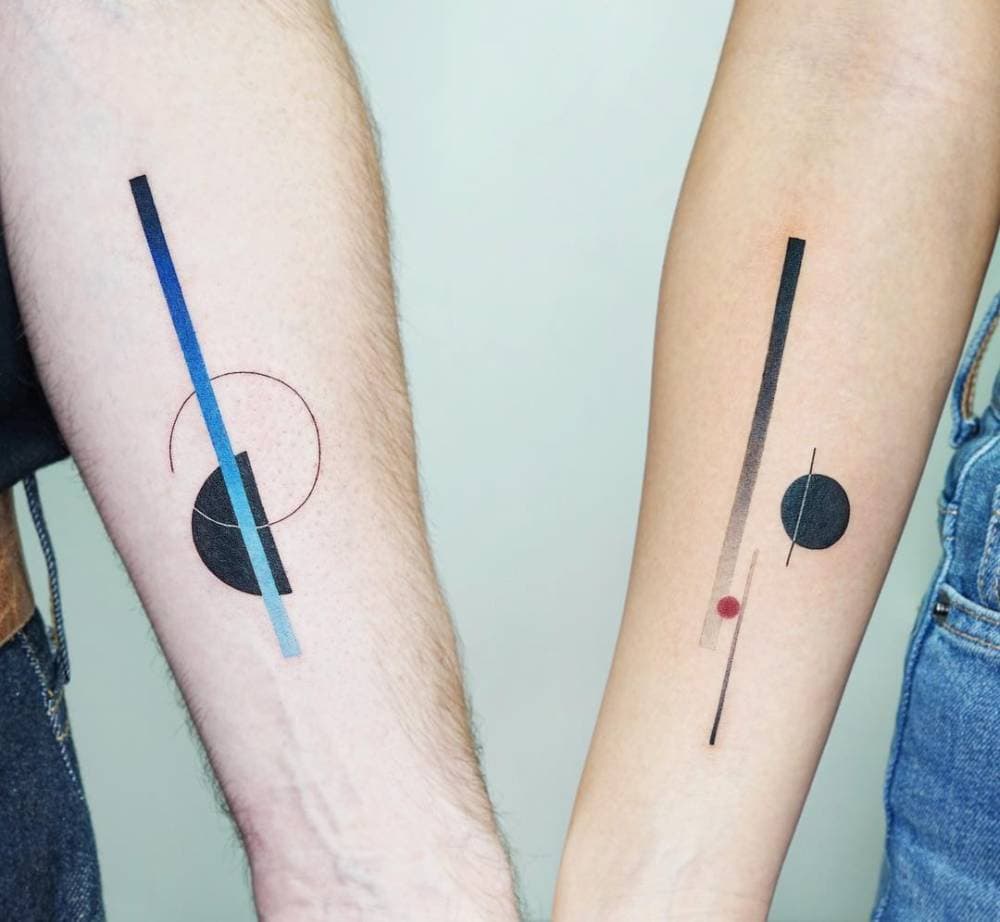
This is where a lot of couple tattoos go wrong. Identical placement can look neat in a sketch, but it can fall apart on two different wrists, forearms, or shoulder angles because bodies are not interchangeable. INKSOUL is smart to call out mirrored wrists and complementary forearm pieces, because those placements make the relationship between the tattoos part of the design itself.
A split geometric animal is a good example. On paper, it is one image divided in half. On skin, it only works if both halves are built around the bodies that wear them, with line weight and negative space adjusted so the pair still reads cleanly from a distance. The same is true for matching mandalas: a pair can be identical in concept but need slight placement changes so the central geometry lands where it should on each person.
Stencil quality is not a backstage detail
INKSOUL’s most practical point is also the least romantic: modern stencil printing has changed what is possible. Specialized thermal and digital printers make symmetry more achievable than it used to be, which is a huge deal for matching geometry. If the stencil is sloppy, the tattoo will inherit that slop, and no amount of sentiment fixes a crooked axis.
- whether the lines mirror correctly
- whether the placement matches the anatomy
- whether the final piece feels intentional instead of improvised
For geometric couple tattoos, stencil quality affects three things at once:
That is why execution matters as much as concept. A precise design dropped onto the wrong part of the body can look weaker than a simpler idea placed with care.
What the 2026 trend line is really saying
The broader 2026 trend coverage points in the same direction as INKSOUL. Tattoodo’s couple-tattoo guide emphasizes coordinates, dates, and paired designs that maintain individual style. Fabbon says the category is evolving toward fresh, innovative looks that blend modern aesthetics with old romance. At the same time, fine-line trend coverage says the style is becoming more refined, detailed, and technically precise, which lines up perfectly with the current appetite for discreet, highly personal tattoos.
The tattoo market data gives that shift some scale. One 2026 market report estimates the global tattoo market at USD 2.7 billion, with a projection of USD 6.46 billion by 2035. The same analysis puts millennial adoption at 46 percent and Gen Z at 32 percent, which helps explain why custom, design-led tattoos are getting so much attention. There is real money and real demand behind the move toward precision work.
Geometry has the symbolism built in
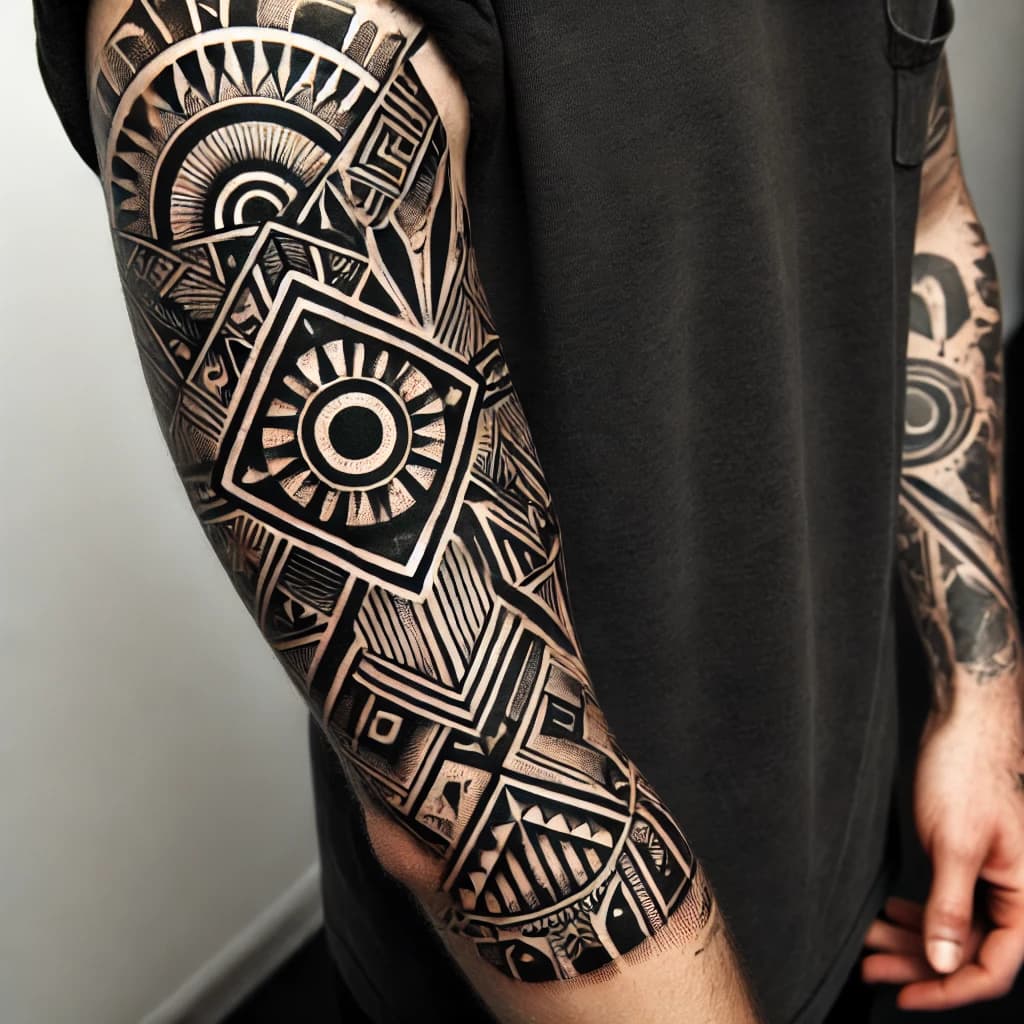
Geometric tattoos are not just clean shapes. The style has its own vocabulary, and sacred geometry is a major part of it. The 2026 geometric-tattoo coverage from The Apollo and other guides points to mandalas, Metatron’s Cube, the Flower of Life, Sri Yantra, and Platonic solids as core forms, while Tatship ties geometric patterning to historical roots in Islamic art and Native American designs and connects the style to spirituality.
That history matters when you are designing for two people. A pair of mandalas or a coordinate-based composition can carry intimacy without losing structure, because the language already exists in the geometry. It is not a stretch to say these tattoos work best when they feel mathematically linked rather than sentimentally overloaded.
The most common mistake is trying to force sameness
The strongest couple tattoos in this category do not pretend two bodies are the same. They use symmetry, mirroring, or shared pattern language to create a connection that survives real-world placement. That is the point INKSOUL gets right and the reason its guide is so useful for geometric tattoo collectors: the design has to survive the stencil, the skin, the healing, and the fact that the two tattoos live on different people.
That is the real split in geometric couple tattoos now. One path is a generic matching symbol that looks fine for a day and forgettable forever. The other is a precise, body-aware design that treats symmetry as craft. The second one is harder to pull off, but it is the only one that earns its place on both skins.
This article was produced by Prism’s automated news system from verified source data, official records, and press releases, then run through automated quality and moderation checks before publishing. The system is built and supervised by the people who set the standards it runs under. Read our full AI policy.
Did this article answer your question?