Minimalist line work drives 2026 geometric tattoo trend
Geometric tattooing is splitting in two: bolder builds still work, but 2026 belongs to tiny line-based pieces that age well only when the needle work is exact.
The new geometric split is easy to spot
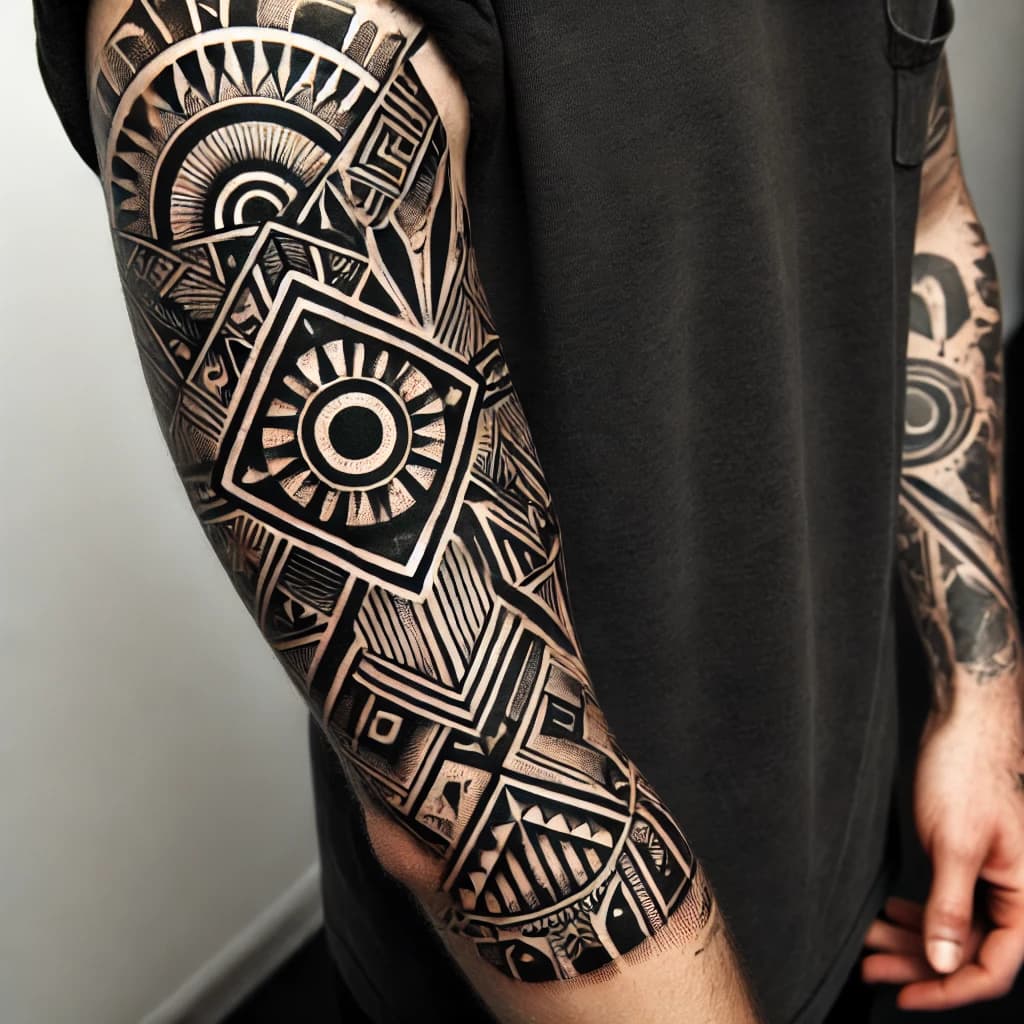
Geometric tattooing is moving in two directions at once. On one side, there are still dense mandalas, layered line systems, and bigger compositions built to dominate skin; on the other, minimalist line work is pulling the style toward smaller, lighter marks that read as precise rather than loud. That shift is what makes the current moment so useful for anyone booking geometry now: the decision is no longer just what looks good on paper, but what can survive as a clean structure on skin.
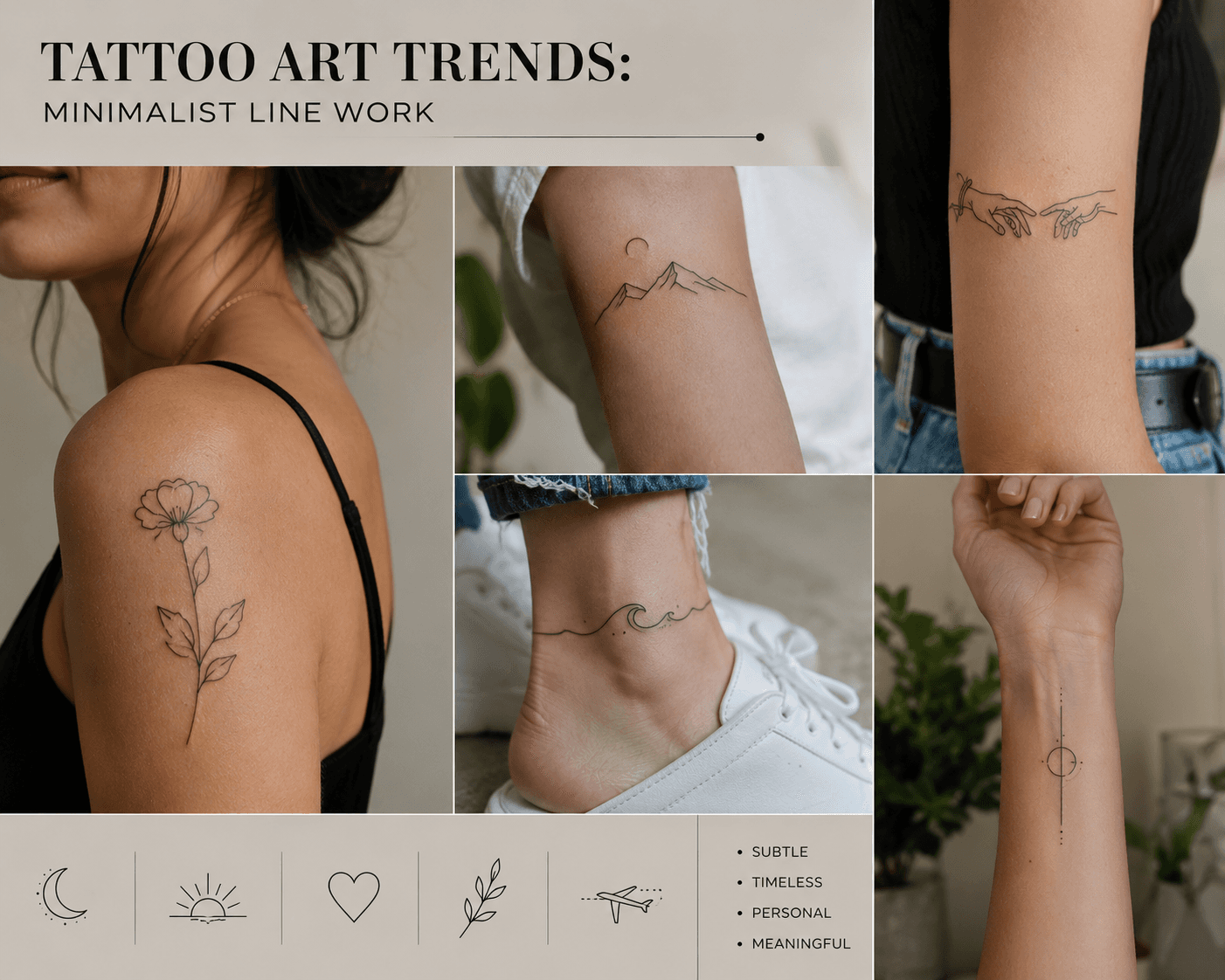
The strongest reader-service takeaway is simple: minimalism is not a watered-down version of geometric tattooing, it is one of the ways the style is crossing deeper into the mainstream. Tiny symbols, single-line faces, simple geometry, and delicate outlines are showing up because they carry meaning without visual weight. For first-time clients, professionals who need discreet body art, and collectors who want symbolism without a large commitment, that lighter approach is becoming the default entry point.
Why fine line is winning inside geometric work
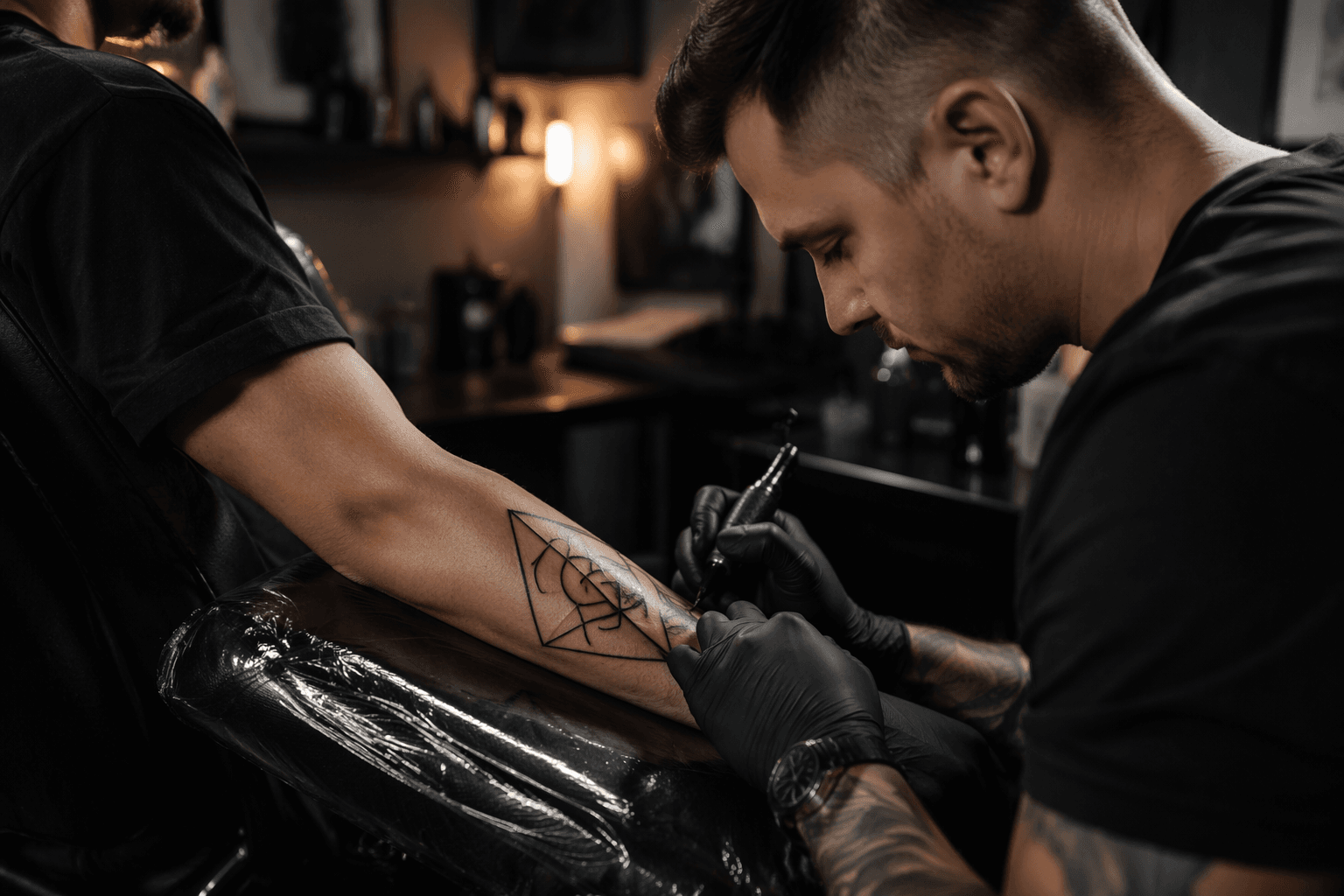
The reason minimalist geometry is spreading is technical as much as aesthetic. Fine-line tattooing relies on thin needles, and in some cases single-needle techniques, to build hairline marks with very little room for error. That makes a small geometric piece look deceptively simple on a screen, even though the actual application demands disciplined hand control, consistent pressure, and a clean sense of spacing.
Tattoodo’s fine-line framing helps explain the appeal: round liner needles, or sometimes a single needle, create lines that stay delicate rather than heavy. That matters because geometric tattoos depend on clarity. If the lines wobble, the shape loses its edge; if the spacing closes up, the whole design can stop reading as geometry and start looking like an ink blur. Minimalism is not replacing precision here, it is exposing how much precision the style always required.
Where the overlap with geometry is strongest
The overlap between minimalist line work and geometric tattooing is sharpest in pieces that use repetition, breathing room, and the body’s own contours. Single-needle mandalas, negative-space patterns, and clean shape repetition all fit the same lane because they rely on line discipline instead of heavy shading. A small set of circles, triangles, or repeated arcs can look elegant when the spacing is exact and the placement works with the wrist, collarbone, ankle, or forearm.
That placement piece is not a minor detail. Revlox’s examples point to wrists, fingers, ribs, collarbones, ankles, behind the ear, and along the arm because those zones let a compact shape sit naturally on the body. For geometric collectors, that is the difference between a tattoo that feels integrated and one that looks pasted on. The most successful small designs use the body as part of the composition, not just as a canvas.
What ages well, and what loses structure fastest
If you want a geometric tattoo that stays readable, the safest bet is a design with a few decisive lines, enough negative space, and forms that do not depend on microscopic detail. Clean shape repetition tends to hold up better than intricate micro-patterns because the eye can still recognize the structure even if the lines soften slightly over time. Larger minimal pieces also give the artist more room to place the lines with precision.
The fastest losers are usually the tiniest, most crowded versions of the style. Hairline grids, packed symbol clusters, and ultra-dense patterns are more vulnerable because their identity depends on very fine spacing. Once those spaces soften, the geometry can collapse faster than a bolder tattoo would. That is the practical tradeoff behind the minimalist boom: the lighter the line, the more the execution has to carry the design.
The safety questions worth asking before booking
Minimalist work may look gentle, but the safety and hygiene standards are the same as any tattoo. The U.S. Food and Drug Administration considers tattoo inks cosmetics, says tattoos are permanent designs created by inserting ink into skin, and issued final guidance in 2024 aimed at reducing contaminated ink conditions. The Centers for Disease Control and Prevention has also documented tattoo-associated nontuberculous mycobacterial skin infections linked to contaminated inks or nonsterile water, and it recommends sterile ink and sterile water.
That is why the booking conversation should go beyond style references. Ask how the artist handles needle setup, ink sourcing, and sanitation for fine-line work, because body artists use sharps and are covered by OSHA bloodborne pathogen standards. For geometric tattoos, where thin lines and tight spacing can expose every mistake, hygiene and technical control are part of the design process, not separate from it.
- What needle setup will you use for the smallest lines?
- How will you keep the spacing crisp in a compact geometric piece?
- Is this design better at a larger size so the structure can breathe?
- Which placement will work best with the body’s natural line?
- What aftercare do you want for fine-line work to preserve the edges?
Before you sit down, the useful questions are practical ones:
A style with older roots than the current trend cycle
The rise of minimalist geometry may feel new, but the visual language behind it is old. Smithsonian Magazine notes that Ötzi the Iceman carried 61 tattoos, and that ancient Polynesian tattoo traditions often featured elaborate geometric designs developed over millennia. That history matters because it shows geometric tattooing has always been about structure, rhythm, and meaning, even when the tools and aesthetics changed.
Seen that way, 2026 is not a break from geometric tattooing so much as a reset. The current lean toward restraint, precision, and subtle symbolism is making the style easier to wear, easier to place, and easier to adapt across the body. The winning pieces are the ones that know exactly how little they need to say, then say it with lines that stay true.
This article was produced by Prism’s automated news system from verified source data, official records, and press releases, then run through automated quality and moderation checks before publishing. The system is built and supervised by the people who set the standards it runs under. Read our full AI policy.
Did this article answer your question?