African Geometric Body Markings Carried Identity and Lineage, Not Just Beauty
Researcher Tobi Efunnowo's new deep-dive confirms that Yoruba Ila and Igbo Uli weren't decorative trends — they were functional identity systems, and today's tattoo studios are borrowing them without reading the manual.
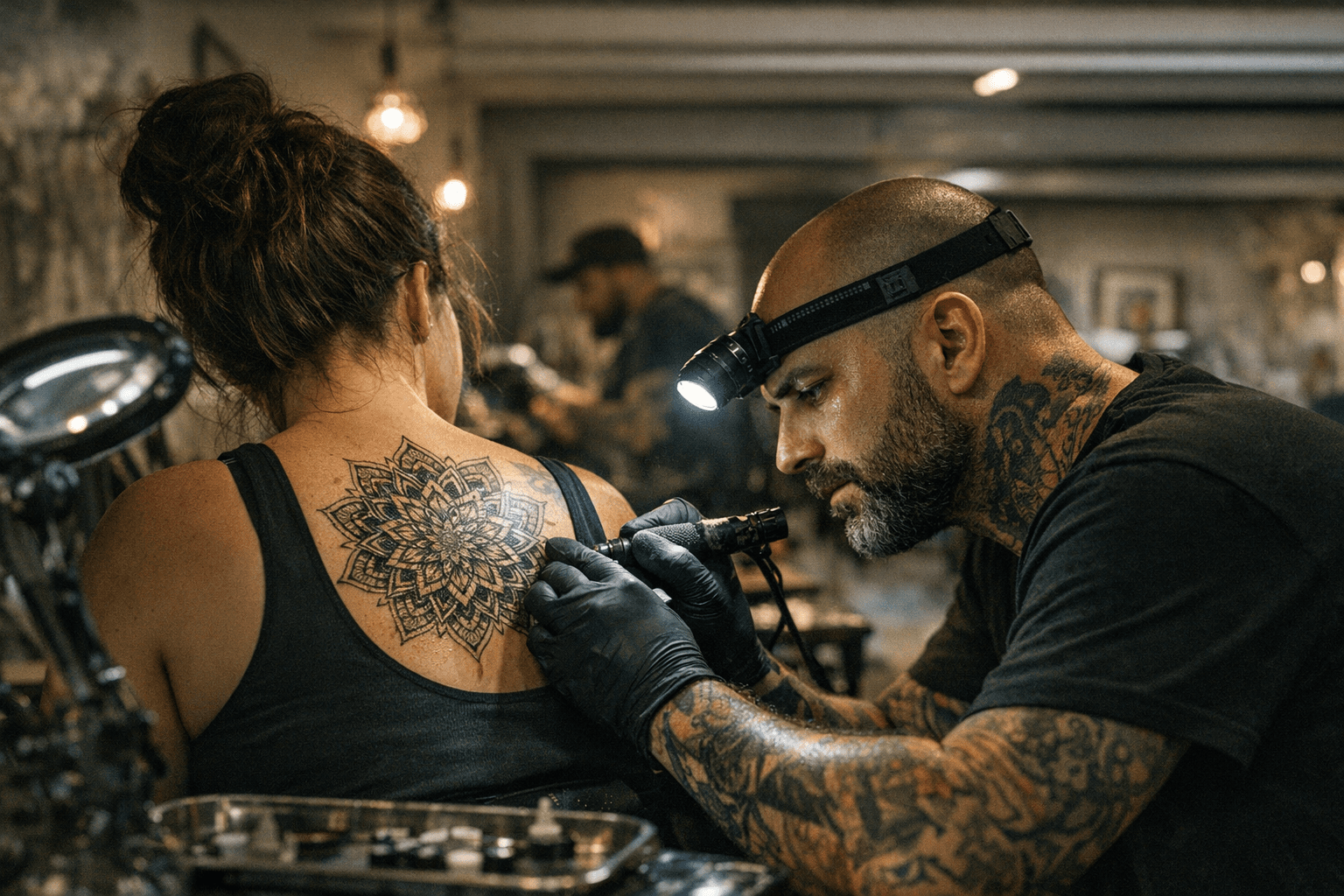
Tobi Efunnowo's feature, published just days ago, lands like a direct challenge to every geometric tattoo artist who has ever sketched a "tribal-inspired" sleeve without stopping to ask where that geometry came from. The piece does what the broader tattoo industry rarely bothers to do: it names specific traditions, names what was actually at stake in them, and follows the thread of meaning all the way to the festival stall and the studio booking form. If you work in geometric styles, or if you've ever requested one, this is the conversation you didn't know you were already part of.
The Ila: a Passport Written in Skin
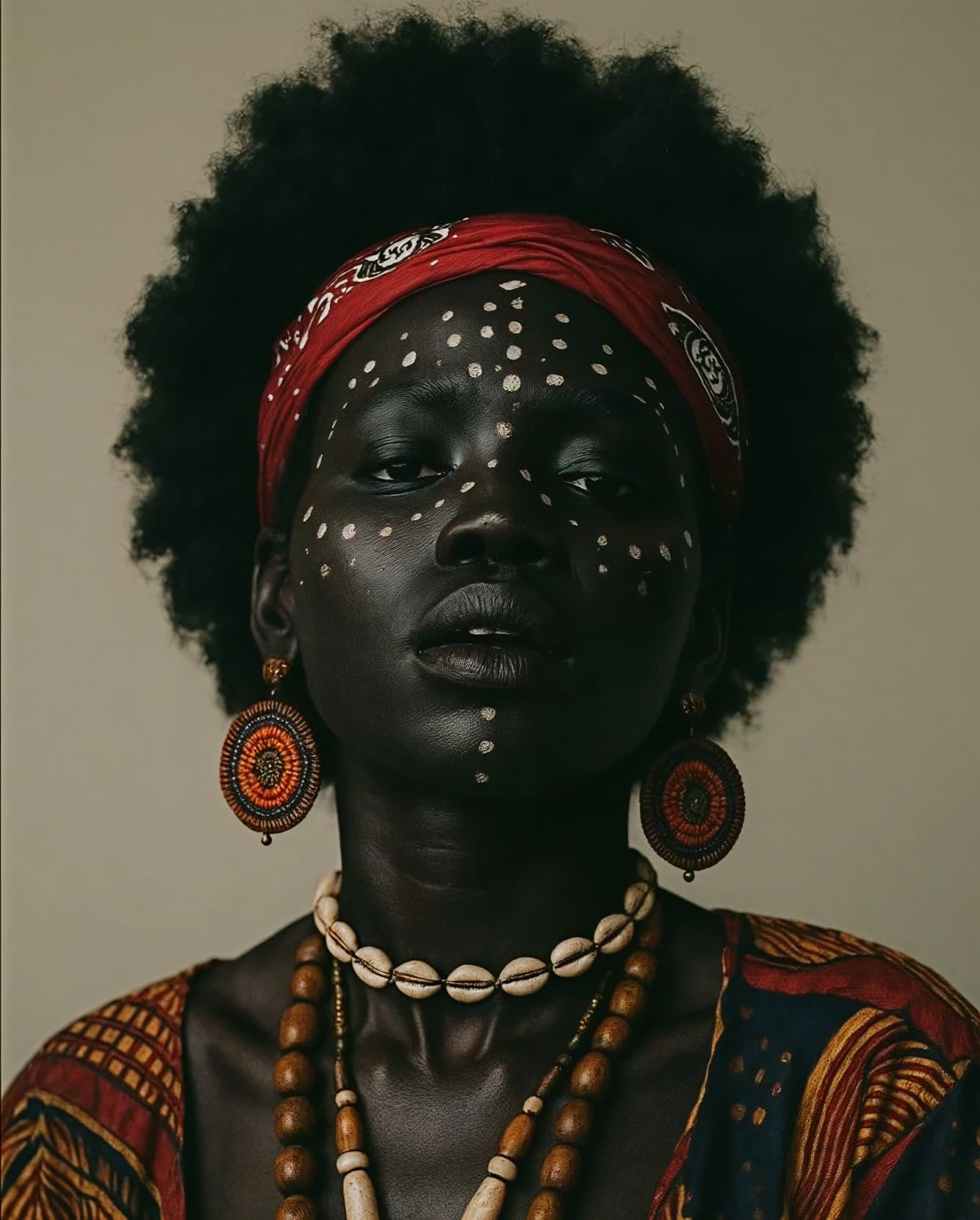
The Yoruba people, predominantly found in the southwestern region of Nigeria, refer to their scarification markings specifically as "Ila" rather than simply "scarification." These marks were made by cutting the skin with razor blades or sharp knives, then applying a native dye or black paste, usually ground charcoal, both to stain the marks and staunch bleeding. That process wasn't cosmetic; it was administrative. The primary function was identification of a person's tribe, family, or patrilineal lineage, which in a pre-documentary world made the face itself the record. Efunnowo frames this explicitly as an identity passport: your hometown, your family line, your belonging, all legible to anyone who could read the marks.
The primary function of tribal marks is for identification of a person's tribe, family, or patrilineal heritage, with secondary functions including symbols of beauty and Yoruba creativity. That hierarchy matters enormously. Beauty was a secondary outcome, not the point. When a geometric motif that began as kin-record gets reprinted in a tattoo catalog under "African-inspired geometry," the entire hierarchy gets flipped: beauty becomes the primary function, and the lineage system behind it disappears entirely.
Uli: the Geometry That Refused Permanence
The Igbo Uli tradition complicates the picture further, and usefully so. Uli are the curvilinear traditional designs drawn by the Igbo people of southeastern Nigeria, generally abstract and consisting of linear forms and geometric shapes, though with some representational elements. Here's the detail most tattoo adaptations miss entirely: designs last approximately eight days. Uli was never meant to be permanent. It was a living, periodically renewed practice, applied to the body and to compound walls in cycles tied to ritual and social occasion.
Field research conducted in Awka District between 1910 and 1911 documented Uli wall paintings across multiple towns in the region, including Agulu, Agukwu Nri, Nibo, Nise, and Amansea. The motifs themselves have deep roots: some motifs in the Uli repertoire were used as decoration on footed bowls unearthed at Igbo-Ukwu along with famous bronzes. Igbo-Ukwu pottery dates back to the 9th century AD, according to archaeologist Thurstan Shaw, suggesting Uli art began around that same period.
When a tattoo artist reproduces a Uli motif as permanent ink, they've already made a fundamental category error: the mark was designed to be impermanent, renewed, living. Fixing it forever in skin is not an homage to the tradition; it's a structural contradiction of it.
What Colonial Law Did to These Practices
Understanding why these traditions feel "ancient" and "lost" to outside observers requires one additional layer of history. Scarification in Africa expresses clan identity, status within a community, passage into adulthood, or spiritual significance. European colonial governments and European Christian missionaries criminalized and stigmatized the cultural practices of tattooing and scarification in Africa; as a consequence, the practices underwent decline, ended, or continued to be performed as acts of resistance. The modern tattoo industry's casual absorption of "tribal geometry" is not happening in a neutral historical vacuum. It's happening in the aftermath of suppression. That context changes the ethical weight of borrowing significantly.
The Nsukka Bridge: When Insiders Adapt Their Own Tradition
One instructive counter-example is the Nigerian Nsukka group, which in the decades following independence began consciously drawing on Uli forms as the foundation for a contemporary visual language. Artists in the group included El Anatsui, Olu Oguibe, and Uche Okeke. Uche Okeke drew inspiration for a new visual language from Uli, an Igbo female body and wall painting tradition based on sinuous abstract forms derived from nature. Okeke learned the technique from his mother, a renowned Uli draughtswoman. The difference between Okeke's adaptation and an anonymous "tribal geo" sleeve is not merely academic: Okeke was working from within the tradition, through family transmission, in deliberate dialogue with its history and meaning. That's a model worth studying, not just admiring.
Myth vs. Fact: The "Tribal" Label
The single most damaging shorthand in this conversation is the word "tribal." Here's the myth-vs-fact version worth sharing:
Myth: "Tribal geometry" is a universal aesthetic category, a timeless decorative style with no specific cultural owner.
Fact: There is no single "tribal geometry." Yoruba Ila, Igbo Uli, and the dozens of other African marking traditions each carried distinct communicative systems tied to specific communities, occasions, and social roles. Lumping them under "tribal" collapses centuries of differentiated cultural meaning into a generic mood board. As Efunnowo's piece makes clear, these were not decorative afterthoughts; they were functional systems, sometimes political, sometimes spiritual, always social.
The Respect Checklist
For artists working in geometric or sacred-geometry styles who draw on cultural motifs, Efunnowo's reporting points to a concrete set of questions and steps. Run through these before accepting a booking or sketching a design:
- Identify the specific origin. "African-inspired" is not a source. Which culture, which tradition, which region? Yoruba Ila and Igbo Uli are distinct systems with different rules, meanings, and communities of practice. Treating them interchangeably is like confusing a Japanese family crest with a Polynesian navigational tattoo.
- Research the original function. Was this mark a rite-of-passage marker? A lineage indicator? A spiritual protection sign? That function shapes whether reproducing it as decoration is a neutral act or something more loaded. Uli's impermanence is itself a piece of meaning: ask whether permanent ink is the right medium at all.
- Ask your client about provenance. Is this connected to their own heritage? Are they commemorating a family or cultural identity, or selecting a visual they found appealing? Those are different conversations, and they lead to different decisions about how or whether to proceed.
- Credit publicly and specifically. If you post the work, name the tradition. "Inspired by Igbo Uli body painting" is more honest and more useful to your audience than "geometric tribal piece." It creates a trail back to the source and positions you as an artist who knows what they're working with.
- Avoid the generic boho framing. Presenting borrowed cultural motifs as universal or timeless erases the communities that created and sustained them. The visual form did not appear fully formed in a mood board; it came from somewhere, and that somewhere deserves to be named.
- Engage with living practitioners. Several Nigerian artists continue to work with Uli forms, and contemporary Yoruba scholars are actively publishing on Ila. These are not closed archives; they are living traditions with living stewards. Finding and crediting those voices is not optional due diligence; it's basic professional practice.
The geometric tattoo community is arguably better positioned than most style communities to have this conversation seriously. Geometric work already demands precision, intentionality, and research into the formal logic behind a design. Applying that same rigor to cultural provenance is not a leap; it's just an extension of the discipline you're already practicing. The marks that Efunnowo documents were built on exactly that kind of exactness: every line meant something specific to someone specific. That's a standard worth matching.
Know something we missed? Have a correction or additional information?
Submit a Tip