This Tattoo Studio Was Built to Break the Industry’s Worst Habits
One degree off-axis in a mandala ruins it permanently. Love Ink Tattoos in King, NC was built to make sure that never happens.
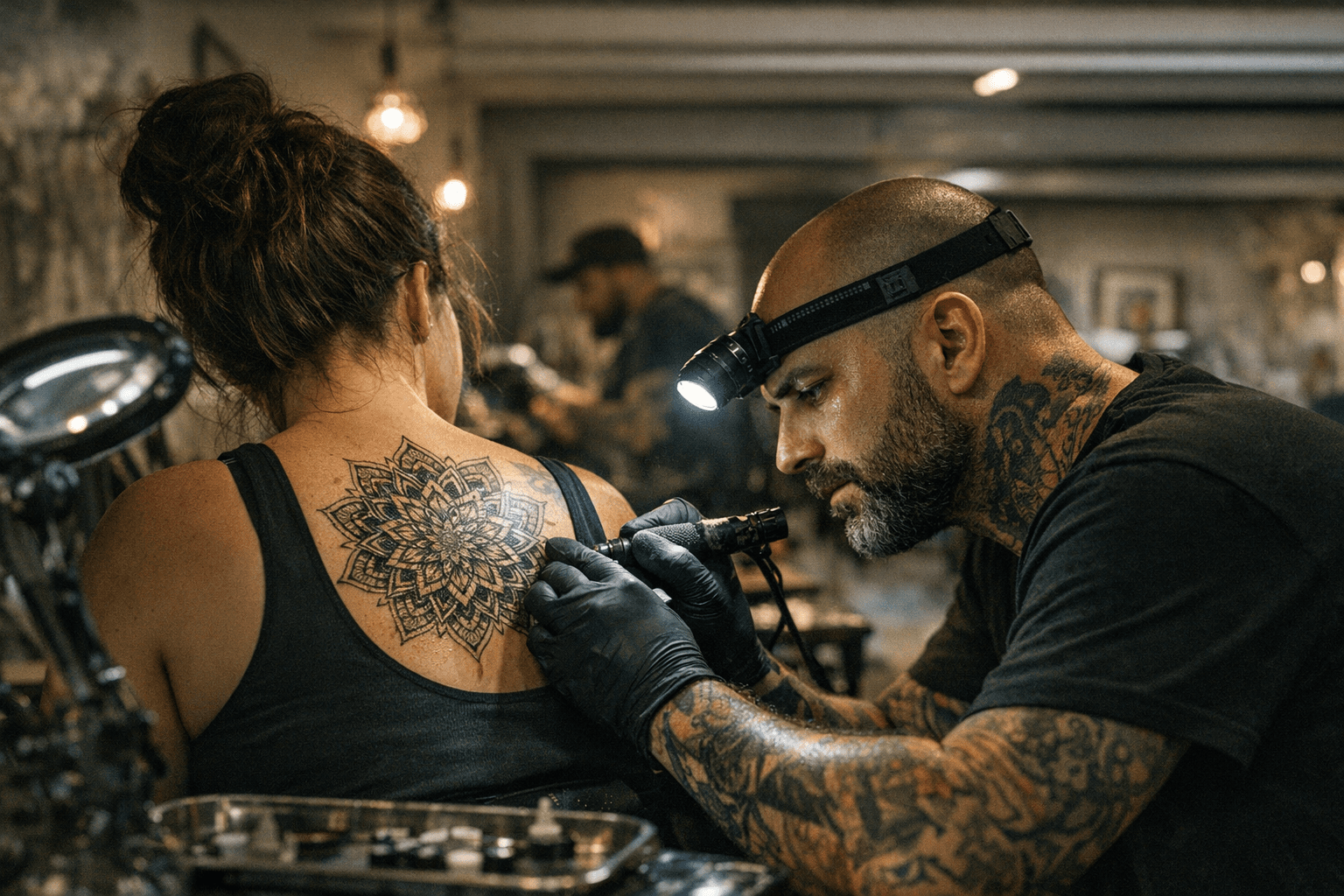
The tattoo industry's most damaging habits aren't hidden. They operate in plain sight: aftercare instructions that change shop to shop, stencils rushed to fit the next booking, pricing that shifts between the quote and the chair, and shop atmospheres engineered for throughput rather than quality. For most styles, sloppy process produces mediocre results. For geometric work, it produces something worse: a single line out of true, one degree of deviation in a mandala or sacred geometry composition, and the mathematical logic of the entire piece is permanently broken. That's the unforgiving reality of this style, and it's the reason a studio built on operational discipline matters to this community specifically.
Built Out of Refusal, Not Opportunity
"Love Ink Tattoos didn't come out of opportunity. It came out of refusal." That line captures the founding of Dustin and Meagan Friend's studio in King, North Carolina more precisely than any origin myth. After years working in unstable shop environments across North Carolina, the husband-and-wife team documented the industry's standard failures from the inside: poor communication, inconsistent standards, and environments where both artists and clients were treated as expendable. These weren't edge cases. They were the norm.
"Walking away meant risk. Staying meant more of the same." They chose risk. With no financial backing and no safety net, they built Love Ink Tattoos from the ground up, handling everything themselves from construction to daily operations. The mindset they applied to building the physical space is the same one they bring to every piece: "controlled, intentional, and built to hold up." Even the studio's blue-and-yellow colour scheme carries meaning; it ties directly to their daughter Madeline and Down Syndrome awareness, and that family story shapes how they run the shop at every level.
What Operational Discipline Actually Looks Like
The gap between a studio that claims high standards and one that enforces them is process. At Love Ink, in-person consultations are required before work begins. Design, placement, pricing, and expectations are discussed up front before anyone picks up a machine. That single requirement addresses the most common client complaints in tattooing simultaneously: pricing surprises, design misalignments, and placement decisions made under pressure in the chair.
The guiding principle is explicit: "clear communication builds trust before the tattoo even starts." And the standard holds regardless of project size. Walk-ins receive the same care as clients booking large-scale custom work. "Smaller tattoos aren't rushed. Larger projects aren't squeezed in. The expectation is the same every time, clean execution and a result that holds." That consistency isn't a marketing promise; it's a structural commitment. As the studio frames it, "structure is not extra but necessary when one is committing permanent work to skin."
The Mystery Tattoo as a Regulatory Test Case
The clearest proof of Love Ink's institutional seriousness is how they handled their Mystery Tattoo experience. Blind tattoo concepts have circulated online for years, typically launched without formal oversight. Love Ink's version required health-department approval before it could be built. The process: clients select a design from a capsule, the artist prepares it entirely out of sight, and the tattoo is applied without the client seeing it until it is finished. "There's no mid-process correction. No preview. Just trust in the artist and the system behind it."
Seeking regulatory sign-off before launching a novelty service isn't required by reputation; it's required by integrity. That approval step is exactly the kind of verifiable institutional check that separates a studio serious about infection prevention and informed-consent compliance from one treating those concerns as administrative inconvenience.
Why Geometric Work Is the Harshest Test of These Standards
Fine-line dotwork, interlocking geometric forms, and mandala compositions operate on precision that leaves no room for process shortcuts. The stencil transfer in geometric work isn't a formality; it's the structural foundation. A rushed consultation skips the moment when a client's skin type, placement variables, and realistic expectations for healed fine-line work get evaluated honestly. That skipped conversation is where geometric tattoos fail long before the needle touches skin.
Love Ink's upfront consultations, exacting stencil standards, and reproducible workflows directly address every link in that failure chain. The studio represents a broader professionalization movement in tattooing: one that treats consistent process not as optional refinement but as the minimum threshold for artists working in technically demanding styles.
The Hard-Nosed Client Checklist for Geometric Work
Before booking geometric work at any studio, these questions separate accountable shops from ones still running on the industry's worst habits:
- Do you require an in-person consultation before booking, and does it cover placement, design finalization, and pricing confirmed in writing before the session date?
- How is the stencil test-fitted, and what is the policy if placement needs adjustment after the stencil is applied?
- What are your aftercare instructions for fine-line and dotwork healing specifically, and are they provided in writing?
- What happens if the healed result requires correction? Is a touch-up included, and under what documented conditions?
- Has the studio sought health-department approvals or passed inspections for any specialized services or setups beyond standard licensing?
- Can you show healed examples of geometric work, not just freshly photographed pieces taken the same day?
- What is your process if a client needs to revise design elements after the consultation but before the session?
The answer to most of these questions at most studios is vague, verbal, and non-binding. At Love Ink, the operating model is built to make them answerable. Dustin and Meagan Friend built that model from nothing in King, North Carolina, and in doing so made visible exactly how much the rest of the industry has been avoiding building it for years.
This article was produced by Prism’s automated news system from verified source data, official records, and press releases, then run through automated quality and moderation checks before publishing. The system is built and supervised by the people who set the standards it runs under. Read our full AI policy.
Did this article answer your question?