AI tools and precision inks reshape geometric tattoo design
AI mockups, symmetry tools, and precision stencils are changing what geometric tattoo clients can ask for, preview, and execute before the first needle touches skin.

Digital mockups, contour-aware placement checks, and stencil planning now make symmetry part of a geometric tattoo consultation instead of an afterthought. Clients can now ask for a much more exact process, not just cleaner-looking work.
AI is moving the consultation upstream
Accio projects the global tattoo market will rise from USD 2.35 billion in 2025 to USD 4.92 billion by 2033, driven by higher social acceptance, better tattoo technology, and stronger demand for personalization. For geometric and mandala work, the most useful part of that trend is the rise of AI-powered design software that can speed up reference generation and placement visualization before anyone books a session.
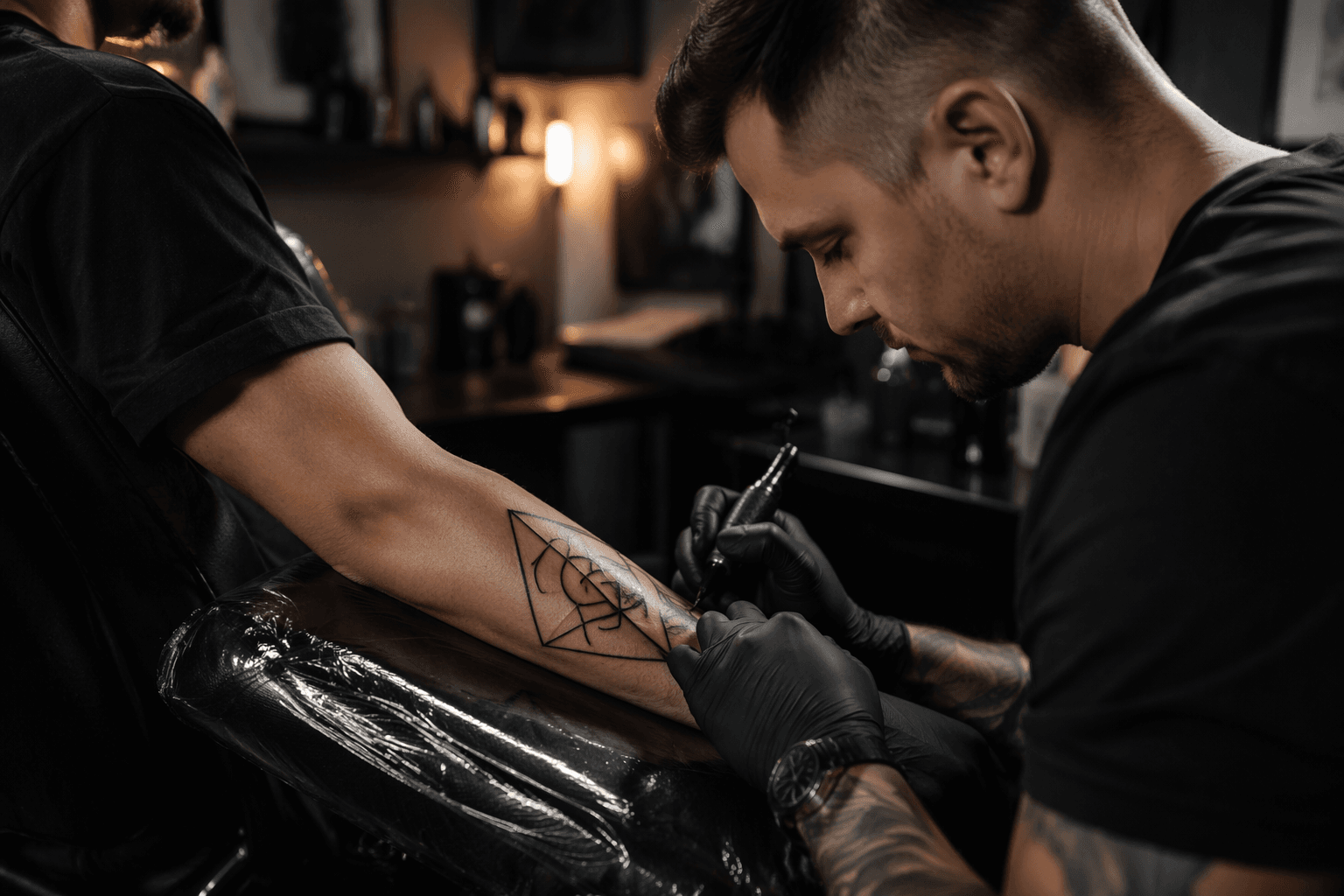
Geometric pieces live or die on centering, balance, and body flow. Preview tools can show realistic placement, match to body contours, and adjust size and angle, giving clients a way to compare options before the stencil is ever printed. In practice, that means a forearm hex pattern, a spine mandala, or a chest-based sacred geometry piece can be tested against the actual plane of the body instead of judged from a flat screen alone.
Precision is becoming part of the aesthetic
Precision tattoo machines, improved sterilization tools, and hypoallergenic and vegan-friendly inks are part of the technology stack shaping the market. Those tools matter in geometric tattooing because line weight, dot spacing, and crisp edge control leave very little room for drift.
The stencil business shows how much the workflow has changed. Verified Market Research values the tattoo stencil market at USD 1.28 billion in 2025 and projects it to reach USD 2.12 billion by 2033, while Verified Market Reports puts the tattoo stencil printer market at USD 220 million in 2024, rising to USD 450 million by 2033. That growth lines up with the way studios are working now: more exact stencil output, faster iteration, and cleaner transfer for intricate patterns that have to land correctly the first time.
North America remains a major market, while Asia Pacific is expanding quickly.
Nostalgia is driving the brief, not just the look
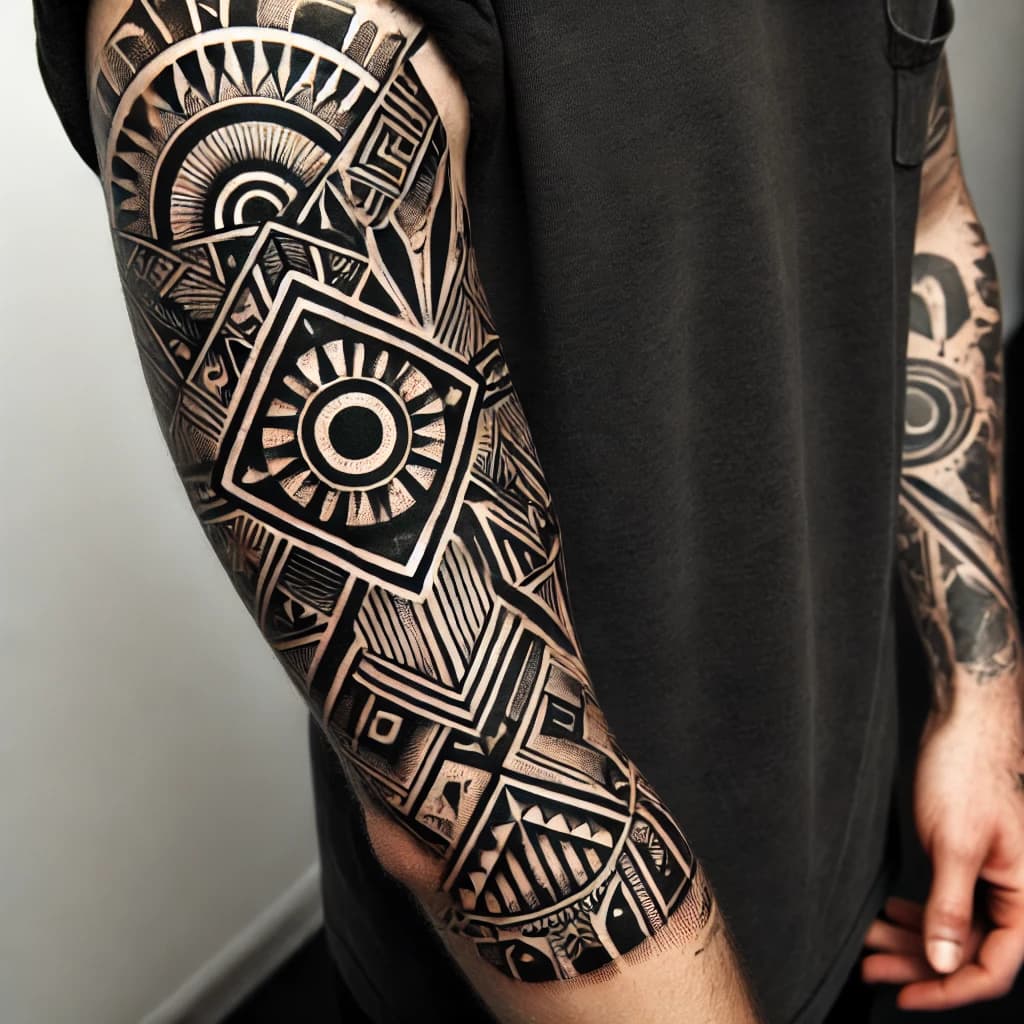
Geometric tattooing draws on sacred geometry, including the Flower of Life and Metatron’s Cube, along with the broader math of symmetry, balance, and proportion.
Pew Research Center found in 2023 that 32% of U.S. adults have at least one tattoo, including 22% who have more than one. Among tattooed adults, 69% said they got ink to honor or remember someone or something, and 47% said they got a tattoo to make a statement about what they believe. Pew also found that 41% of adults under 30 and 46% of adults ages 30 to 49 have at least one tattoo, which helps explain why geometric and minimalist work keeps landing with younger clients who want meaning and clean structure in the same piece.
AARP found that Americans with tattoos and those without them are generally satisfied with tattoos, and most believe society has become more accepting of people with tattoos.
What clients can ask for now
The practical change for the geometric tattoo community is simple: requests can be more specific. Digital tools make it easier to ask for a consultation that tests the piece before it is permanent, and stencil technology makes that testing more accurate.
- A body-contour preview that shows how the pattern sits on the arm, leg, chest, back, or ribs
- A symmetry check that confirms center lines, spacing, and mirrored elements
- Size and angle adjustments before stencil printing, especially for mandalas and radial designs
- Ink conversations about hypoallergenic and vegan-friendly options when skin sensitivity or ingredient preference matters
- A stencil pass that translates the digital layout into a clean, transfer-ready guide for the artist
A strong geometric booking now can include:
Today the client conversation includes the mockup, the stencil, and the machine setup as part of the design.
Safety still sets the floor
OSHA places tattooing under the Bloodborne Pathogens standard because tattooing and piercing generate blood and create occupational exposure to bloodborne pathogens. For geometric work, that regulation matters just as much as the art, because crisp linework only holds value when the studio is also disciplined about infection control, sharps handling, and training.
This article was produced by Prism’s automated news system from verified source data, official records, and press releases, then run through automated quality and moderation checks before publishing. The system is built and supervised by the people who set the standards it runs under. Read our full AI policy.
Did this article answer your question?