Ancient Greek Vase Reveals Thracian Noblewoman’s Deer Tattoo and Status Markers
A rare Thracian tattoo on a 470 BC kylix links deer-and-ladder imagery to noble status, not punishment, and stretches geometric tattoo history deeper into the ancient record.
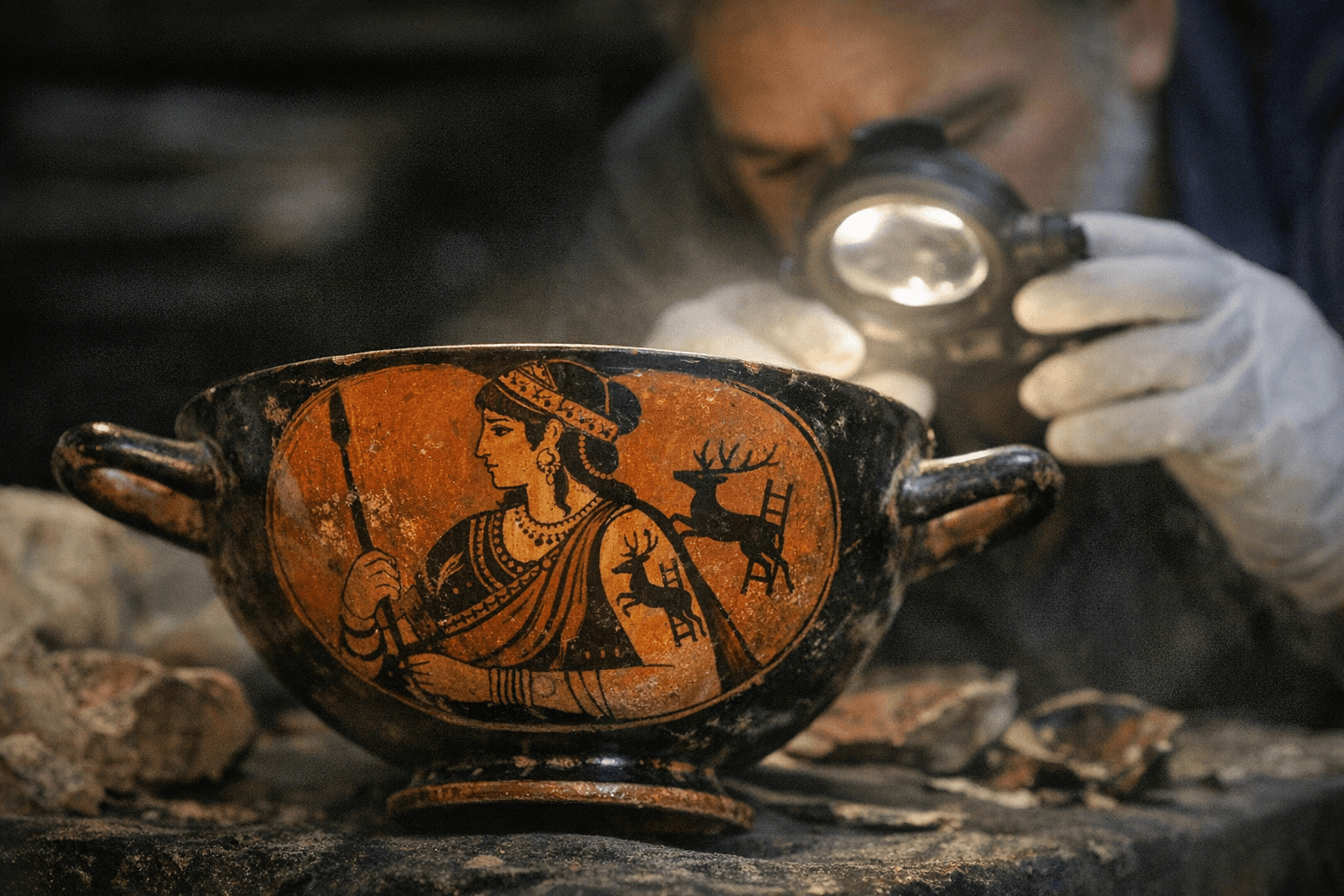
A tiny white-ground kylix from Athens has become one of the clearest early images of tattooing as rank, not shame. On Acropolis Museum inventory GL II.439, the scene preserves a Thracian woman with a delicate deer and ladder-like tattoo, the kind of structured body marking geometric tattoo readers will instantly recognize as linework with status built into the design.
The cup is attributed to the Pistoxenos Painter and dated to around 470 BC. It stands 0.13 m high, measures 0.325 m in diameter, and was found in February 1888 in the fill formed before the Acropolis’ south wall. Its interior shows the killing of Orpheus by frenzied Thracian women, while the exterior shows Thracian men and horses. The vessel also preserves the inscription , and the restored inscriptions may read that Glaukos was handsome and that Euphronios made the vase, though the museum marks that restoration as tentative.
What makes the piece matter for tattoo history is the cultural contrast it captures. Greek society generally treated tattoos as punitive marks tied to enslavement, punishment, or barbarian identity. Thracian practice read the opposite way. In modern scholarship, Herodotus is cited for the idea that tattooing among Thracians marked noble birth, while a lack of tattoos signaled lower status. Dio Chrysostom later added a sharper social code, saying that more numerous and elaborate tattoos indicated higher standing and family rank.
For readers who think in terms of composition, this vase shows how early geometric tattoo language worked before it became ornamental vocabulary. Earlier Thracian images in Greek vase painting were often blunt and austere, built from chevrons, lateral lines, and simple geometric shapes. Later fifth-century examples add deer and snakes, pushing the marks from basic patterning into a more deliberate symbolic system. On this kylix, the deer motif and ladder-like structure make that leap visible: not just decoration, but a body-based signal of lineage, hierarchy, and identity.
The image is also rare enough to matter on its own terms. One modern estimate says only 26 Greek vase paintings depict Thracian tattoos, and scholarship notes that the practice was not limited to women. Thracian men were tattooed too. That rarity gives the GL II.439 cup unusual weight in the documented lineage of geometric tattooing. It shows a world where symmetry, repetition, and placement already carried meaning, long before those same devices became staples of modern blackwork, ornamental symmetry, and sacred-geometry-inspired design.
This article was produced by Prism’s automated news system from verified source data, official records, and press releases, then run through automated quality and moderation checks before publishing. The system is built and supervised by the people who set the standards it runs under. Read our full AI policy.
Did this article answer your question?