Sustainable Tattoo Supplies Reshape Geometric Studios, Without Sacrificing Precision
Eco supplies are reshaping the geometry station, and the sharpest studios are proving lower-waste can still mean exact lines.

The stencil is where the green shift starts
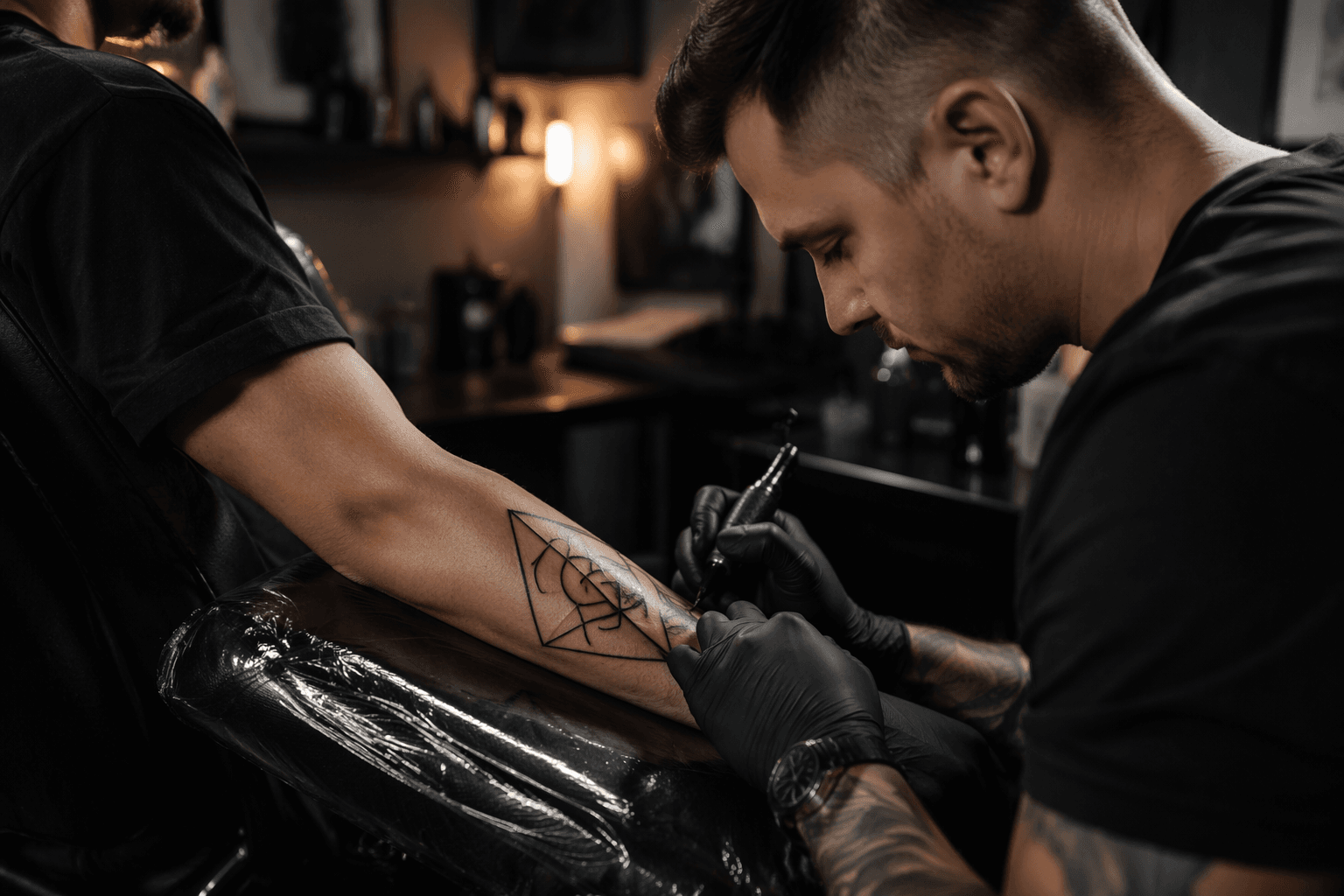
The cleanest sustainability move in geometric tattooing is happening before the needle ever touches skin. Electrum’s Eco Stencil system is built for photo-reference transfers that stay crisp and consistent, and its 4-ounce printer ink bottle is rated for up to 3,000 stencils, a figure that can change the rhythm of a symmetry-heavy shop in a hurry. The matching paper is designed specifically for that ink, while regular paper can absorb more and dull the transfer, which is exactly the kind of mistake geometric work cannot afford.
That is why the greener setup is not read as a compromise by artists who live and die by symmetry. Electrum’s paper is sold as a 500-sheet box for $36.95, and the stencil ink runs $79.99, but the bigger workflow shift is technical: the ink is formulated for Epson EcoTank printers, two bottles are needed to fill the reservoirs, and the system asks for weekly printing to keep nozzles wet and prevent clogs. In other words, the eco version is not softer, it is more disciplined.
What is landing on the station shelf now
The rest of the supply cart is following the same path. World Famous Tattoo Ink is still pushing certified vegan formulas made in the USA, with individual colors and blacks ranging from $7 to $35 and sets running from $76 to $614, while Electrum’s own ink line includes single colors at $14 and an 8-color set at $108. For blackwork, the point is not just ethics. World Famous’ Pitch Black is marketed for deep, dark fill and color packing, while its outlining black is described as thinner and lower-viscosity, so the saturation and line-use decisions still look like classic tattoo craft, just with a vegan label attached.
Disposables are where the waste math becomes visible. Coalition Tattoo Supply’s eco-conscious line lists compostable ink caps at $16, biodegradable nitrile gloves from $13, compostable barrier film from $12, machine bags at $12.50, bottle bags at $16.75, clip cord sleeves at $18.75, and PLA razors at $8.50. The key detail is that the gloves remain nitrile-based, which suggests the studio is not surrendering the familiar hand feel that artists rely on at the machine, only the plastic footprint around it.
Cleaning still has to earn trust
The cleaner that stands out in this shift is Electrum Cleanse, a non-toxic, non-irritating, hypoallergenic, pH-neutral rinse solution priced at $20. The company says it helps reduce swelling and redness for better visual clarity while tattooing and can improve color saturation and pigment retention, which matters in geometric work where any haze around the line makes the pattern harder to read. That is the practical bridge between “eco” and “precision”: the product has to leave the skin clear enough for the artist to see the structure, not just feel good in the bottle.
Reusable sterilizable gear still anchors the workflow, and the price tags show why this is a real operational change rather than a branding pose. On current supply shelves, autoclaves run from $999.95 for an electric sterilizer to $5,499.99 for a fully automatic machine, while ultrasonic cleaners sit at $299.99 to $589.99 and sterilization pouches start at $3.39. In practice, that means greener studios are pairing lower-waste disposables with the same hard sterilization backbone they already needed for compliance and client confidence.
Aftercare is now part of the studio’s ethics
The aftercare shelf is where the client feels the value shift most directly. Badger’s Organic Tattoo Balm is $13.99 for a 2-ounce tin and is USDA Certified Organic, cruelty free, and packed in an infinitely recyclable tin with an FSC cardboard sleeve. Reuzel’s HYDRABALM is $9.95, certified cruelty-free, and says it helps protect crisp edges from stretching or blurring. Tatwax’s original soothing balm is $5.95 for 1 ounce, with the larger process balm at $19.95, and the line is built from all-natural ingredients like beeswax, shea butter, sweet almond oil, cocoa butter, and organic aloe vera.
That aftercare turn is backed by the medical literature, too. A PubMed-indexed 2021 paper says moisturizing during tattoo healing is common practice and was recommended in European guidelines to keep the site moist, while a 2023 review found tattoo adverse reactions can be immediate, delayed, or long-term. Another 2023 analysis of 700 American tattoo aftercare instructions found many lacked clear hygiene guidance and advice on when to seek medical care, which makes packaging, handling, and consistency a bigger deal than a pretty label ever was. An additional study found opened skin-care bulk packs used in tattoo parlors and conventions can be microbiologically contaminated, so minimal packaging and careful handling are not just aesthetic choices, they are part of infection control.
Why geometric studios are adopting this now
This shift lands differently because tattooing is no longer a niche consumer habit. Pew Research Center found in 2023 that 32% of U.S. adults have at least one tattoo, including 22% who have more than one, and Smithsonian has noted that 69% of tattooed adults say they got inked to honor or remember someone or something, 47% to make a statement about what they believe, and 32% to improve their appearance. When that many clients are treating a tattoo as a value-bearing purchase, supply choices stop being backstage details and start becoming part of the promise.
That is also why regulation has become part of the studio conversation. The European Chemicals Agency says the EU’s REACH restriction on tattoo inks and permanent make-up took effect in January 2022 and targets thousands of hazardous chemicals, including carcinogens, mutagens, reproductive toxicants, skin sensitisers, and irritants, while stressing that the goal is to make colors safer rather than ban tattooing. The German Federal Institute for Risk Assessment adds that little is known about the long-term effects of tattoo inks and that there are still no binding criteria for a universal safety assessment. In a field built on order, control, and repeatable line accuracy, that uncertainty is exactly why cleaner supply chains and tighter aftercare have become part of the technical standard, not a side project.
For geometric studios, the new measure of precision now runs from stencil transfer to final heal. The strongest eco-friendly supplies are not asking artists to choose between conscience and sharpness, they are asking them to demand both in the same session.
This article was produced by Prism’s automated news system from verified source data, official records, and press releases, then run through automated quality and moderation checks before publishing. The system is built and supervised by the people who set the standards it runs under. Read our full AI policy.
Did this article answer your question?