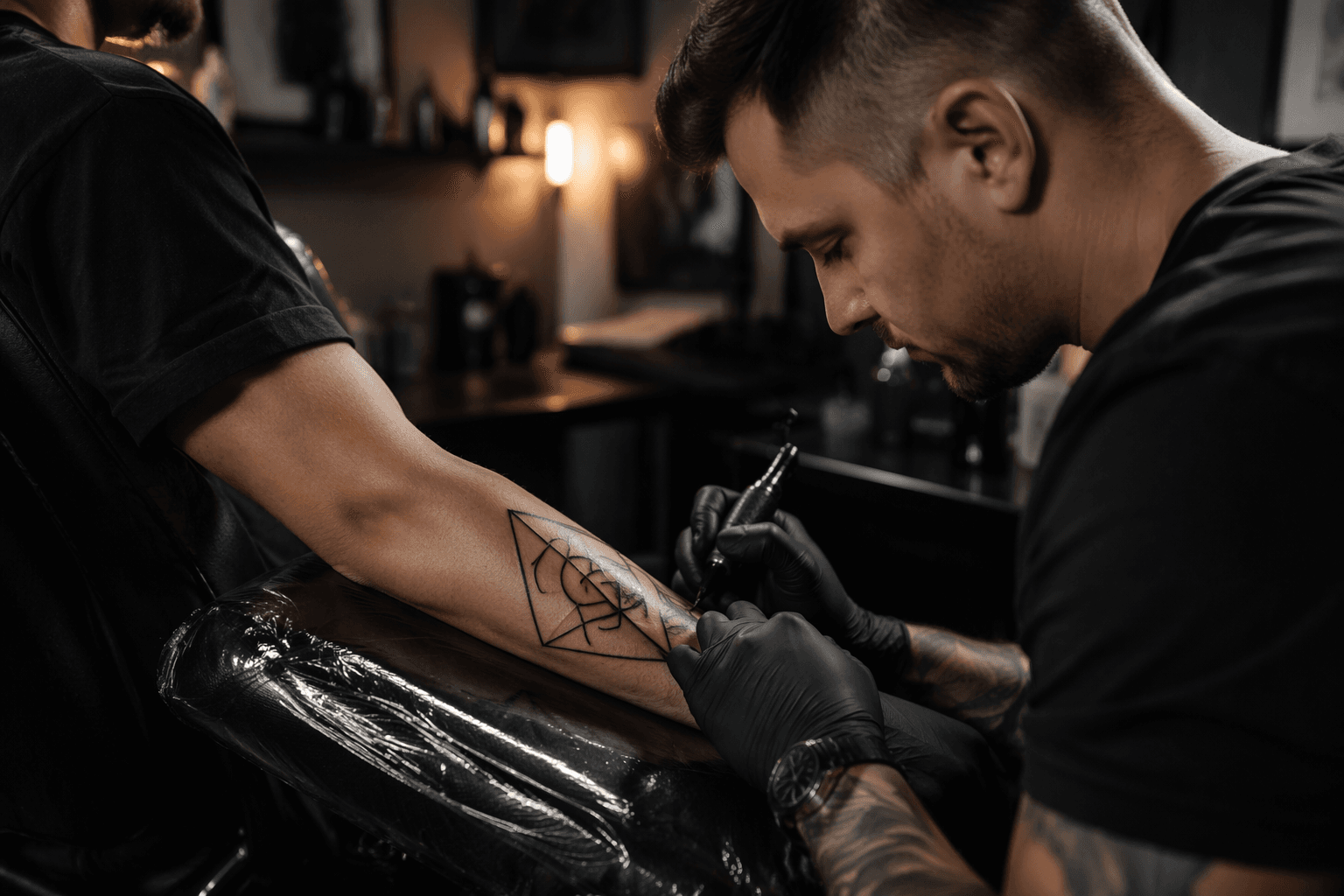
One-line tattoos highlight geometric precision, balance, and minimalist style
One-line tattoos reward the same discipline geometric fans love, but the style only works when spacing, placement, and line control are built for real skin, not just a thumbnail.
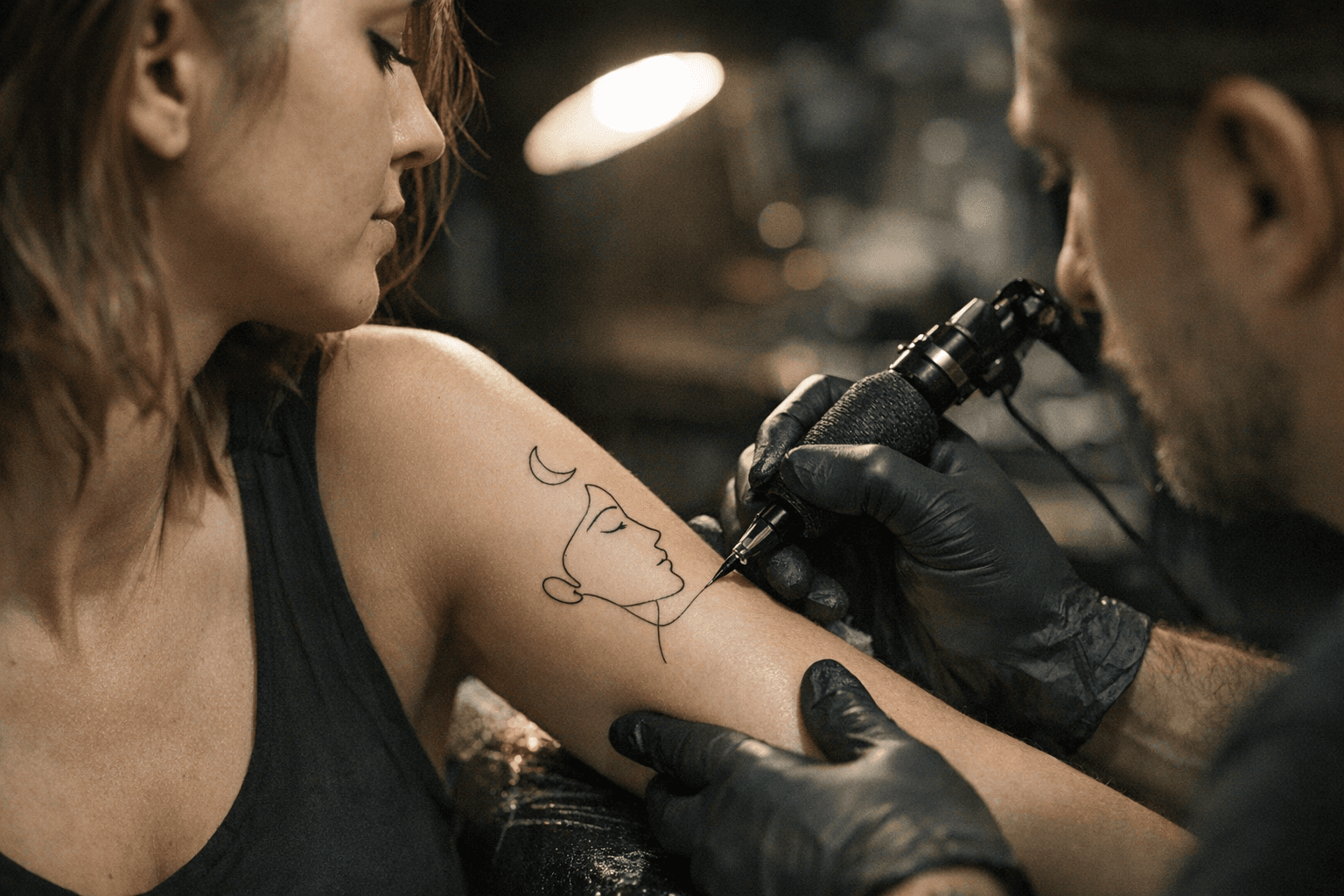
One clean line can do the work of an entire geometric composition when the hand behind it is steady enough. That is why the April 14, 2026 one-line curation lands so well with geometric tattoo readers: it is not about decoration for its own sake, but about precision, balance, and the kind of restraint that makes a design feel deliberate.
Why one-line work speaks the same language as geometry
The overlap is immediate. Geometric tattoos depend on exact hand control, balanced spacing, and strong composition, and one-line tattoos ask for the same things with even less room to hide. There is no shading-heavy fallback and no dense fill to smooth over a wobble, so every bend, pause, and curve carries weight.
That is what gives the style its appeal. A one-line tattoo can look airy and sophisticated without reading as empty, which is a difficult balance to strike in tattooing. The best examples feel calm and intentional, whether the line becomes a face, a figure, an animal, or an abstract symbol.
The broader culture around tattoos helps explain why this style keeps traveling. In a Pew Research Center survey conducted July 10 to 16, 2023, 32% of U.S. adults said they have at least one tattoo, and 22% said they have more than one. Pew also found that a majority of adults believe society has become more accepting of tattoos in recent decades, which helps minimalist work move comfortably from niche studios into everyday life.
What actually ages well
The one-line designs that hold up best are the ones that respect the body’s shape instead of fighting it. Small structural compositions tend to age better than intricate drawings, because the line has room to breathe and the image still reads clearly as the skin settles and the tattoo softens over time.
That is why placements such as wrists, forearms, upper arms, ankles, behind the ear, and the nape of the neck are so common in this style. Healthline notes that placement matters, and those smaller zones are often chosen for compact tattoos that rely on crisp negative space. On the right body part, the line can curve with the anatomy and strengthen the design instead of warping it.
A good one-line tattoo should still make sense from a distance. The simplest versions often last visually because they are not trying to do too much. A face made from a single flowing contour or a minimal animal silhouette can stay readable long after a more intricate single-line drawing starts to soften.
Where single-stroke tattoos tend to blur
The risk is not that the concept is too minimal. The risk is that the artist or placement asks the line to do more than it can comfortably carry. When the design depends on tiny internal details, overly tight curves, or repeated micro-turns, the tattoo can lose clarity as the skin moves and ages.
Fine-line work is especially unforgiving. InkedMag describes it as precise, delicate, and challenging, and that description matters here because the style leaves little visual cover. A line that is slightly too thin, slightly uneven, or placed on a part of the body that moves constantly can drift out of balance faster than a bolder composition.
This is also why the phrase “simple” can be misleading. A clean-looking one-line tattoo may have taken more technical control than a busier design, because the artist has to get the rhythm of the stroke right on the first pass. If the line starts to break the visual flow, the whole tattoo feels off.
The artists who helped make the style readable
Modern one-line tattoos did not appear out of nowhere. Mo Ganji, the Berlin-based artist known globally for clean, single-line tattoos, helped turn the format into a recognizable contemporary language. His work showed how one continuous stroke can create a complete image without clutter.
Dr. Woo, whose name is Brian Woo, played a different but equally important role in the broader fine-line movement. He is widely associated with popularizing single-needle aesthetics in contemporary tattoo culture, and that helped make sparse linework feel less like a novelty and more like a fully formed style category.
That influence matters because geometric readers tend to notice structure before spectacle. The appeal is not just that these tattoos look cool in a feed. It is that they show discipline. The artist has to understand rhythm, spacing, and negative space the way a geometric designer does, only with skin as the canvas.
What to ask before you commit
A one-line tattoo can look effortless in a mockup and still fail in real life if the planning is loose. Before booking, the most useful questions are practical ones:
- Will the line weight hold at the size you want, or will it blur into a soft mark too quickly?
- How will the tattoo sit with the movement of the wrist, ankle, or neck, where the body bends often?
- Can the design keep its shape if it is reduced slightly, or does it depend on tiny internal details?
- Does the artist have examples of healed fine-line work, not just fresh photographs?
- What aftercare do they recommend, and how do they handle touch-up expectations?
Those questions matter because tattoo safety is not an afterthought. Mayo Clinic notes that tattoos may be more common than ever, but the risks are still real and careful aftercare matters. The FDA also says tattoos and permanent makeup can carry risks including infections and allergic reactions.
Why aftercare is part of the design
A one-line tattoo is not finished when you leave the chair. The healing process becomes part of the final look, especially with delicate linework. Dermatology guidance notes that aftercare instructions vary widely across studios, and many omit clear guidance about hygiene or when to seek medical care, which leaves too much to guesswork.
The risk is not abstract. The CDC reported 22 cases of tattoo-associated nontuberculous mycobacterial skin infections across four states in 2011 and 2012, and contamination in tattoo inks was identified in two of the five clusters investigated. That does not mean fine-line tattoos are inherently unsafe, but it does mean the process deserves the same seriousness as the design.
The American Academy of Dermatology also warns that even when you are inked by a licensed artist and follow aftercare, your skin can react in unexpected ways. That is part of the reality geometric readers often appreciate: control matters, but so does respecting the limits of the medium.
The appeal is restraint, not emptiness
The current appetite for one-line work says something larger about tattoo culture. People are not only looking for bigger, louder imagery. They are also looking for designs that communicate softness, privacy, and confidence through restraint.
That is why the April 14 curation fits the geometric conversation so neatly. It points to a broader shift toward elegant understatement, where the strongest tattoos are not the fullest ones but the most disciplined ones. In that space, a single line can feel as intentional as an entire grid.
This article was produced by Prism’s automated news system from verified source data, official records, and press releases, then run through automated quality and moderation checks before publishing. The system is built and supervised by the people who set the standards it runs under. Read our full AI policy.
Did this article answer your question?