Cathedral Tattoos Emerge as Geometric Gothic Statement for 2026
Cathedral tattoos turn truly geometric when arches, vaults, and rose windows control the composition, not just the mood.
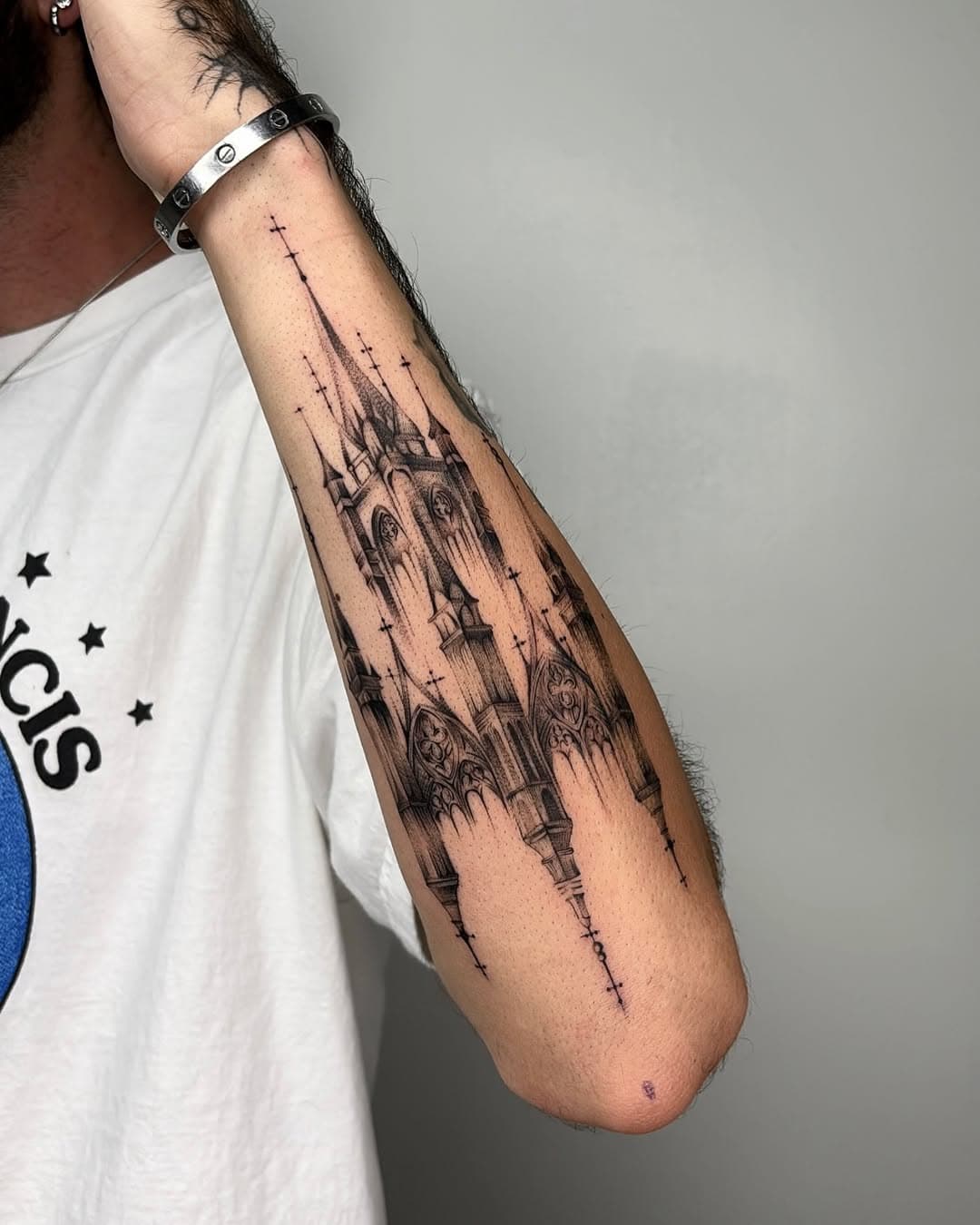
Cathedral tattoos become geometric when the building’s logic becomes the tattoo’s logic. That is the real shift happening in the strongest cathedral pieces now: they are not just Gothic illustrations, but disciplined studies in symmetry, vertical rhythm, and negative space. Cologne Cathedral alone makes the point clear, because a structure begun in 1248 and not completed until 1880 carries 632 years of architectural persistence in one silhouette.
Why cathedral tattoos sit so close to geometric work
The appeal starts with structure. Cathedral imagery already gives you repeated arches, tall spires, ribbed vaults, window tracery, and façade symmetry, which means the motif naturally behaves like a geometric design even before a single dot or line is added. That is why cathedral tattoos have expanded beyond architecture fans and Goth-leaning clients into a broader lane that also pulls in fine-line precision and emerging cybersigilism.
The difference between a cathedral tattoo that reads as geometric and one that reads as generic gothic illustration is control. When the artist respects the building’s proportions, the piece feels engineered: arches stack cleanly, window patterns repeat with intention, and the composition breathes instead of collapsing into a busy silhouette. In that sense, the cathedral becomes a framework for order on skin.
The motifs that do the heavy lifting
The best cathedral tattoos are built from a few visual anchors that do most of the geometric work:
- Arches and arcades create repeated curves that can be spaced like a pattern rather than drawn as decoration.
- Rose windows bring circular symmetry into an otherwise vertical composition, which is where the design starts to feel unmistakably geometry-forward.
- Vaults and ceiling ribs translate well into radiating line systems, especially when the artist uses them to organize the whole composition.
- Spikes, pinnacles, and spires create a vertical beat that reinforces balance and movement.
- Window tracery and stained-glass framing add smaller repeating units that can be adapted into blackwork, fine-line, or dotwork structure.
That stained-glass connection matters more than it first appears. Inked Mag notes that the stained-glass style most people recognize today traces back to the 10th century with the construction of Gothic cathedrals, which helps explain why cathedral tattoos often feel like they belong in the same conversation as sacred geometry, ornamental symmetry, and black-and-grey precision. The motif is old, but the visual language still reads sharply on modern skin.
When the cathedral design becomes a body-flow decision
Placement can make or break this style, and that is especially true with cathedral tattoos because the architecture itself already suggests where it wants to live on the body. Tall façades and spires want vertical real estate, while broad fronts and rose-window compositions need width to stay legible. Tattooing 101 is right to stress that placement can make or break a design, because even a strong cathedral concept can look awkward if the body’s flow fights the structure.
The most natural placements are the ones that preserve the building’s proportions:
- Forearms work well for towers, spires, and narrow façades because the long shape echoes the cathedral’s vertical rise.
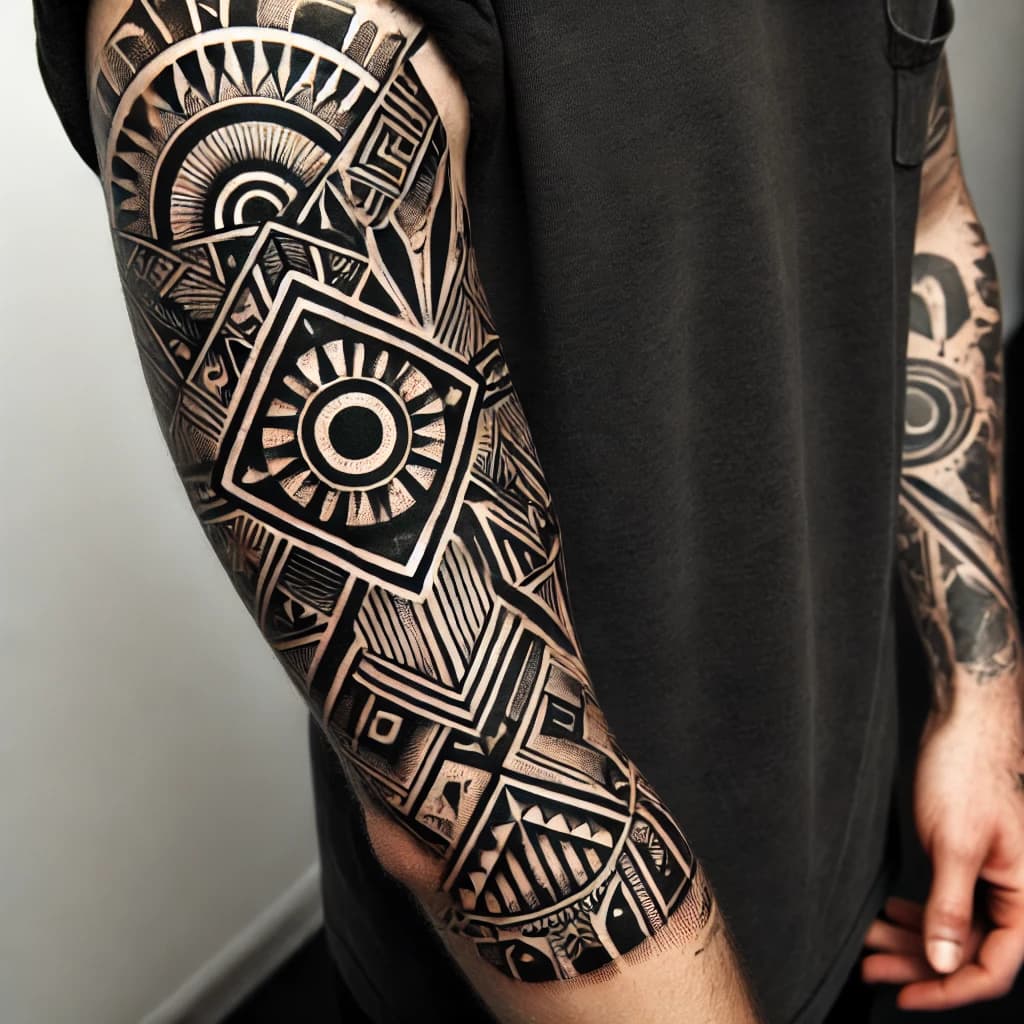
- Sleeves let arches and window bands wrap with the arm instead of being flattened into a single front-facing image.
- Hands can support smaller Gothic elements, but they need restraint so the detail does not overcrowd the space.
- Chest panels and backs are where rose windows, full fronts, and wider façade compositions can finally breathe.
That body-flow logic is what separates a cathedral tattoo from a simple church picture. The best versions do not just show a building; they build with the body.
Why Cologne Cathedral and Notre-Dame remain such strong anchors
Cologne Cathedral, or Kölner Dom in Cologne, Germany, is one of the clearest reference points because UNESCO describes it as an outstanding work of human creative genius. The long construction timeline, from 1248 to 1880, gives the building a layered identity that feels especially useful in tattoo form: it is not just a monument, but a story about endurance, unfinished labor, and eventual completion. That kind of narrative depth is exactly why cathedral tattoos can read as memorial, spiritual, or personal even when they are highly stylized.
Notre-Dame de Paris carries a different kind of charge. After the 2019 fire, the cathedral stayed in the public eye through its reconstruction, and AP reported in 2023 that scaffolding around the summit was removed, revealing the new spire for the first time. That image gives contemporary cathedral tattoos an added layer of present-tense relevance. They are not only about medieval history; they are also about restoration, survival, and what a cultural landmark looks like after public loss.
Where the line between gothic and geometric really sits
Inked Mag has described cathedral tattoos as part of a broader appreciation of historic churches and cathedrals for their religious significance and spectacular architecture, while also framing architecture-inspired tattoos as geometric and commemorative. That combination is the key to understanding the trend. A cathedral tattoo becomes geometry-forward when it leans on repetition, measured spacing, and structural clarity; it becomes mostly gothic illustration when the atmosphere overwhelms the architecture.
A useful test is simple: if you remove the religious symbolism, does the piece still hold together as a study in form? If the answer is yes, the tattoo is probably doing geometric work. If the answer is no, it may still be a strong cathedral tattoo, but it is leaning more on mood than on structure.
What makes the style feel current in 2026
The reason cathedral tattoos feel especially relevant now is that they sit right at the crossroads of several tastes the geometric community already values: black-and-grey discipline, sacred symbolism, precise linework, and large-scale body mapping. The newer cathedral pieces are not trying to flatten the architecture into a logo. They are using Gothic forms the way geometric tattooing uses circles and triangles: as a system for rhythm, balance, and visual order.
That is why the motif resonates beyond religious identity. It can read as spiritual, historical, commemorative, or simply exquisitely designed. For anyone drawn to geometric tattoo language, the cathedral offers something rare: a sacred structure that already knows how to become pattern.
This article was produced by Prism’s automated news system from verified source data, official records, and press releases, then run through automated quality and moderation checks before publishing. The system is built and supervised by the people who set the standards it runs under. Read our full AI policy.
Did this article answer your question?