Curved Open Magnum Cartridges Reshape How Artists Approach Geometric Tattoos
Curved open magnum cartridges are quietly revolutionizing geometric tattoo work, delivering the soft gradients and large-area saturation that sacred geometry demands.
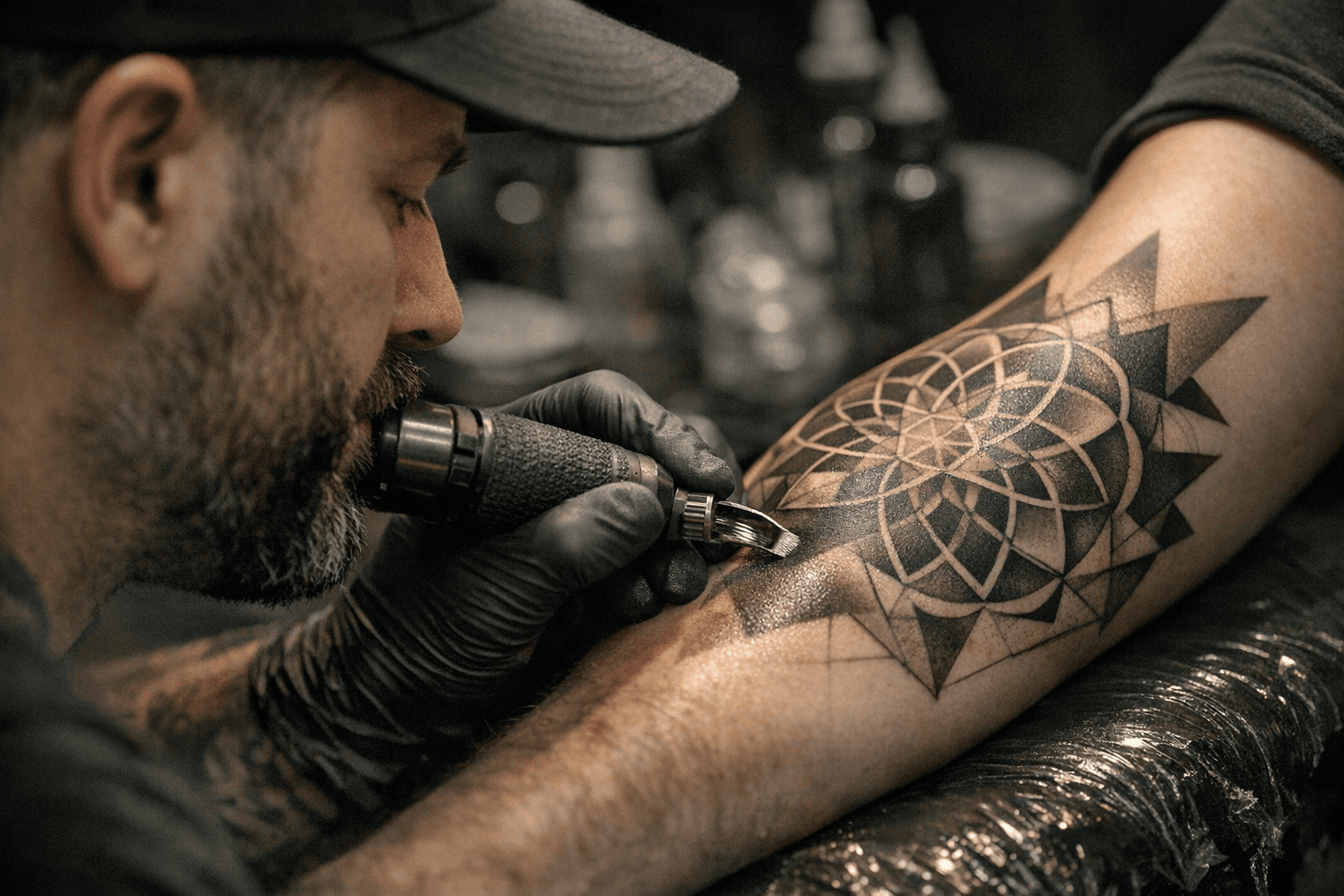
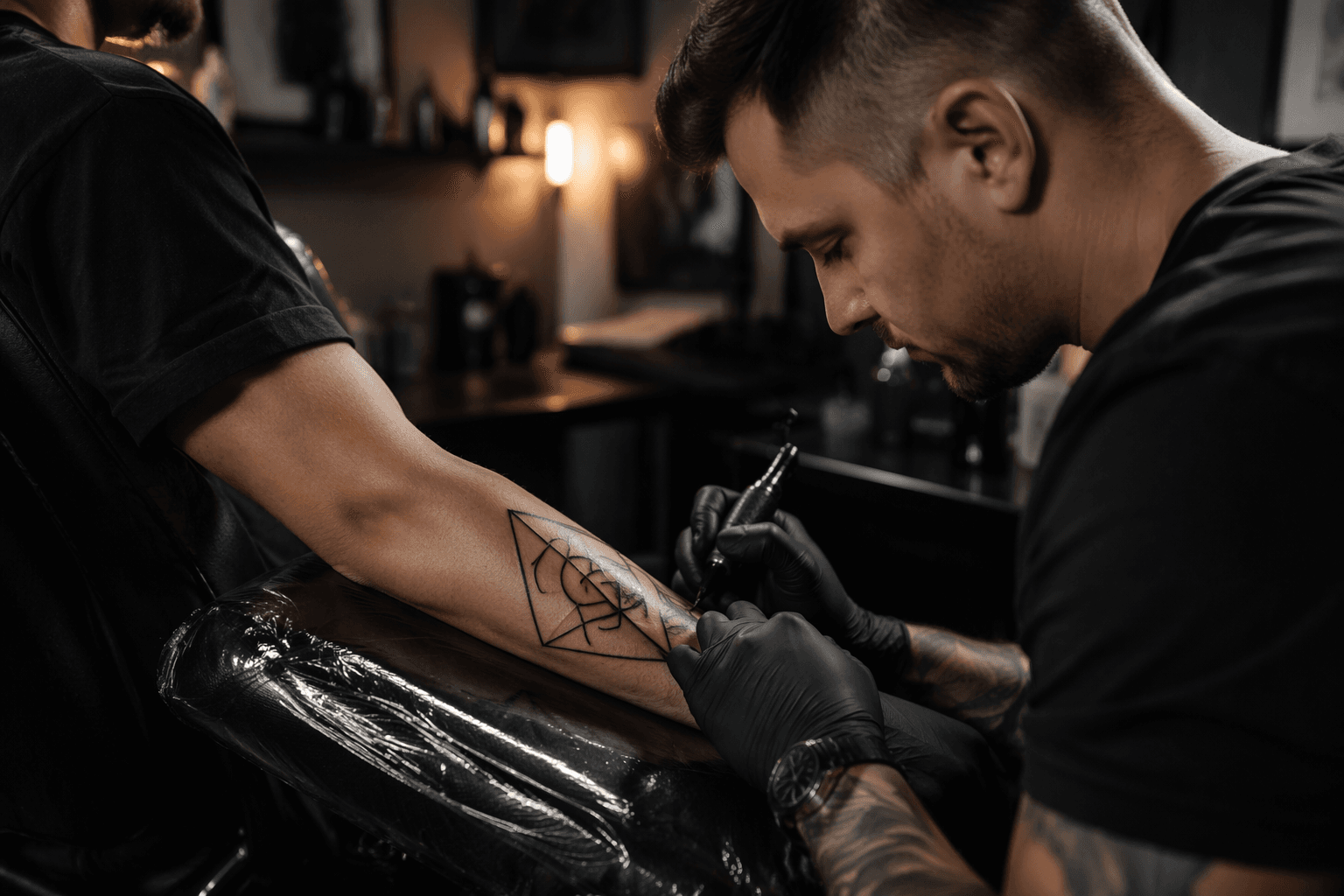
Geometric tattooing lives and dies by precision: crisp lines, yes, but also the seamless shading that gives mandalas their dimensionality and sacred geometry its depth. For years, artists working in this space have navigated a frustrating tension between the sharp structural demands of geometric work and the soft blending required to make those forms feel alive. Curved open magnum cartridges are changing that calculation in meaningful ways.
What curved magnums actually do
The foundational appeal of the curved magnum configuration comes down to geometry itself. As Caesar The Hun explains in REBEL's industry publication The Rebellion Reads, "curved magnum tattoo needles are built for smooth pigment blending between colors and shades," and their arched design "makes transitions appear softer than with other configurations while causing less trauma to the skin." That reduced trauma matters enormously during the long sessions geometric work typically demands, where large mandala fills or gradient backgrounds can push both artist and client to their limits.
Covering large areas quickly is another advantage the configuration brings, which makes it particularly well-suited to the expansive shading common in sacred geometry pieces, dotwork transitions, and the kind of soft-wash backgrounds that frame geometric sleeves. The arched needle formation contacts the skin in a curved sweep rather than a flat line, which is precisely why it distributes pigment more evenly across surface area without the aggressive drag of flat magnums.
Despite that versatility, the design carries real limitations worth knowing before you pull a COM from the tray. "Lining is not possible with this setup," as REBEL's content notes plainly, and "tight corners remain out of reach." For geometric tattoo artists, that means curved magnums belong firmly in the shading-and-fill phase of a session, not the structural line work that defines your geometry. Use your liners for the scaffolding; reach for the curved mag once you're ready to breathe dimension into it.
The arc from novelty to staple
It's worth appreciating how recently this configuration entered the toolkit. REBEL's editorial frames curved magnums as "the youngest needles in tattooing history" that have "quickly become one of the most popular configurations on the market." That trajectory speaks to a real gap they filled: artists needed something between the precision of round shaders and the brute coverage of flat magnums, and the curved configuration delivered results distinctive enough that it "made them a staple in modern tattooing" rather than simply another variant.
For geometric work specifically, that timing aligns with the broader explosion of mandala tattooing, geometric realism, and fine-line sacred geometry that defined much of the last decade. The curved magnum arrived exactly when artists needed a tool capable of building the soft, dimensioned fills those styles require.
Maverick Supply Co.'s Curved Open Magnum cartridges
On March 12, 2026, Maverick Supply Co.'s in-house editorial channel Maverick ZINE published a technical deep-dive on their Curved Open Magnum (COM) cartridges, targeting "working artists who rely on magnum cartridges for soft shading, large-scale saturation, and gradient work." The product is positioned as "designed by tattooers, for tattooers," combining medical-grade plastic construction, precision-polished stainless-steel needles, and a silicone membrane system described as providing "smooth ink flow, clean performance, and total backflow prevention."
The silicone membrane is worth focusing on. Inconsistent ink flow is one of the more frustrating variables in long geometric sessions, particularly when you're building up subtle tonal gradients in a mandala or trying to maintain even saturation across a background wash. Maverick claims the membrane delivers "consistent tension and clean backflow prevention," which addresses both the flow control and the hygiene dimension simultaneously.
The open-tip housing is the other engineering choice that directly serves geometric artists. Maverick states it "gives artists better ink visibility, faster rinsing between colors, and greater control during long sessions." Faster color rinsing is genuinely practical when you're moving between multiple ink tones in a complex geometric piece, and better visibility of needle depth and ink pool helps artists maintain the controlled, deliberate mark-making that geometric styles demand.
COM configurations: finding your size
Maverick's COM line offers thirteen configurations:
- 5COM, 7COM, 9COM, 11COM, 13COM
- 15COM, 17COM, 19COM, 23COM, 27COM
- 35COM, 39COM, 49COM
That range from 5 to 49 covers nearly every shading scenario geometric artists encounter. Smaller counts like the 5COM and 7COM are suited to tighter detail fills and precision gradient work inside intricate geometric shapes; mid-range configurations like the 13COM and 17COM handle the general-purpose mandala shading most artists spend the bulk of their session on; larger configurations from the 27COM upward are built for the kind of large-scale background saturation that turns a chest piece into something immersive.
Each box contains 20 disposable, single-use cartridges, EO-gas sterilized and individually packaged for professional safety. Maverick also claims compatibility with "all major rotary and cartridge machines," which matters in a studio environment where artists may be running different machines for line work versus shading passes.
REBEL's Contact Span system: precision selection
Where Maverick's COM line emphasizes construction and configuration breadth, REBEL's approach to curved magnums centers on a metric called Contact Span, a measurable attribute that quantifies the width of the needle array's working contact with the skin. The system is designed so "professional artists can easily identify, compare, and select the exact cartridge needed for their style."
The numeric differences between cartridges in the REBEL line illustrate why this matters. The REBEL Precision 9 Bugpin Curved Magnum runs a 0.25mm needle at #8 gauge with a 6.5mm long taper and a 2.40mm contact span, making it a fine-detail tool suited to precise gradient transitions in smaller geometric elements. By contrast, the REBEL Precision 25 Curved Magnum steps up to a 0.30mm needle at #10 gauge, drops to a 3.5mm medium taper, and widens its contact span to 7.60mm, opening it up for broader coverage passes. The REBEL 45 extends the range further, though full numeric specs for that cartridge were not published in the available editorial content.
For geometric tattoo artists, the Contact Span metric offers a useful language for planning session strategy. A 2.40mm contact span keeps your shading surgical, ideal for working inside tight geometric compartments without bleeding over into adjacent negative space. A 7.60mm contact span lets you move efficiently across open fills without building up repeat passes that can overwork the skin.
Where curved magnums fit in a geometric workflow
The practical takeaway across both Maverick and REBEL's accounts is consistent: curved open magnums belong in your geometric toolkit for shading, blending, gradient fills, and large-area color packing. They are not a line needle and were never designed to be. Geometric work that relies on crisp structural geometry needs proper round liners or tight shader configurations for that scaffolding phase.
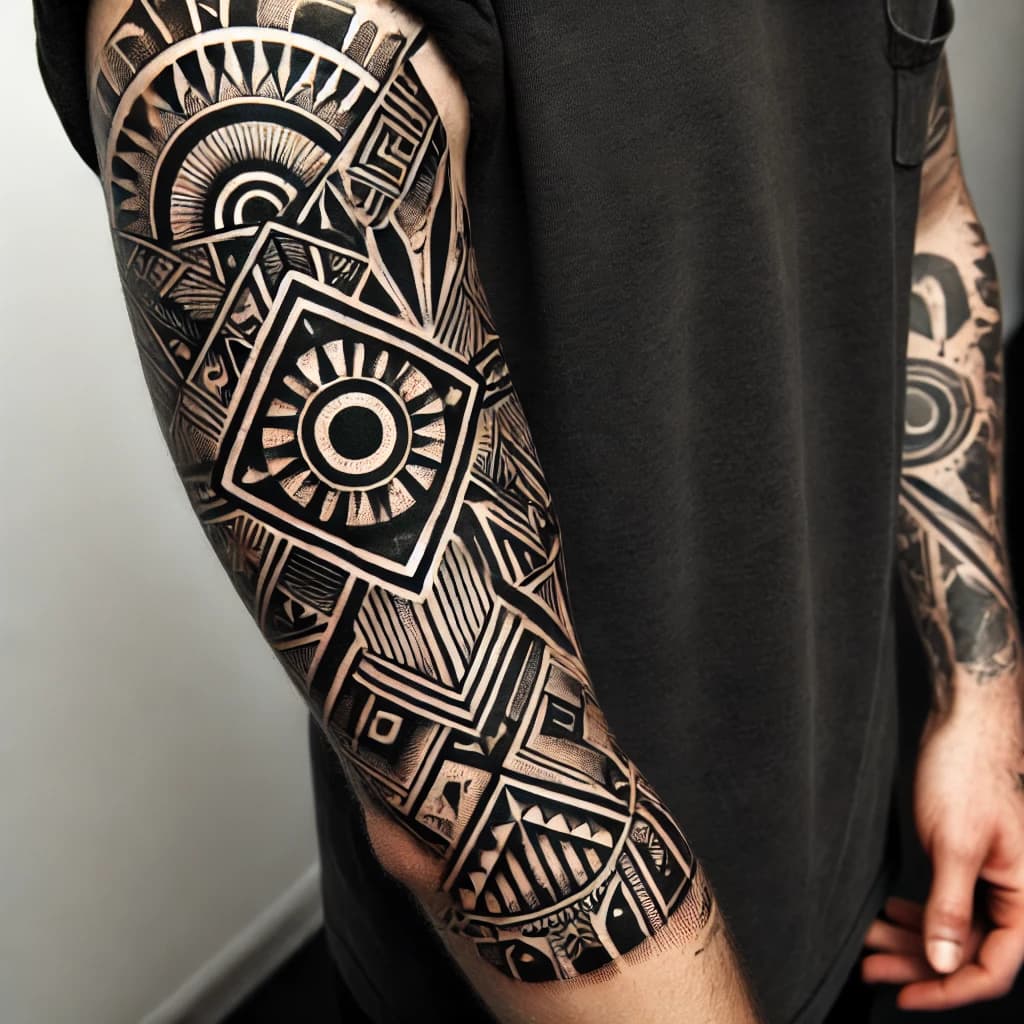
Where curved magnums genuinely shine in geometric contexts is the dimensional work that elevates a piece from a flat diagram to a living form: the soft shadow fills inside mandala petals, the gradient halos around geometric shapes, the smooth color transitions in geometric realism sleeves, and the large-scale background washes that give the geometry room to breathe. REBEL's conclusion captures it well: "whether working in black and gray or vibrant color, REBEL Curved Magnum cartridges provide the control and consistency required for precision-driven tattooing."
As curved magnum cartridge lines grow more technically refined and more accessible through suppliers like Maverick Supply Co. and REBEL, the floor for this kind of dimensional geometric shading keeps rising. The configuration that was a novelty barely a decade ago now has enough depth, variety, and supporting infrastructure that there is a curved magnum for nearly every shading task a geometric artist can imagine.
This article was produced by Prism’s automated news system from verified source data, official records, and press releases, then run through automated quality and moderation checks before publishing. The system is built and supervised by the people who set the standards it runs under. Read our full AI policy.
Did this article answer your question?