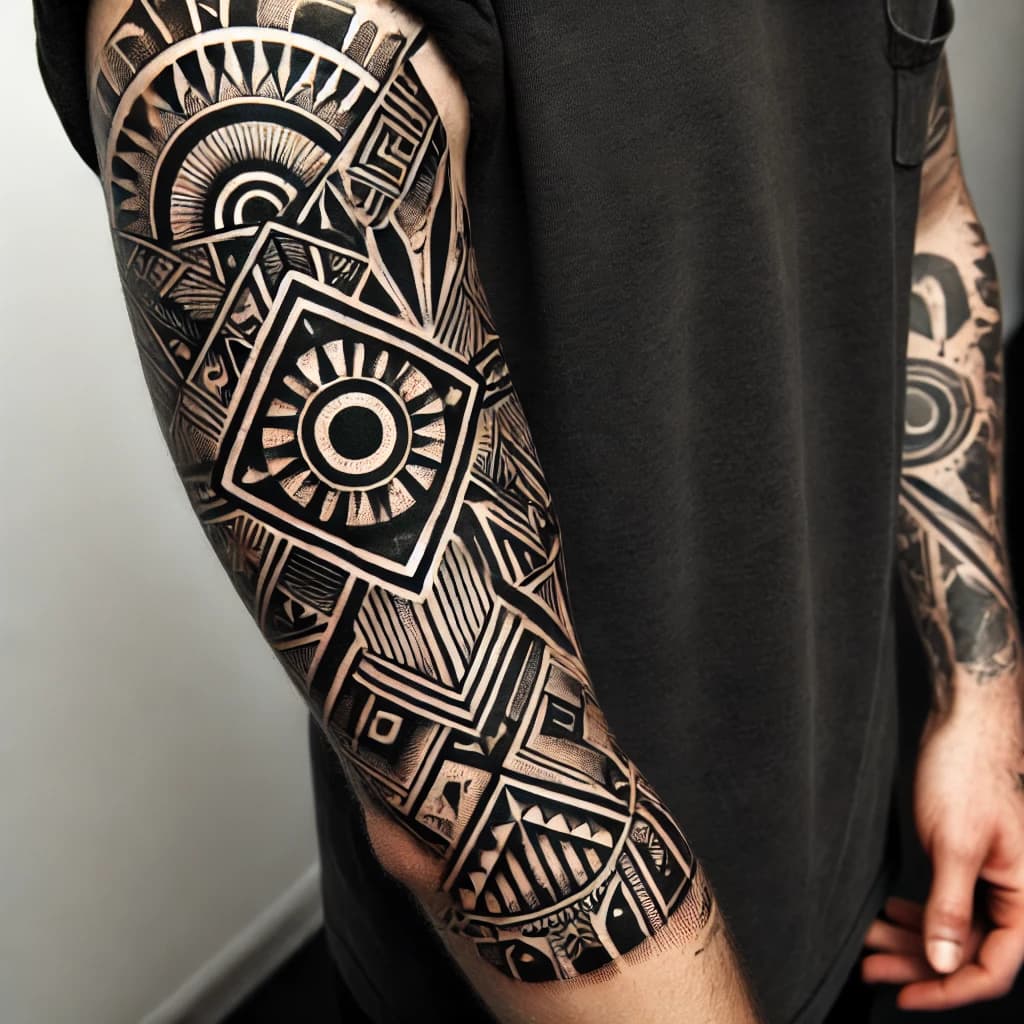
Dillon Forte reveals the precision behind geometric tattoo design
Dillon Forte treats geometric tattoos like a design system, where symmetry, negative space, and body flow matter as much as linework. His method turns patterns into placement strategy.
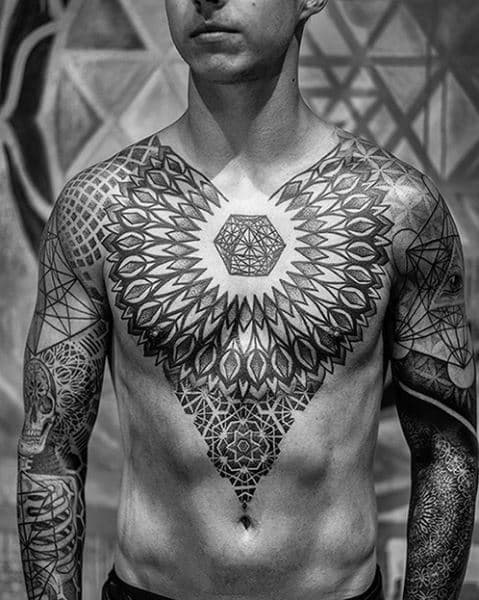
Nearly 20 years into the craft, Dillon Forte has turned pattern-making into a language of precision, symbolism, and placement that reads clearly across skin. His work sits at the meeting point of sacred geometry, blackwork, dotwork, and mandala tattooing.
Geometry as a visual system
What sets Forte apart is not just the shapes he uses, but the way he organizes them. His process is built around precise applications of geometric designs, with compositions layered the way a designer stacks elements in a Photoshop file.
That approach changes the way you look at a sleeve, a forearm piece, or a chest panel. A strong geometric tattoo follows the body’s architecture, using symmetry and repeated forms to make the image feel intentional from every angle.
The materials of the style are also its rules
Forte’s visual vocabulary draws from nature, mathematics, and ancient symbols. The recurring building blocks in his geometric world include the Flower of Life, Fibonacci spirals, Metatron’s Cube, Platonic solids, and architectural symmetry.
That logic keeps geometric tattooing from tipping into randomness. When an artist understands how a Fibonacci spiral can guide movement, or how Platonic solids can anchor a central form, the tattoo reads like a designed system rather than a collection of cool shapes.
How to read a geometric tattoo portfolio
A geometric tattoo portfolio should tell you how the artist thinks before it tells you how they draw. Forte’s approach is useful here because it exposes the kinds of decisions that matter most: symmetry, line work, clean fills, dotwork, stippling, body surfaces, composition rules, and visual planes. If those elements are working together, the tattoo will feel resolved. If they are not, the piece may look precise in close-up but lose coherence on the body.

When you scroll through portfolios, look for more than crisp edges.
- Does the artist use symmetry to organize the piece, or just repeat a motif without direction?
- Do the lines support the body’s shape, or fight against it?
- Are dotwork and stippling used to create depth and transition, or just to fill space?
- Does the artist understand how visual planes shift across shoulders, ribs, forearms, and calves?
Placement is part of the design, not an afterthought
Forte’s system also highlights something geometric tattoo fans know instinctively: placement is not a separate step from design. Body surfaces change the meaning of the pattern. A composition that looks balanced on paper can feel off once it wraps around a knee, stretches over a rib cage, or breaks across a shoulder cap. The artist has to think about how symmetry will survive movement and how the design will land on different planes of the body.
That is why geometric tattoos reward artists who can talk about composition rules in practical terms. Where does the center of gravity sit? What happens when a mandala meets a joint? How much negative space is needed so the blackwork does not collapse into a solid mass?
What Forte’s style teaches about choosing the right artist
The cleanest takeaway from Forte’s approach is that geometric tattooing is not just about technical neatness. It is about whether an artist can move from pattern language to design architecture. If they understand sacred geometry, blackwork, dotwork, and mandala forms as parts of one system, they can build a tattoo that feels calm, deliberate, and structurally sound.
A strong geometric artist should be able to explain how the design will be layered, where symmetry will carry the eye, and how the piece will use clean fills and stippling to control contrast. They should know when to let negative space breathe and when to tighten the composition so the visual rhythm stays intact.
This article was produced by Prism’s automated news system from verified source data, official records, and press releases, then run through automated quality and moderation checks before publishing. The system is built and supervised by the people who set the standards it runs under. Read our full AI policy.
Did this article answer your question?