Geometric ankle tattoos balance clean linework with delicate flow
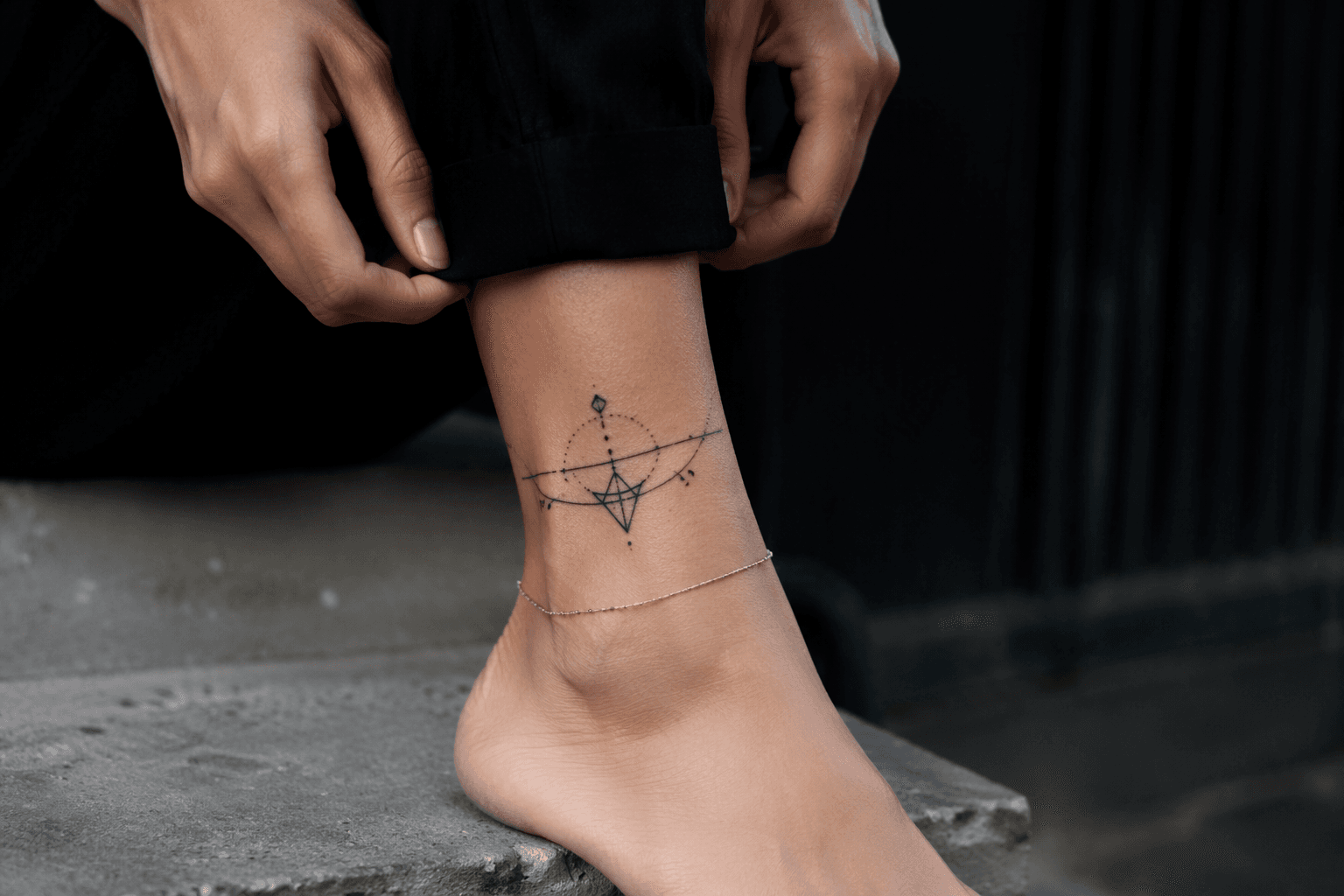
The ankle rewards geometric tattoos that bend with the body, not fight it. Clean spacing, wraparound flow, and line weight decide whether a piece stays crisp.
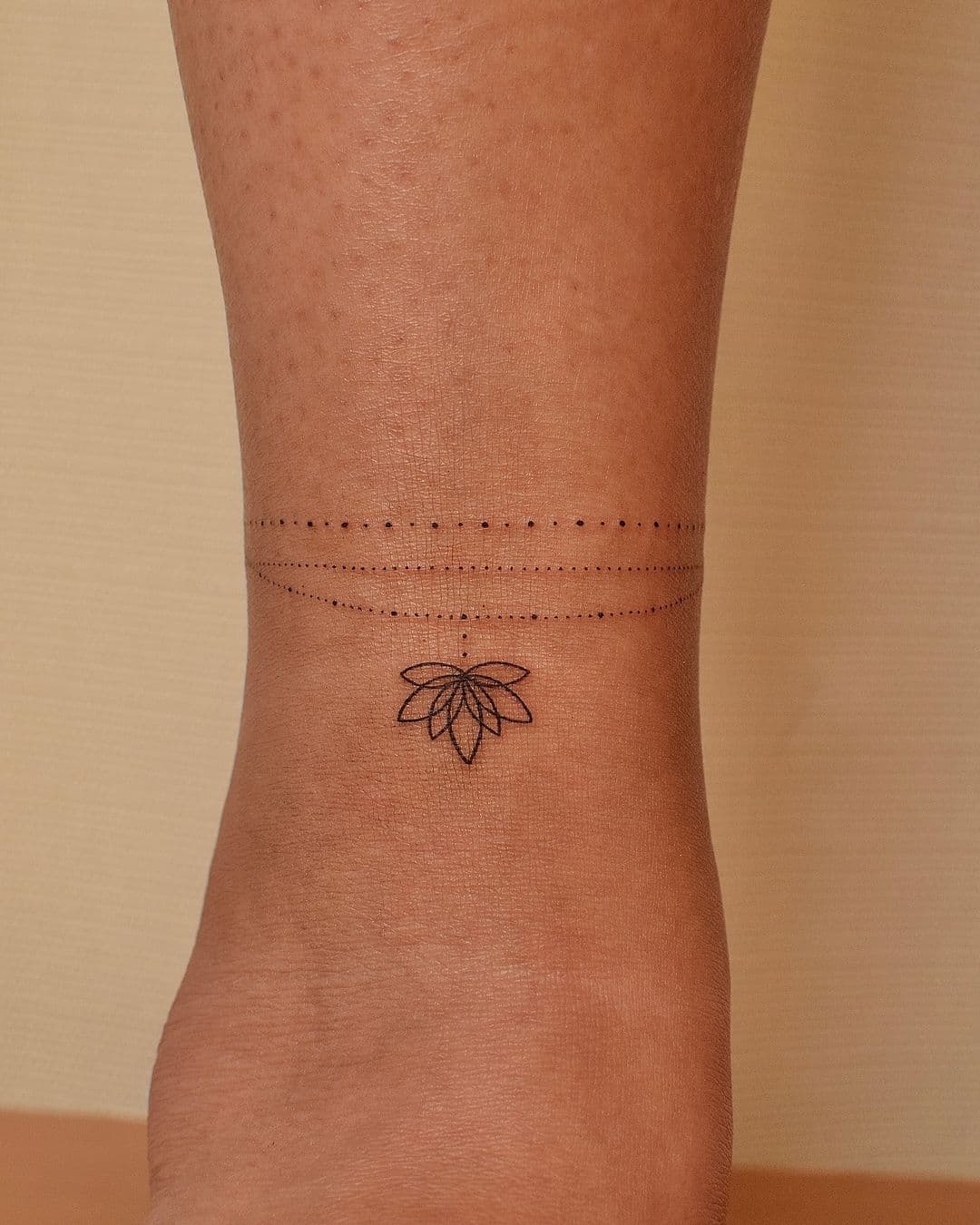
The Lotus Anklet Tattoo in Anderson Gomez’s June 26 collection combines a floral center with fine bracelet-inspired detail, then uses a thin line to wrap the ankle so the piece reads as one continuous form. A design can look perfectly balanced on paper and still collapse once it has to curve around bone, sit under a shoe collar, and survive constant motion. The strongest ankle pieces treat placement as part of the design, not an afterthought.
Why the ankle changes the rules
Tattoo placement, design, artist choice, and aftercare all shape the final result, but the ankle puts unusual pressure on every one of those variables. The ankle is a popular spot that is also challenging, mainly because the skin is thin, cushioning is limited, and shoes add friction that can interfere with healing and long-term crispness. The same factors also help explain why ankle work is often more painful than tattoos on fleshier areas.
For geometric and semi-geometric tattoos, that matters immediately. A crisp pattern can distort if the body area is curved or if the spacing closes up as the design wraps around the joint. On the ankle, the artist has to think about how a line behaves when it is asked to travel over a narrow, rounded surface that moves all day.
How geometry survives a curved surface
The best geometric ankle tattoos do not insist on hard edges at every point. They use symmetry, ratios, line weight, and negative space to stay readable while bending with the body. On the ankle, those choices become technical decisions: too much density and the design clogs; too little structure and it loses its frame.
Wrap-around and anklet-style pieces are especially suited to this placement because they echo the ankle’s shape instead of fighting it. That is why a thin band, a bracelet-like line, or a design that closes gently around the joint often feels more successful than a bulky central image.
The Lotus Anklet sets the template
Among Gomez’s examples, the Lotus Anklet Tattoo is the clearest fit for geometric tattoo fans. Small circular accents add ornament without crowding the leg, and the bracelet-inspired wrap keeps the piece reading as one continuous form.
What makes the design work is not just the lotus motif. It is the way the composition respects the narrow skin surface and the curve of the bone beneath it. The piece feels delicate, but it still has structure. A tattoo like this succeeds when the wrap is clean, the spacing stays open, and the linework can hold up as the ankle flexes through daily movement.
When botanical imagery behaves like geometry
The rest of the collection stays in that controlled, measured lane even when the imagery turns botanical. A Butterfly on Poppy Flower Tattoo uses contrast between change and resilience. A Wildflower Branch Ankle Tattoo follows the ankle’s natural contour. A Flowing Botanical Vine Tattoo leans into adaptability and quiet strength. A Rose Vine Anklet Tattoo wraps the leg in a band-like composition that reads almost like permanent jewelry.
Organic forms can still be disciplined by structure. The line has to travel cleanly, the spacing has to stay legible, and the composition has to feel intentional as it curves. In practice, that means a vine or branch can behave like a geometric framework when the flow is controlled, the angles are measured, and the negative space is doing some of the work.
Pain, healing, and long-term clarity
Ankle tattoos do not just ask more from the design. They also ask more from the healing process. Longevity depends in part on the size of the tattoo and how intricate it is, and that becomes especially relevant on the ankle, where shoe friction and motion can slow recovery or soften details. Fine linework and compact designs may be elegant here, but they also demand careful aftercare if the artist has packed a lot into a small area.
That is why ankle pieces tend to age best when they are neither overcrowded nor underbuilt. A design with strong line weight, sensible spacing, and a clear outer contour is better prepared for the realities of daily wear.
A placement with deep roots
The ankle is not a new site for disciplined patterning. The Iceman’s tattoos date to about 5,200 years ago, including marks near the ankle joint, and Polynesian tattoo traditions developed over millennia with highly elaborate geometric designs.
This article was produced by Prism’s automated news system from verified source data, official records, and press releases, then run through automated quality and moderation checks before publishing. The system is built and supervised by the people who set the standards it runs under. Read our full AI policy.
Did this article answer your question?