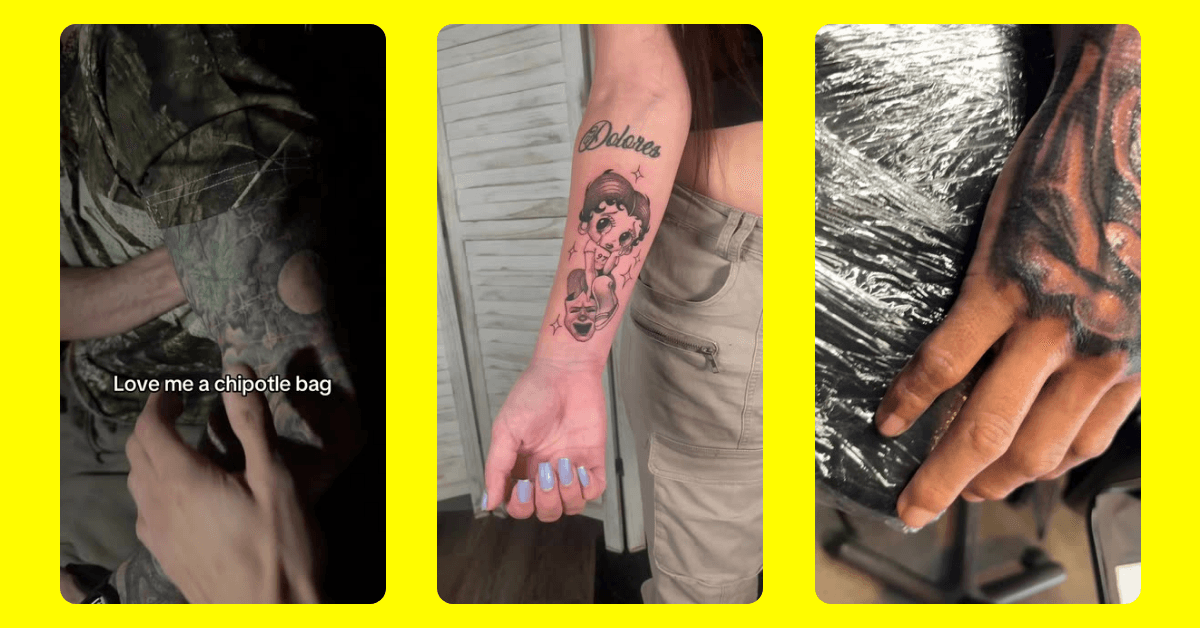
Geometric arm tattoos use placement to shape meaning and style
Placement changes everything: upper arm, forearm, and inner arm each make geometry read as discreet symmetry, a loud statement, or a private code.

Why placement drives the whole design
Geometric arm tattoos work best when you stop thinking about the arm as one blank canvas. The upper arm, forearm, and inner arm each change how symmetry lands, how dense the lines should be, and how large the motif can breathe on skin. That is the real design logic behind the style: geometry is not just decoration, it is a system that has to fit motion, visibility, and meaning at the same time.
That matters because arm tattoos already do a lot of expressive work. They can carry identity, values, family, heritage, and life experience, while still giving you control over whether the piece shows or hides. Geometric patterns sit naturally inside that range, alongside nature motifs, realistic portraits, tribal references, religious imagery, and full sleeves, because they communicate balance and order without losing their edge.
Upper arm: symmetry with discretion
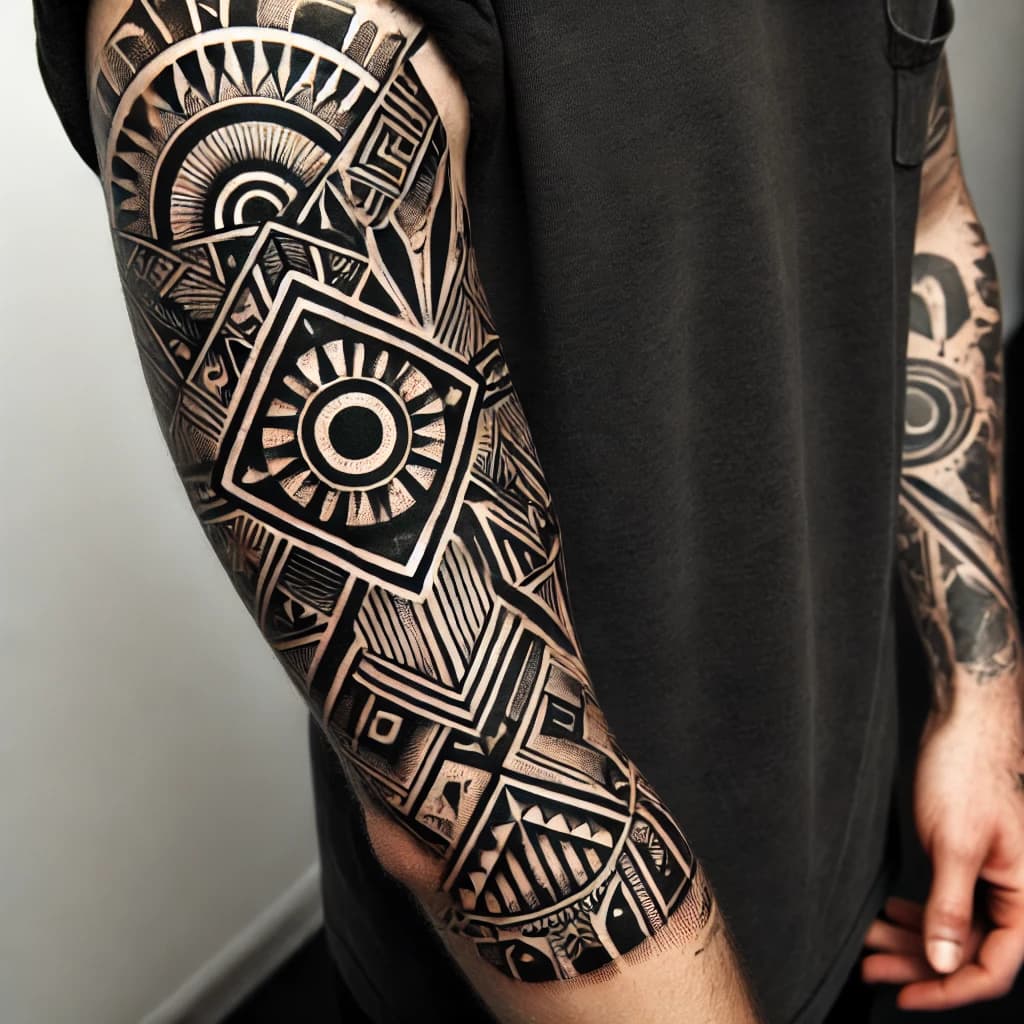
The upper arm rewards designs that can be read cleanly from a distance but do not need to announce themselves all day. It is the easiest of the three zones to cover in professional settings, which makes it a smart home for geometric work that feels personal without being constantly exposed. That flexibility opens the door to centered mandalas, bold bands, and sacred-geometry layouts that can hold a strong axis.
Upper-arm geometry also benefits from scale. Because the area can take a fuller composition, you can let crisp line systems stack up without crowding the design, and you can use symmetry that feels deliberate rather than decorative. If you want the tattoo to read as composed and disciplined, the upper arm gives that structure room to settle.
Forearm: the most declarative zone
The forearm is where geometric tattoos become public-facing. It is more visible, more direct, and more declarative, so the design has to stay legible fast. That favors motifs with clear line density, repeated structure, and a shape language that can survive constant movement as the wrist turns and the arm bends.
This is where long grids, elongated sacred-geometry forms, and banded layouts tend to shine. A forearm piece can look sharp from every angle if the motif is built to travel with the arm instead of fighting it. In 2026 style terms, this is part of the broader shift toward tattoos that read like planned visual systems, not isolated flash images.
Inner arm: where geometry turns personal
The inner arm changes the emotional tone immediately. Because it is less visible by default, the placement feels more intimate, and the design can carry meaning that is meant first for you, then for everyone else. That makes it a strong choice for geometric pieces tied to family, heritage, or private milestones.
Smaller motifs, fine line geometry, and quieter symmetrical structures tend to work especially well here. The inner arm does not need the same loud scale as the forearm, and it often looks strongest when the pattern is tuned to close viewing rather than public display. If the goal is a tattoo that feels like a personal code, this is the zone that gives it the most privacy.
What modern geometric style is doing now
The cleanest geometric arm tattoos are moving away from single-image flash and toward compositions that combine symbolism, style, and anatomy-aware planning. That is why the style feels so current: it can look disciplined without feeling stiff, and it can sit beside realism or heritage motifs without clashing. Geometry works as a connector language, not just a standalone effect.
That approach also fits the way people are using arm tattoos now. A piece can be tuned to show identity on the forearm, stay covered on the upper arm, or hold private meaning on the inner arm, all while keeping one visual logic running through the work. The strongest pieces do not just fill space. They make the placement part of the message.
A long history of clean lines
Geometric tattooing is not a new visual trick. Smithsonian Magazine notes that Polynesian tattoo traditions developed over millennia and often feature highly elaborate geometric designs, which places the style inside a deep cultural lineage rather than a modern trend bubble. The earliest known tattooed body evidence also stretches back to the 5,200-year-old Iceman from the Italian-Austrian border, while Egyptian mummy tattoos dated to around 2000 B.C.E. were long considered the earliest known examples on actual bodies.
That history matters because tattoos have never been only about appearance. A Smithsonian-linked historical overview describes tattooing as a way to communicate beauty, cultural identity, status and position, medicine, and supernatural protection. Geometric arm tattoos inherit that same range of functions, which is part of why they can feel so precise and so loaded at the same time.
Safety and execution still shape the result
The CDC has reported that tattoos can become infected and that tattoo-associated outbreaks have been reported, though infrequently. In one 2012 report, the agency documented 22 cases of tattoo-associated nontuberculous mycobacterial skin infections across four states, and it noted that permanent tattoos had become increasingly common, with 21% of U.S. adults saying they had at least one tattoo.
That context makes precision matter even more. Clean execution is not a luxury in geometric work, it is the foundation of the style, because symmetry only looks right when the lines are crisp and the placement is intentional. The arm gives you room to build that kind of discipline, but the design still has to be planned with both meaning and placement in mind.
The placement question is the whole story
Once you read the arm as three distinct storytelling zones, geometric tattoos make immediate sense. The upper arm gives you controlled symmetry, the forearm gives you public clarity, and the inner arm gives you intimacy and restraint. That is why the best geometric arm pieces do not just look sharp in a thumbnail, they look inevitable on the body.
This article was produced by Prism’s automated news system from verified source data, official records, and press releases, then run through automated quality and moderation checks before publishing. The system is built and supervised by the people who set the standards it runs under. Read our full AI policy.
Did this article answer your question?