Geometric blackwork and tribal tattoos, what sets them apart
The split is sharper than it looks: geometric blackwork leans on symmetry and contrast, while tribal tattoos carry lineage, flow, and cultural meaning.

Geometric blackwork and tribal tattoos can look like cousins at first glance, but the difference shows up fast once you start reading the lines. One style builds its power from symmetry, repetition, negative space, and saturated black fields; the other depends on body flow, cultural context, and lineage-specific meaning. If you are choosing a bold black tattoo language for your skin, that distinction is the real starting point.
Visual structure: symmetry versus flow
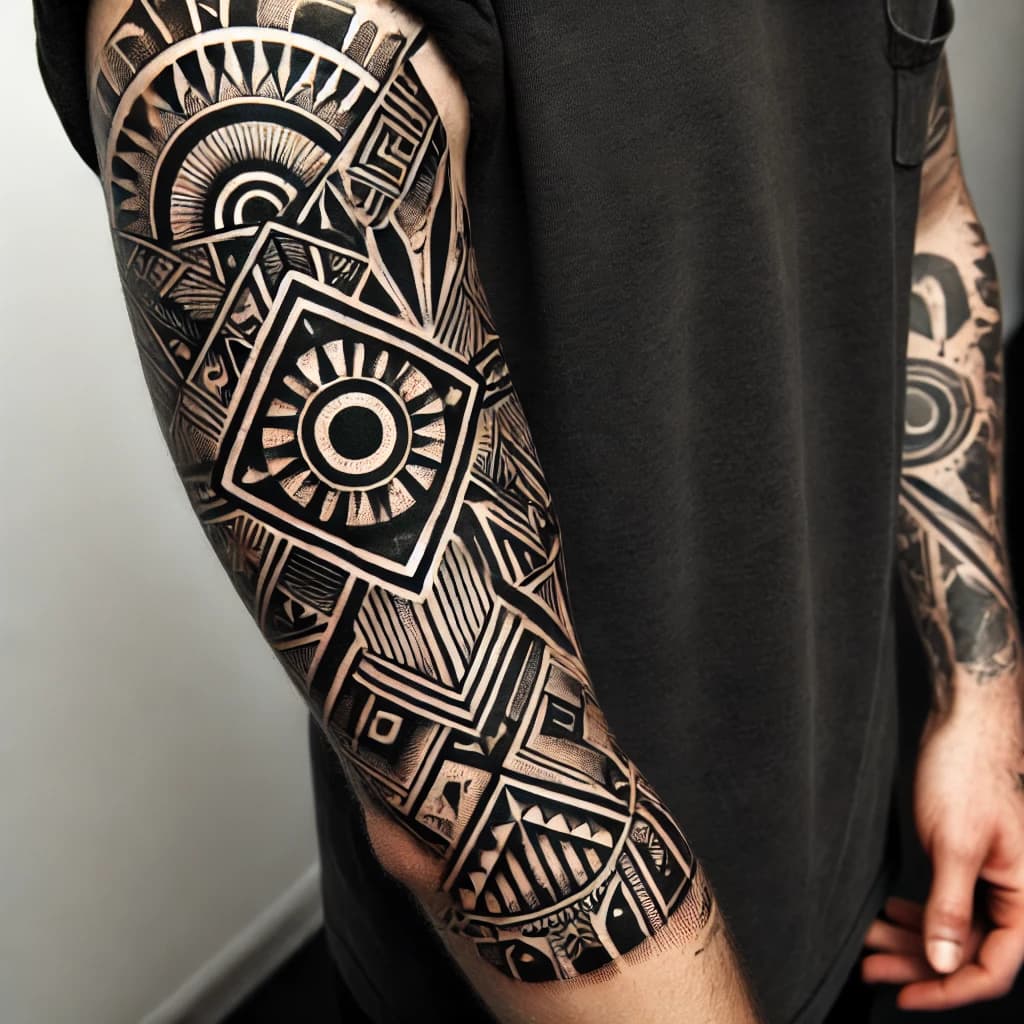
Blackwork is built around heavy black pigment, sharp contrast, and clean patterning rather than color. That is part of why it tends to stay legible for years: the eye can still read the shapes even as the tattoo settles into the skin. Geometric blackwork sits comfortably inside that family, alongside blackout sleeves and blackwork animals, because it uses structure as the main event.
Tribal tattoos work differently. Their strength comes from flowing curved lines, repeating motifs, and strong symmetry, but that symmetry is not just decorative. In lineage-based traditions, the shape language carries identity, spiritual meaning, and community memory, which is why the style should never be treated as a generic black pattern. The two can overlap in modern fusion pieces, but they are not the same visual argument.
Where geometric blackwork fits
Tattoodo treats blackwork as an umbrella style, and that broad frame helps explain why geometric work belongs here so naturally. The same family can include tribal tattoos, dark art, illustrative and graphic art, etching or engraving styles, and even lettering or calligraphic scripts when they are done in black ink. Geometric blackwork is one of the clearest branches in that family because it turns structure into the subject.
The geometry side is not vague at all. Tattoodo’s geometric tattoo guide points directly to sacred geometry, dotwork patterns, mathematical shapes, symmetrical compositions, mandalas, platonic solids, and geometric animal designs. Ornamental blackwork sits close by, especially when it uses mandala-like centers, lace-like symmetry, and sacred-geometry-inspired layouts. For readers who love precision, this is the heart of the appeal: ornamental work hides geometric thinking in plain sight.
Placement behavior: what the body wants
The best black-heavy tattoos are not just drawn, they are placed with intent. Arms, legs, chest, back, torso, and rib cage all give blackwork enough surface area to hold contrast and keep the structure readable. That matters especially for large geometric pieces, where a design can collapse if the spacing gets too tight or the body placement fights the pattern.
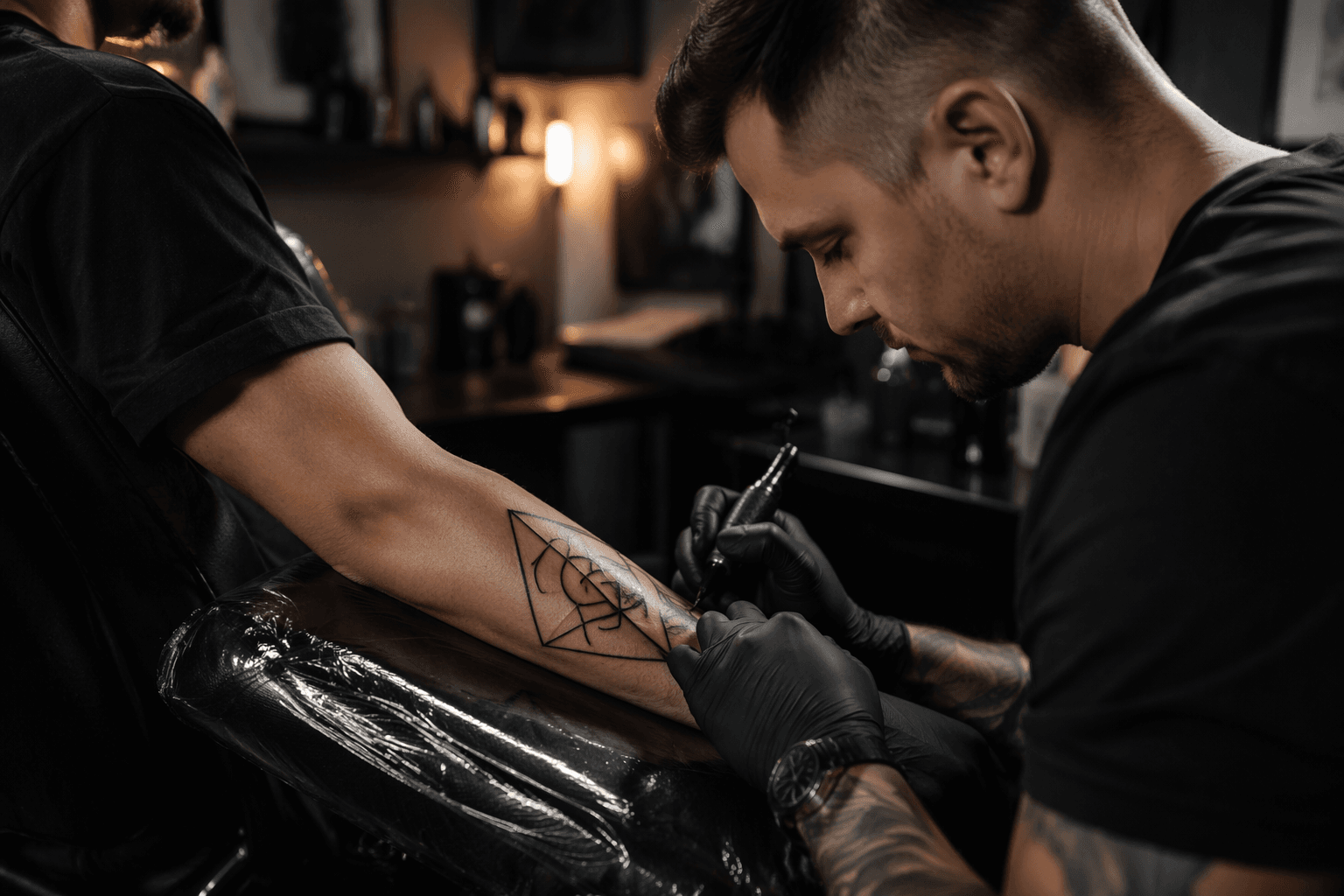
Ornamental blackwork makes this even clearer because it is often well suited to freehand tattooing. Inked Magazine’s profile of Paula Sgarbi points out that freehand work can be tailored to the body’s curves, which is exactly why these pieces can feel so integrated. Instead of forcing a stencil onto the skin, the artist can let the body’s architecture guide the symmetry, and that is where blackwork starts to feel less like a decal and more like a built form.
Tribal work also relies on placement, but for a different reason. Its curves and repeats are often designed to move with the body, not merely sit on top of it. That’s why placement is not just about visual balance here, it is about respecting the way the design belongs to a person, a shape, and sometimes a cultural tradition.
How each style ages on skin
If blackwork keeps its edge for years, it is because the style is made for long-term readability. The deep pigment and strong contrast do a lot of the aging work for you, which is part of the reason so many people are drawn to it when they want something that will still read clearly later in life. Tattoo ink is permanent because it is deposited below the skin’s top layer with needles, so this is not a temporary style choice.
That permanence is also why aftercare, pain, cost, equipment, and placement deserve real attention before the appointment starts. The stencil is only the beginning. The American Academy of Dermatology notes that tattoo reactions can happen immediately or years later, tattoos can make skin-cancer detection harder, and black ink can be involved in delayed granulomatous reactions. In other words, bold black work does not age only as an image, it ages as part of your skin.
The cultural line you should not blur
The word tribal is where this conversation gets serious. The British Museum emphasizes collaboration with Indigenous communities when dealing with tattooed material culture, and that approach reflects the bigger truth: these are not interchangeable decorative motifs. A single label can flatten very different traditions, including Polynesian systems, Native North American work, Borneo lineages, and other Indigenous forms that each carry their own rules and meanings.
That is also why the broader history matters. Smithsonian Magazine notes that humans have been marking skin for thousands of years, and that ancient tattoos could signal religious faith, relieve pain, protect the wearer, or indicate class. Its coverage of Victorian era Britain shows the same impulse in a different register, where the arm became the most popular tattoo location and names or initials were common subjects. Tattoos have always been about more than appearance, which is exactly why lineage and context matter so much in tribal work.
Choosing the right black ink language
If your eye goes straight to symmetry, repetition, negative space, and crisp black fields, geometric blackwork is probably the closer fit. If what moves you is the way a design flows with the body and carries cultural weight, tribal work asks for a very different kind of respect. Modern fusion can blend the two, but the strongest pieces still know which language they are speaking.
That is the simplest test when the styles blur online: read the structure first, then read the meaning. Geometric blackwork is a design system built from contrast and precision, while tribal tattooing is a living lineage of form, identity, and body knowledge. Once you see that split, the black ink on the skin stops looking generic and starts revealing exactly what kind of story it is trying to tell.
This article was produced by Prism’s automated news system from verified source data, official records, and press releases, then run through automated quality and moderation checks before publishing. The system is built and supervised by the people who set the standards it runs under. Read our full AI policy.
Did this article answer your question?