Geometric Eye of Horus tattoos blend ancient symbol with clean structure
Ancient symbolism gets a cleaner skin-language here: the Eye of Horus is reworked with symmetry, linework, and geometry without losing its protective force.

1. Radiant Eye of Horus tattoo
This version leads with radiating linework and sunburst rays, so the eye feels less like a static emblem and more like a signal. It is the most direct way to push wisdom, awareness, and protection into a geometric build without overcrowding the design.
2. Eye of Horus pyramid tattoo
Placing the eye above pyramids gives the piece a stronger architectural read, especially when the pyramid faces are filled with hieroglyphic detail. A sun-like circle above the structure tightens the balance and makes the whole composition feel ordered from top to bottom.
3. Floral Eye of Horus tattoo
Leaves soften the symbol without erasing its authority, and the ankh adds a clean life-and-protection counterpoint. This is the kind of hybrid that still reads as sacred symbol first, decoration second.
4. Realistic green Eye of Horus tattoo
A vivid green iris and detailed shading pull the Eye of Horus into a more lifelike register. The realism modernizes the image, but the underlying message stays intact: protection, intuition, and the ability to see past the surface.
5. Sacred geometry Eye of Horus tattoo
This is the most explicit fusion of the symbol with geometric discipline, because the eye is built into measured structure instead of ornament. The result feels deliberate and architectural, which suits a motif already tied to order and higher meaning.
6. Fine-line wedjat-eye tattoo
The Eye of Horus works beautifully as a fine-line piece because the ancient wedjat-eye already combines a human eye with stylized falcon markings. Clean linework strips the design down to its essentials while keeping the symbol immediately recognizable.
7. Blackwork symmetry tattoo
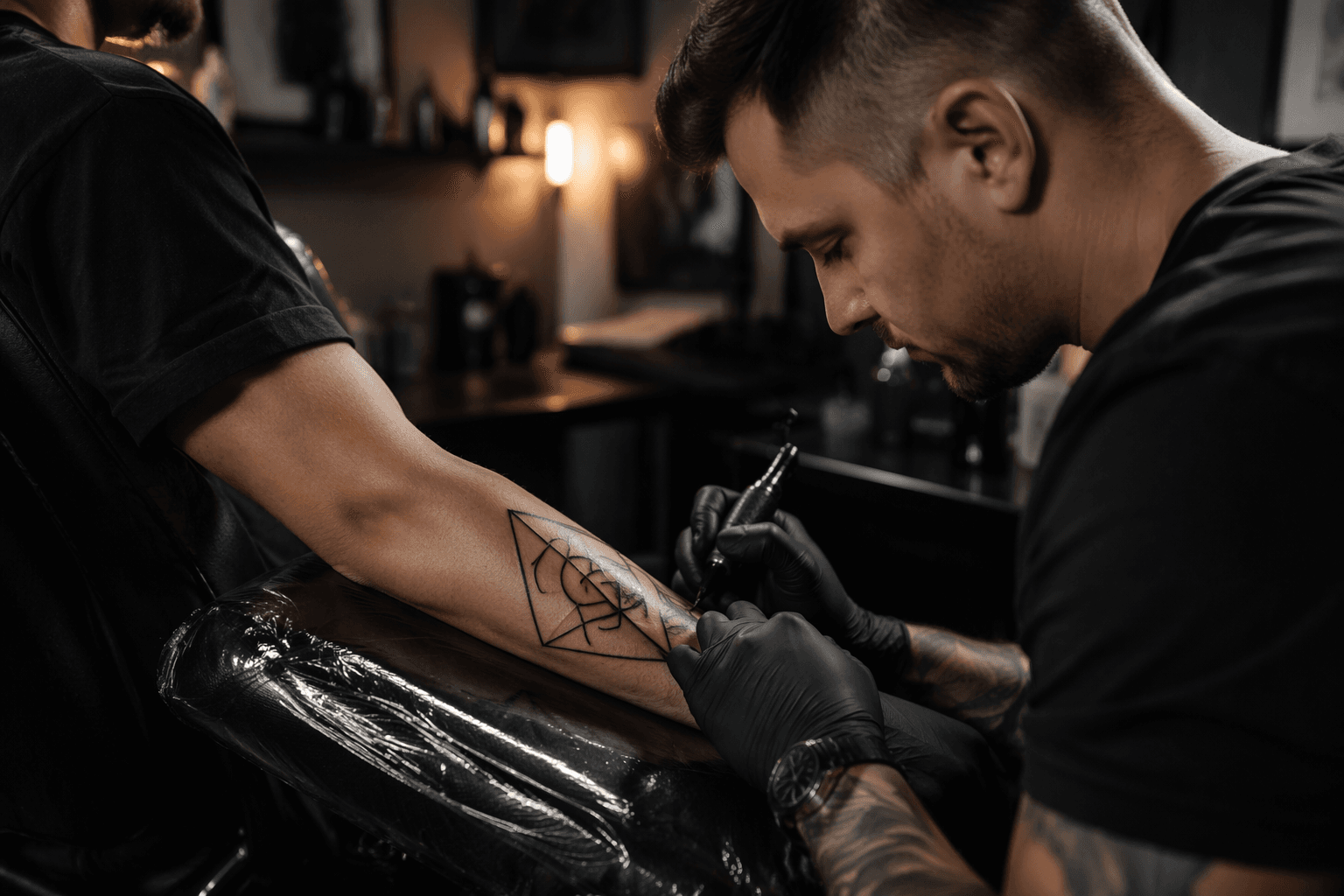
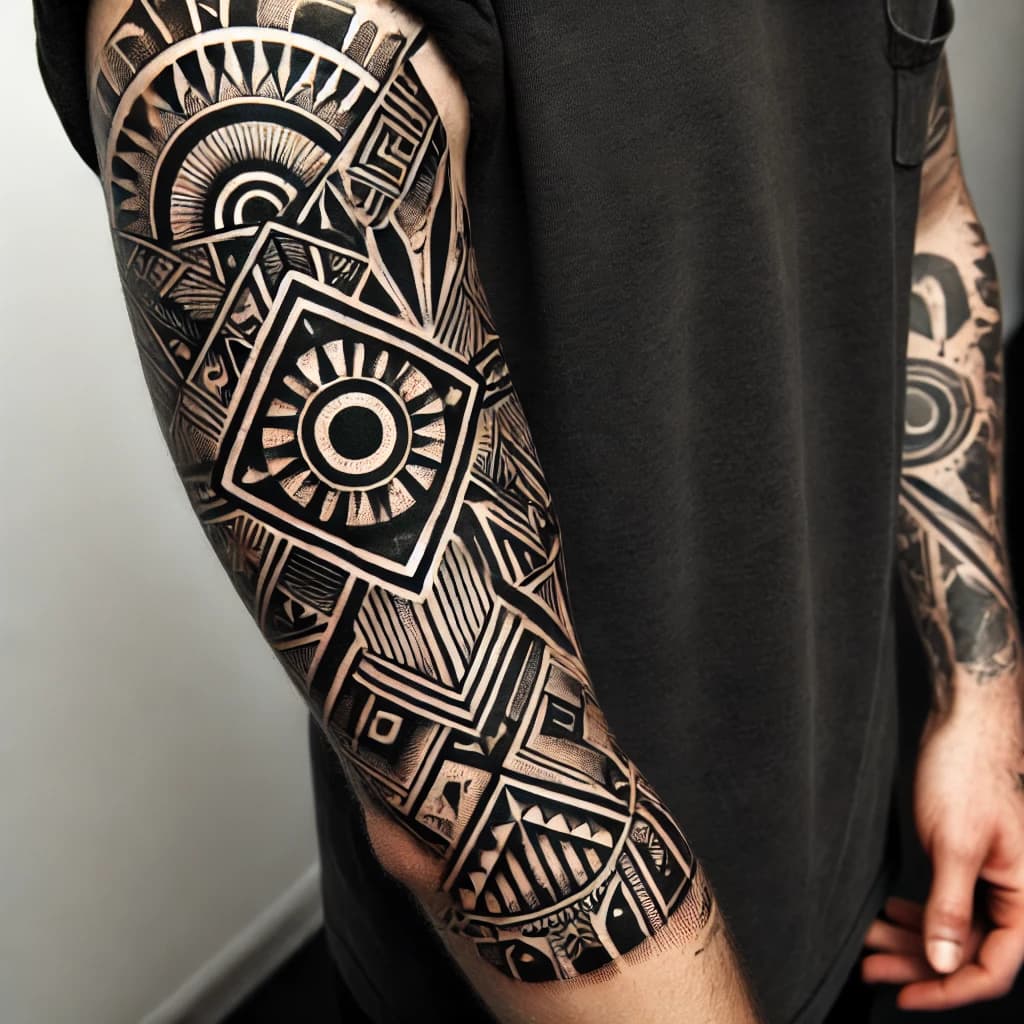
A blackwork approach gives the eye stronger contrast and sharper symmetry, which makes the shape carry its own weight on the body. This is the version for someone who wants clarity over decoration and a design that reads fast from a distance.
8. Open-work amulet tattoo
The British Museum holds a steatite Eye of Horus amulet with pierced, open-work construction, and that material logic translates well into tattoo form. Negative space can mimic the amulet feel, letting the symbol breathe instead of filling every gap.
9. Hieroglyph panel tattoo
Hieroglyphic framing gives the eye context and turns the piece into more than a standalone icon. It works best when the script is used as structure, not clutter, so the eye remains the visual anchor.
10. Sun-disc balance tattoo
A sun-like circle above the eye creates a neat vertical hierarchy that immediately stabilizes the composition. That small geometric decision does a lot of work, because it turns a sacred symbol into a balanced layout.
11. Ankh-linked protection tattoo
The ankh ties the Eye of Horus to life and continuity, which makes the piece feel more layered without becoming busy. It is a strong choice when the goal is to keep the ancient symbolism legible but expand its meaning on skin.
12. Healing-power tattoo
The Metropolitan Museum of Art describes the wedjat-eye as a healed eye, and that healing power is one of the reasons the design translates so well into tattooing. A cleaner line build can emphasize restoration rather than just visual flair.
13. Rebirth tattoo
In Egyptian mythology, Horus’ eye is injured or stolen by Seth and restored by Thoth, which gives the symbol a built-in rebirth narrative. Tattooed in geometric form, that story feels less like illustration and more like a resolved composition.
14. Regeneration tattoo
The wedjat-eye was understood as a source of regeneration, and that makes it an unusually strong talisman for body art. Geometry supports that reading by giving the design a sense of restoration and wholeness.
15. Living-and-dead amulet tattoo
The symbol was used widely by both the living and the dead, which explains why it still feels so adaptable on skin today. As a tattoo, it works as a personal amulet first and a visual statement second.
16. Steatite-inspired tattoo
The British Museum’s steatite examples show how durable the symbol has been across materials, and that sturdiness can be echoed with solid, stone-like tattoo shading. It is a smart path when you want the piece to feel ancient without looking dated.
17. Gold-accent tattoo
Gold references the way the symbol has moved through elite materials as well as everyday amulets. A restrained gold accent can give the Eye of Horus a sharper focal point while keeping the geometry clean.
18. Red jasper tattoo
Red jasper brings warmth and weight to the design, drawing on the material range seen in museum collections of the motif. It is especially effective when paired with crisp black lines, because the color deepens the symbol without muddying its shape.
19. Faience-blue tattoo
Blue glazed composition and faience are a natural fit for a design that already carries sky, protection, and restoration associations. A faience-blue palette can modernize the tattoo while still respecting the symbol’s long material history.
20. Identity-layered sacred geometry tattoo
This is the version that merges personal meaning, cultural memory, and structure into one piece. The Eye of Horus already carries vigilance and protection, so geometry simply gives those ideas a cleaner frame.
21. Medium-size forearm talisman tattoo
A medium-size placement helps the symbol stay readable, which matters in a tattoo culture where Statista’s 2021 U.S. survey found 17% of Americans had more than one tattoo and 74% reported none. That kind of contrast makes clarity valuable, and the Eye of Horus delivers it without losing depth.
22. Full-circle minimal Eye of Horus tattoo
The strongest geometric Eye of Horus tattoos come back to the same point: balanced linework, measured symmetry, and a symbol that still feels powerful after the decoration is stripped away. That is the difference between aestheticizing the eye and truly letting geometry sharpen it.
This article was produced by Prism’s automated news system from verified source data, official records, and press releases, then run through automated quality and moderation checks before publishing. The system is built and supervised by the people who set the standards it runs under. Read our full AI policy.
Did this article answer your question?