Geometric tattoos trace deep roots in Polynesian cultural traditions
Geometric symmetry in tattooing often comes from living Pacific traditions, not studio trends, and the difference matters before you put ink on skin.
The geometric look already has a history
The clean lines, repeating motifs, and balanced shapes that many people now read as “geometric” have long existed in Polynesian tattooing. The misconception is easy to make because the visual language feels modern in a studio setting, but the forms themselves are older than today’s trend cycle and tied to identity, genealogy, rank, and ritual life across the Pacific.
That matters because the word tattoo itself comes from the Polynesian word tatau. Once you start from that origin, the conversation changes: these designs are not just patterns to borrow, they are cultural systems with rules, meanings, and responsibilities.
What geometric design really overlaps with
What most contemporary readers call geometric tattooing often overlaps with Polynesian visual structure: symmetry, repetition, direction, and bold negative space. In Pacific traditions, those choices are not merely decorative. They can communicate status, lineage, protection, balance, spiritual identity, or life passage, depending on the culture and the specific motif.
The visual pull is real. A Marquesan cross can read as instantly geometric because of its strong directional structure and balanced form. Hawaiian kakau uhi can use bands and symbolic spacing in ways that feel close to ornamental or geometric composition. Māori and Samoan tattooing also use pattern logic, but the meaning sits underneath the beauty, not beside it.
Why respect comes before reference
The first rule is simple: know which tradition a pattern belongs to before you copy it. A Polynesian sleeve is not a neutral mood board, and a spiral, band, or cross-like motif may carry significance tied to family history, social standing, or sacred context.
This is why responsible interpretation matters so much in geometric tattooing. You can admire the symmetry, but if you want the work to be meaningful rather than extractive, the design has to be understood in relation to the people who made it, preserved it, and continue to wear it.
Māori tā moko is biographical, not decorative
Te Ara’s account of tā moko makes one thing especially clear: Māori tattooing developed distinctive forms in New Zealand, including deeply grooved scars and spiral motifs. Those spirals are the kind of visual element modern tattoo fans often recognize as geometric, but in tā moko they are part of a lived cultural language.
Historically, early forms of moko evolved during mourning for deceased relatives, using obsidian or shells and soot placed in the wounds. Te Ara also notes that the correlation between the mana and tapu of moko reflects the status of the art form, and that chiefs’ moko were used as signatures on the Treaty of Waitangi in 1840. That documentary role is a reminder that these marks were never only aesthetic.
There was also a strong late-20th-century renaissance of moko practice, including the return of full-face moko for men and moko kauae for women. In practical terms, that means tā moko is not a relic. It is a continuing tradition with contemporary presence, and its imagery should be approached with that living reality in mind.
Samoan tatau and the weight of endurance
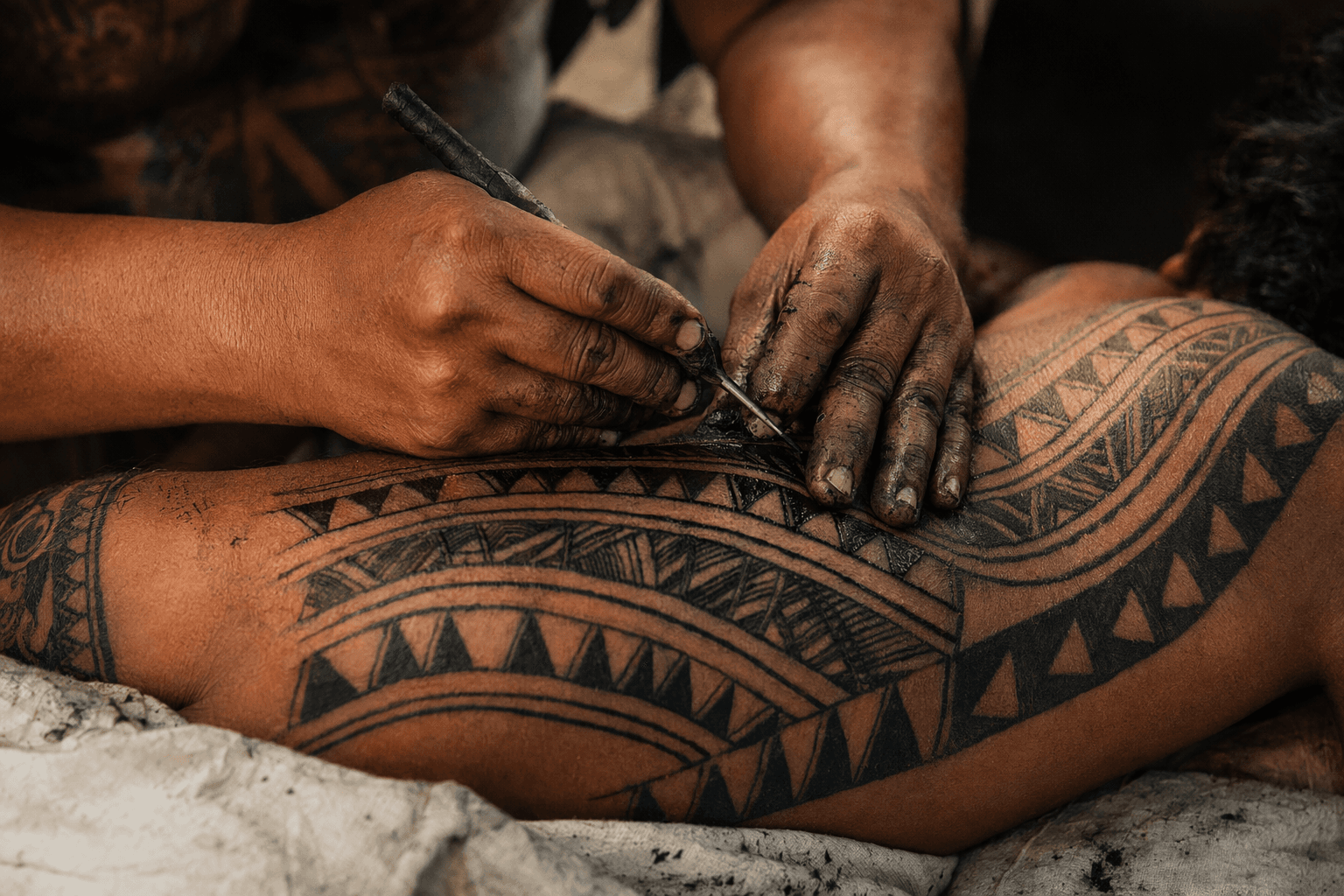
Samoan tattooing sits at the center of any serious conversation about Pacific geometry because of its scale, discipline, and cultural continuity. Smithsonian’s cultural history of Samoan tattooing describes tatau as a practice with earliest beginnings and a long, complicated history shaped by both local and external forces.
Recent scholarship in MAI Journal explains that Christianity contributed to a decline in tattooing because denominations discouraged or banned it, but the practice has seen revival through Indigenous reclamation and decolonization. PBS’s *Skin Stories* adds the broader Pacific context: tattoo traditions were once widespread across the ocean and declined after western missionaries arrived in the 19th century.
That history makes Samoan pe’a especially important to understand. It is one of the most extensive and painful tattooing traditions in the world, applied over multiple sessions with traditional tools. If you are drawn to its strong structural rhythm, the correct response is not imitation without context. It is respect for the people who maintained it through decline and revival.
A New Zealand Geographic account also notes that Samoan independence helped spur a revival of tā tatau, and that Samoan migrants to New Zealand in the 1960s and 1970s helped spread it there. That diaspora history matters because it shows how living traditions travel, adapt, and remain politically and culturally active.
Hawaiian kakau uhi and the return of teaching
Hawaiian tattooing also belongs in the same conversation. The Native Arts and Cultures Foundation describes kakau uhi as being revitalized through the traditional teaching method ao aku, ao mai, which emphasizes transmission through reciprocal learning. That is a crucial detail for anyone looking at Hawaiian-inspired geometry, because the linework is embedded in cultural practice, not just visual style.
Families also preserved the practice through oral tradition even when it was discouraged. In the modern tattoo world, that means Hawaiian bands or pattern-heavy compositions should not be treated as generic island ornament. The design language can signal protection, strength, and spiritual connection, but it carries far more weight than those broad categories alone.
Marquesan motifs and the power of bold structure
Contemporary descriptions of Marquesan tattooing emphasize how geometric the style is, and why it still resonates so strongly in modern tattoo design. Historically, those motifs signified origin, rank, heroism, protection, and passage. That makes the style one of the clearest examples of how geometry can function as identity rather than abstraction.
The Marquesan cross stands out because it translates easily to the eye: bold, directional, and structurally confident. In modern geometric work, that kind of motif often attracts people who want something clean and symbolically loaded. The important distinction is that the visual appeal comes from a living tradition with social meanings, not from a free-floating pattern library.
How to read the style before you choose it
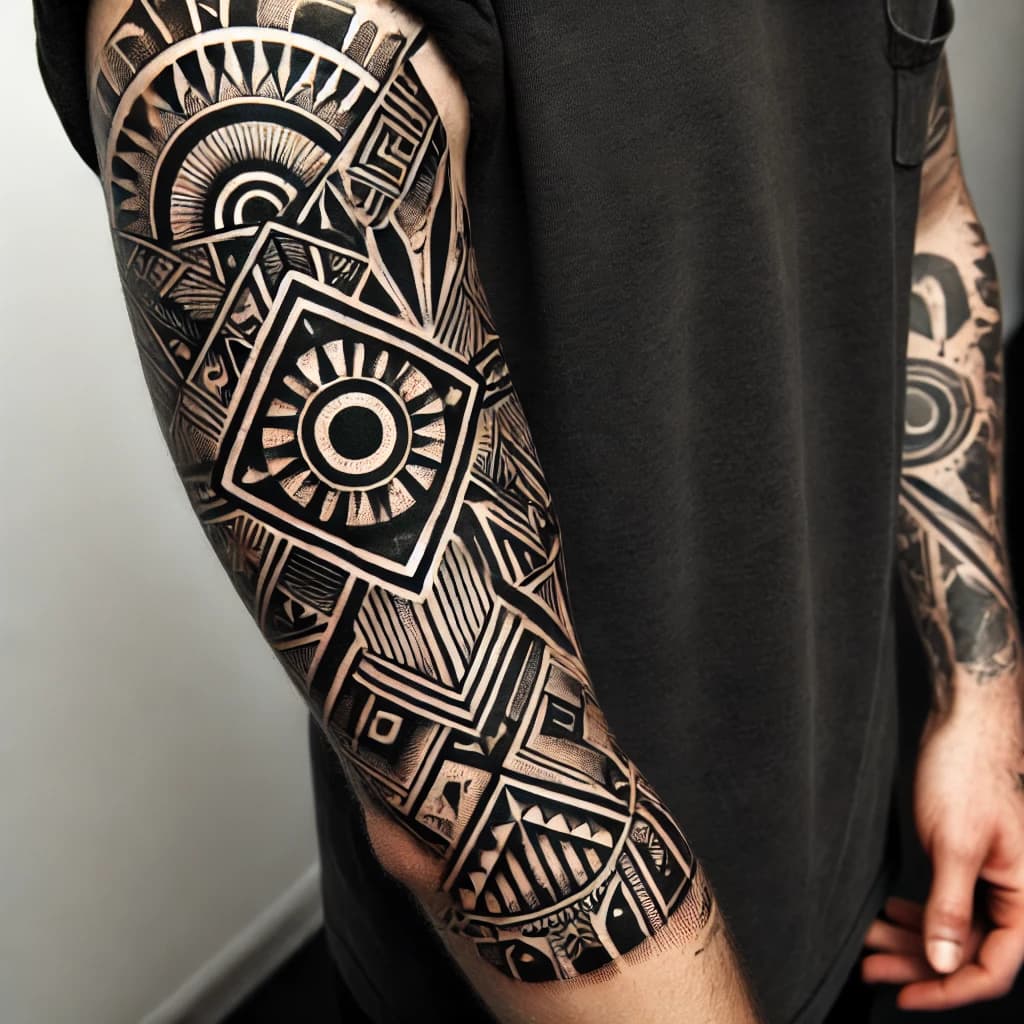
If you are thinking about a geometric tattoo inspired by Polynesian traditions, start by asking what kind of relationship you want with the imagery. A full Polynesian sleeve can unify the arm into one continuous composition, but that only works responsibly when the structure is treated with care, not as decoration-by-accident. A honu rendered in Polynesian patterning may look elegantly geometric, yet it still sits inside a Pacific visual world with its own codes.
- Which culture does the motif come from?
- Does it carry status, genealogy, or ritual meaning?
- Is the design appropriate to wear as direct reference, or should it remain an inspiration point?
- Can the tattooist explain the pattern’s context, not just its look?
Use these questions as a filter:
That last question is especially important. In this corner of tattooing, knowledge is part of the design.
The real takeaway for geometric tattoo fans
The strongest geometric tattoos often feel timeless because they are built on systems that have already endured centuries of change. In Polynesia, those systems were shaped long before modern studio aesthetics, then pressured by missionaries, colonial rule, and cultural suppression, and then renewed through reclamation, teaching, and community memory.
That is the real correction to the misconception. Geometric tattooing is not just a style trend that happened to look symmetrical. Some of its most powerful forms come from living Pacific traditions, and the most respectful way to wear that influence is to understand where it comes from before it ever reaches the skin.
This article was produced by Prism’s automated news system from verified source data, official records, and press releases, then run through automated quality and moderation checks before publishing. The system is built and supervised by the people who set the standards it runs under. Read our full AI policy.
Did this article answer your question?