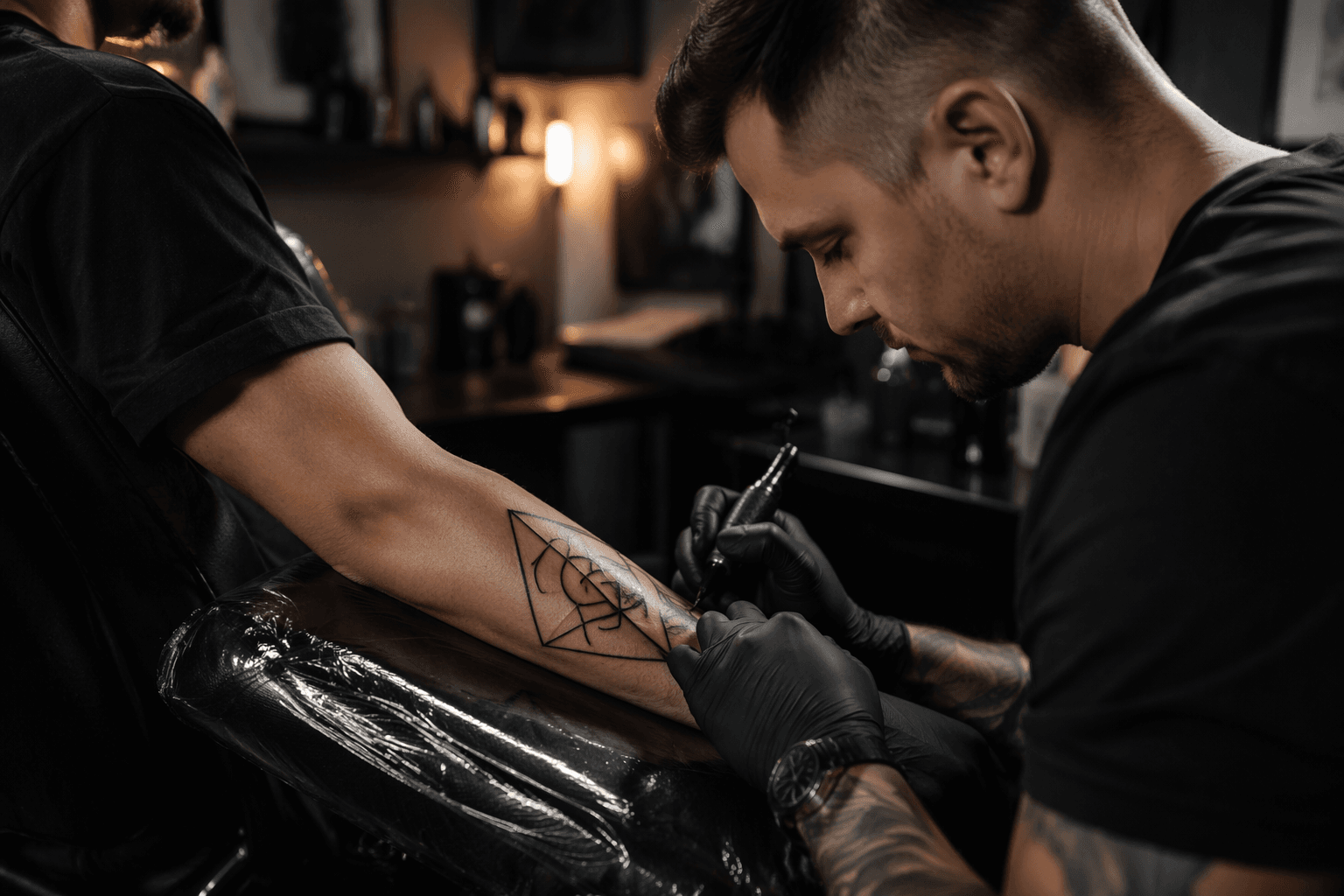
Grid Maker Pro offers free geometry grids for tattoo artists
Grid Maker Pro turns sacred-geometry overlays into a practical stencil tool, aimed at cleaner symmetry, faster setup, and fewer redraws for tattooers.
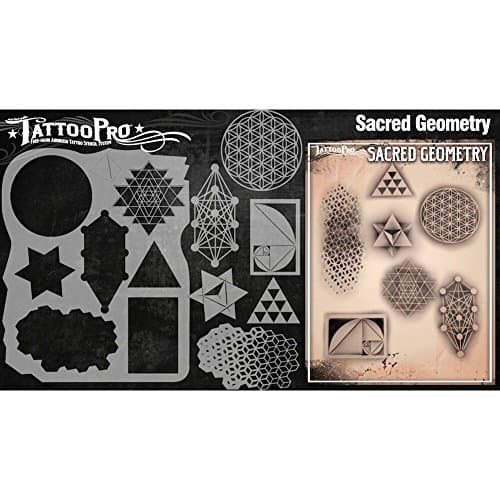
Grid Maker Pro is pitching sacred geometry as a production tool, not a mood board. Its tattoo-artist page is built around a simple promise: if you need cleaner symmetry for mandalas, radial layouts, lettering, or other structure-heavy designs, the overlay can help you get there faster.
A geometry tool built for tattoo workflow
The appeal starts with access. Grid Maker Pro says the tool is free, requires no signup, and keeps the image on the user’s device, which matters in a tattoo workflow where speed and privacy both count. Instead of pushing stencil references through an account system or cloud setup, the artist can open an overlay, size it to the planned tattoo area, and work from that structure immediately.
The page frames the geometric construction itself as the reference point. That is a useful mindset for ornamental work, because once a radial layout is off, the whole design can feel unstable on skin. In practice, that means the grid is less about decoration and more about keeping axes, spacing, and proportion disciplined before the needle ever comes out.
What the overlays actually cover
Grid Maker Pro does not limit itself to one tattoo style. The tattoo page points artists toward mandala grids, sacred-geometry overlays, baseline grids for script, and Loomis head construction for proportion work. That makes the system relevant whether you are laying out a full chest mandala, tightening a geometric wordmark, or mapping facial proportions for custom design work.
The site also names familiar sacred-geometry forms that live deep in the geometric tattoo vocabulary: Sri Yantra, Flower of Life, Metatron’s Cube, and Vesica Piscis. These are presented as part of a broader catalogue of geometry-based templates, which suggests the tool is meant to support the recurring shapes artists already reach for when clients ask for ornamental balance, symmetry, and clean linework.
Why tattooers reach for a grid in the first place
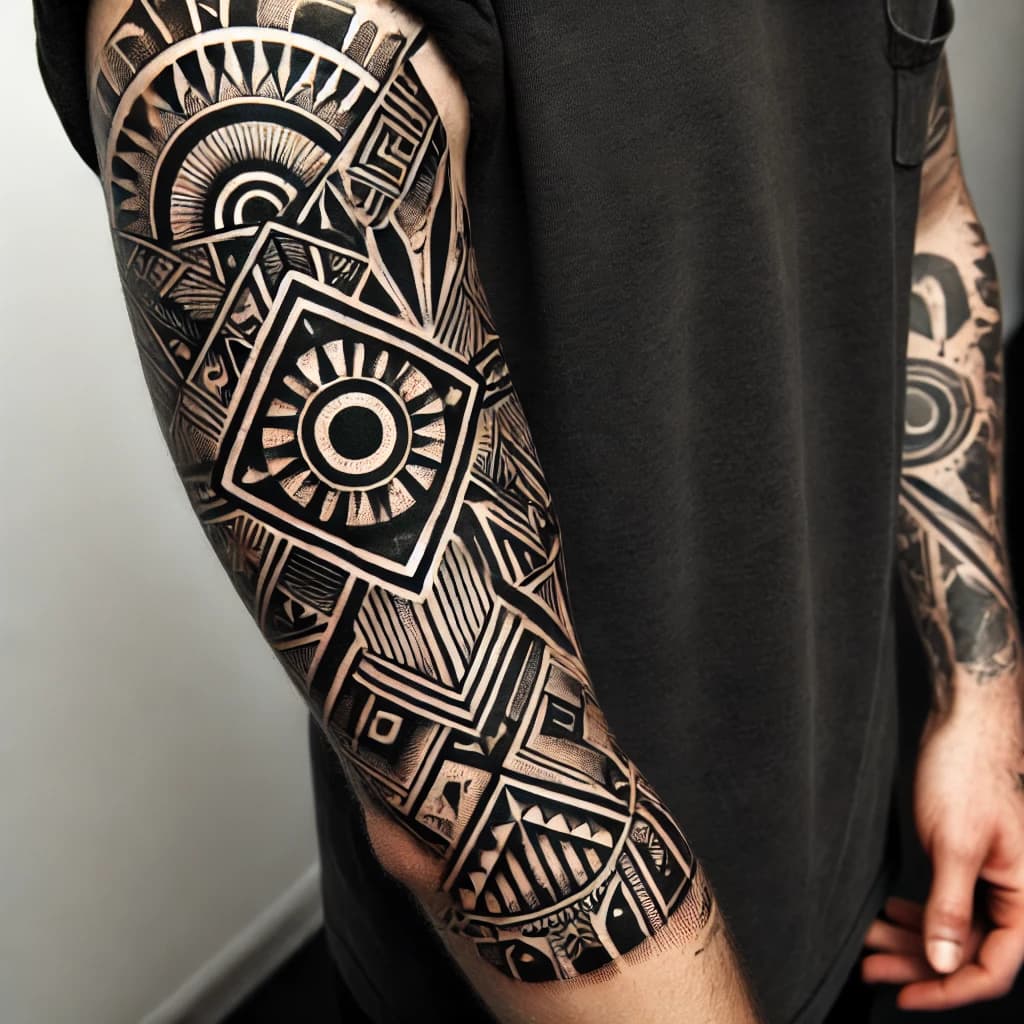
Geometric tattoos are built from primitive shapes like triangles, hexagons, circles, and squares, and that simplicity is exactly why they punish mistakes. If the centerline drifts, the repeats do not land evenly. If a radial composition is rebuilt by eye too many times, redraws start to stack up, and the transfer loses the crispness that clients expect from this style.
That is where the practical use case becomes obvious. A grid can help speed stencil setup, reduce redraws, and keep symmetry intact on mandalas and radial layouts. It can also give geometric lettering a baseline so the script stays measured instead of wobbling into a hand-drawn approximation.
Where the tool helps most
For mandalas and sacred-geometry pieces, the value is in controlling the structure before embellishment. If the Flower of Life or Metatron’s Cube is the underlying scaffold, the overlay gives you a clean way to size the composition to the body area and keep the relationships between circles, intersections, and repeats consistent.
For lettering, the benefit is different but just as practical. Baseline grids help keep the lettering level and proportional, especially when the script needs to sit inside a circular or radial frame. And for proportion work, the Loomis head construction reference shows that the platform is thinking beyond ornamental tattooing and into general visual planning, which is useful if your shop mixes custom illustration with tattoo prep.
Where the artist still has to do the hard part
A grid is a starting point, not a substitute for composition judgment. Sacred geometry can tell you where the structure wants to land, but it cannot decide whether the piece belongs tighter at the center, looser at the edge, or adjusted to follow the body’s movement. That still comes down to the artist’s eye, especially on curved placement areas where flat geometry has to be adapted to skin.
That distinction matters because geometric tattooing is unforgiving. The tool can reduce guesswork, but it cannot fix a design that is visually overbuilt or badly scaled for the body. In that sense, Grid Maker Pro reads less like a shortcut and more like a way to preserve the part of the process that geometric artists already value most: clean construction first, style second.
A broader ecosystem already exists around this kind of planning
Grid Maker Pro’s larger platform says it offers 82 drawing grids and composition overlays, including rule of thirds, golden ratio, Loomis head, perspective systems, and sacred geometry. That places the tattoo page inside a broader precision-focused toolkit, not a one-off novelty aimed at body art.
The company also says its sacred-geometry overlay library includes around 20 templates, and that four of them account for about 75% of practical sacred-geometry use across art, tattoo, and design. That helps explain why the tattoo page focuses on recurring forms instead of trying to catalog every possible shape. In the real world, artists keep returning to the same few structural templates because they solve the most common symmetry problems.
The market signal behind the tool
The interest in geometry references is not happening in isolation. Tattooing 101 describes geometric tattoos as a popular client choice and notes that sacred-geometry-based designs are especially popular. Its stencil guidance also recommends resizing vector files carefully so enlarged stencil designs do not turn blurry, which lines up with the same theme: precision at the prep stage pays off once the design hits skin.
There is also a wider safety context that sits alongside the design conversation. The U.S. Food and Drug Administration says a tattoo is permanent when a needle inserts colored ink into skin, and it notes that the actual practice of tattooing is generally regulated by local jurisdictions. The agency also warns that contaminated tattoo inks can cause infections and allergic reactions, and a recent study of the U.S. market found 15 voluntary tattoo-ink recalls between 2003 and 2021, involving more than 200 inks from 13 manufacturers and one distributor. Medical literature likewise points to sterilization, contaminated ink, skin preparation, and aftercare as major factors in infection risk, which makes careful prep part of the same professional standard as accurate layout.
That is why a free overlay tool can matter without pretending to be magic. The strongest use of Grid Maker Pro is not as a sacred-geometry trend piece, but as a practical aid for tattooers who want their mandalas, radial designs, and geometric lettering to land cleanly the first time. In a style where one off-center axis can throw off the whole read, a solid grid is not extra. It is the thing that keeps the rest of the tattoo honest.
This article was produced by Prism’s automated news system from verified source data, official records, and press releases, then run through automated quality and moderation checks before publishing. The system is built and supervised by the people who set the standards it runs under. Read our full AI policy.
Did this article answer your question?