Hand tattoos make a bold statement, but demand extra care
Hand tattoos can turn geometry into a sharp statement, but the hand’s friction, pain, and fast fading mean the design has to be built for the body.
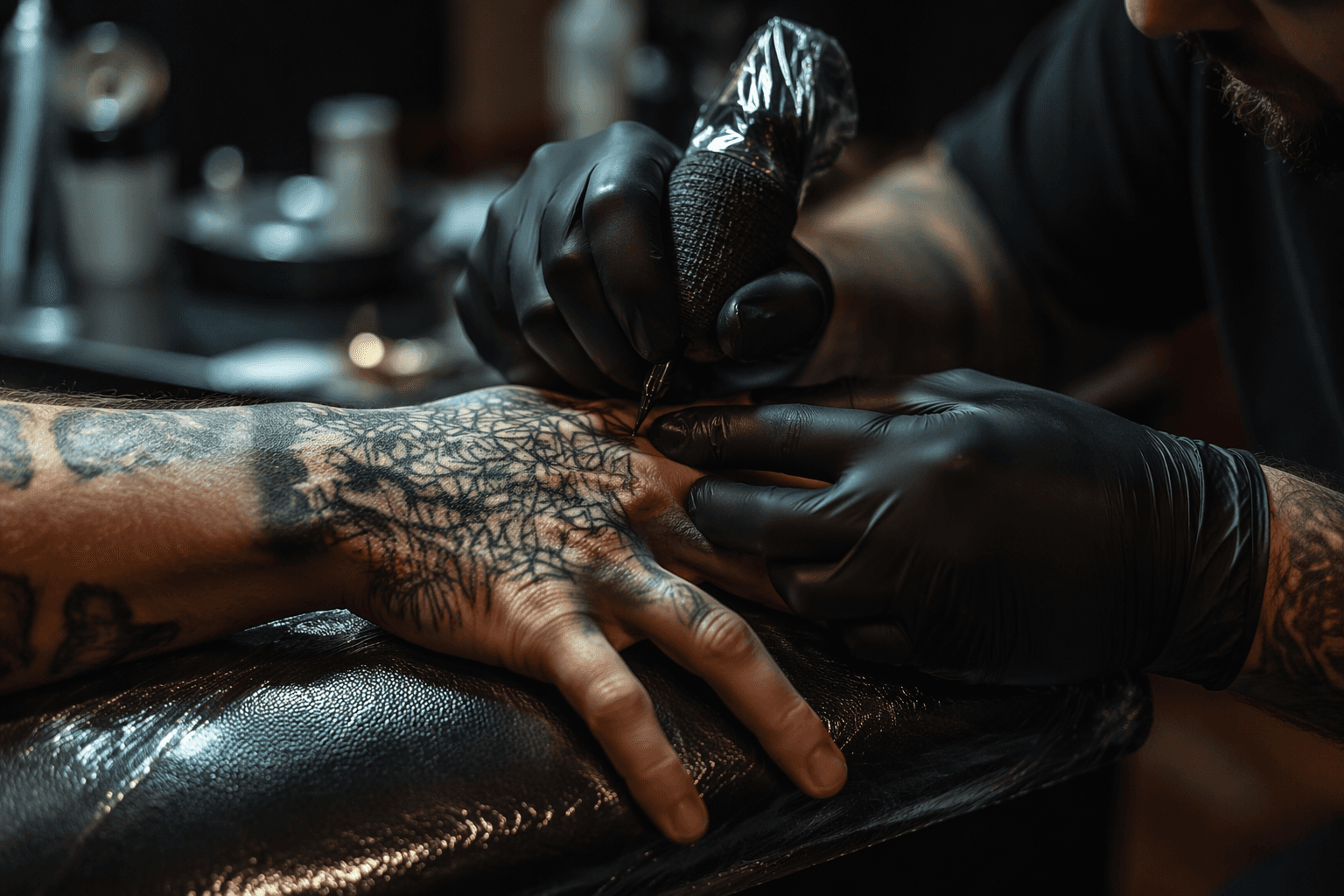
Fingers, knuckles, and the back of the hand are some of tattooing’s least forgiving surfaces for crisp geometry. Everyone sees them, and every wash, scrape, stretch, and hour of sun works against clean lines. That is why hand tattoos can look striking, even elegant, but only if the design is chosen with the hand’s constant motion in mind.
Why the hand changes the rules
In the wider U.S. culture around tattoos, the ground has shifted. Pew Research Center found in 2023 that 32% of U.S. adults have at least one tattoo, and 22% have more than one. Tattoos have become more common in workplaces and more accepted in everyday life, which helps explain why hand tattoos are showing up in more conversations about style and identity. Even with that broader acceptance, the hand still asks for a different level of commitment than an arm or leg piece.
A hand tattoo can act like a signature, especially if you want a small symbol that reads cleanly at a glance. It can also become a daily decision about profession, dress codes, and whether you want to explain the piece every time someone notices it.
What geometric work survives best
Hand tattoos can suit anything from a tiny minimalist symbol to detailed blackwork, but not every geometric idea ages equally well on fingers, knuckles, and the back of the hand. The designs that tend to hold up best are the ones built on strong structure rather than hairline detail: bold symmetry, thicker outlines, simple repeated shapes, and compact blackwork that does not depend on ultra-fine interior patterning.
Polynesian tattoo traditions developed over millennia and often featured highly elaborate geometric designs, while contemporary geometric tattooing is often traced through blackwork, dotwork, tribal, and ornamental influences. Those traditions point to a useful lesson for hand placement: the strongest geometric tattoos are usually the ones that can survive visual noise. A clean mandala fragment, a solid angular band, or a symmetrical motif with generous spacing will usually outlast a design that depends on delicate micro-lines crowding a small surface.
On the hand, size is not the only issue. Placement changes everything. Fingers and knuckles take the most abuse, so a design there needs to be simpler and sturdier than a similar piece on the back of the hand. Thin-line shapes can look beautiful in a mockup, but they do not hold up as well on the hand.
Pain is part of the design decision
The hand is not just hard to keep clean-looking. It also hurts more than many other tattoo placements. By zone, the back of the hand sits around 7 out of 10, the side of the hand around 7 to 8, fingers around 8 to 9, and knuckles at 9. That ranking tracks with the anatomy. The hand and wrist are a dense network of bones, muscles, nerves, tendons, ligaments, and blood vessels, and cutaneous innervation in the hand includes branches of the radial, median, and ulnar nerves.
For you, that means the sensation is rarely just one kind of pain. Some spots feel sharp and buzzy, others feel raw and thudding, and the bony parts can amplify both. If you are planning a geometric piece with repeated passes for linework or shading, that extra sensitivity matters because the hand can become harder to sit through as the session goes on. The more intricate the pattern, the more the pain can influence what the artist can safely finish in one sitting.
Why hand tattoos fade faster
Even a well-executed geometric tattoo has to fight the environment of the hand. Repeated washing, sunlight, friction, and fast skin turnover all push ink out sooner, especially on fingers, knuckles, and the side of the hand. That is why small details can blur, lighten, or break apart there long before they do on a forearm or calf.
Sun protection is not optional if you want the tattoo to stay readable. The American Academy of Dermatology recommends applying broad-spectrum sunscreen 15 minutes before going outside and reapplying at least every two hours. Tanning beds and sunlamps can fade tattoo ink and raise skin-cancer risk. On a hand tattoo, that advice matters more because the placement is exposed so often.
Healing is shorter, not easier
A small hand tattoo may heal faster than a larger piece on the chest or back, but faster is not the same as simple. Smaller tattoos on the hands, wrists, or arms may flake or itch, yet they will likely heal faster than larger tattoos that cover the chest or back. That faster turnaround can be reassuring, but it does not erase the reality that hands move constantly and get touched constantly.
Gentle hydration and careful sun protection help preserve line clarity, and they matter even more when the design depends on symmetry.
How to think before you book
If this is your first tattoo, or your first one in a highly visible place, the hand is usually not the gentlest starting point. A more forgiving area such as the forearm or upper arm can give you a sense of how your skin takes ink and how you live with a visible piece day to day. That does not mean you need to avoid hand geometry forever. It means the placement should match your tolerance for pain, fading, and touch-ups, not just your love of the design.
If the goal is a crisp geometric statement, the winning move is often to simplify rather than embellish: fewer lines, stronger contrast, more symmetry, and a design that still reads when the skin shifts.
Tattooing has been practiced in most parts of the world, and the earliest known body tattoos date to around 5,200 years ago with the Iceman.
This article was produced by Prism’s automated news system from verified source data, official records, and press releases, then run through automated quality and moderation checks before publishing. The system is built and supervised by the people who set the standards it runs under. Read our full AI policy.
Know something we missed? Have a correction or additional information?
Submit a Tip