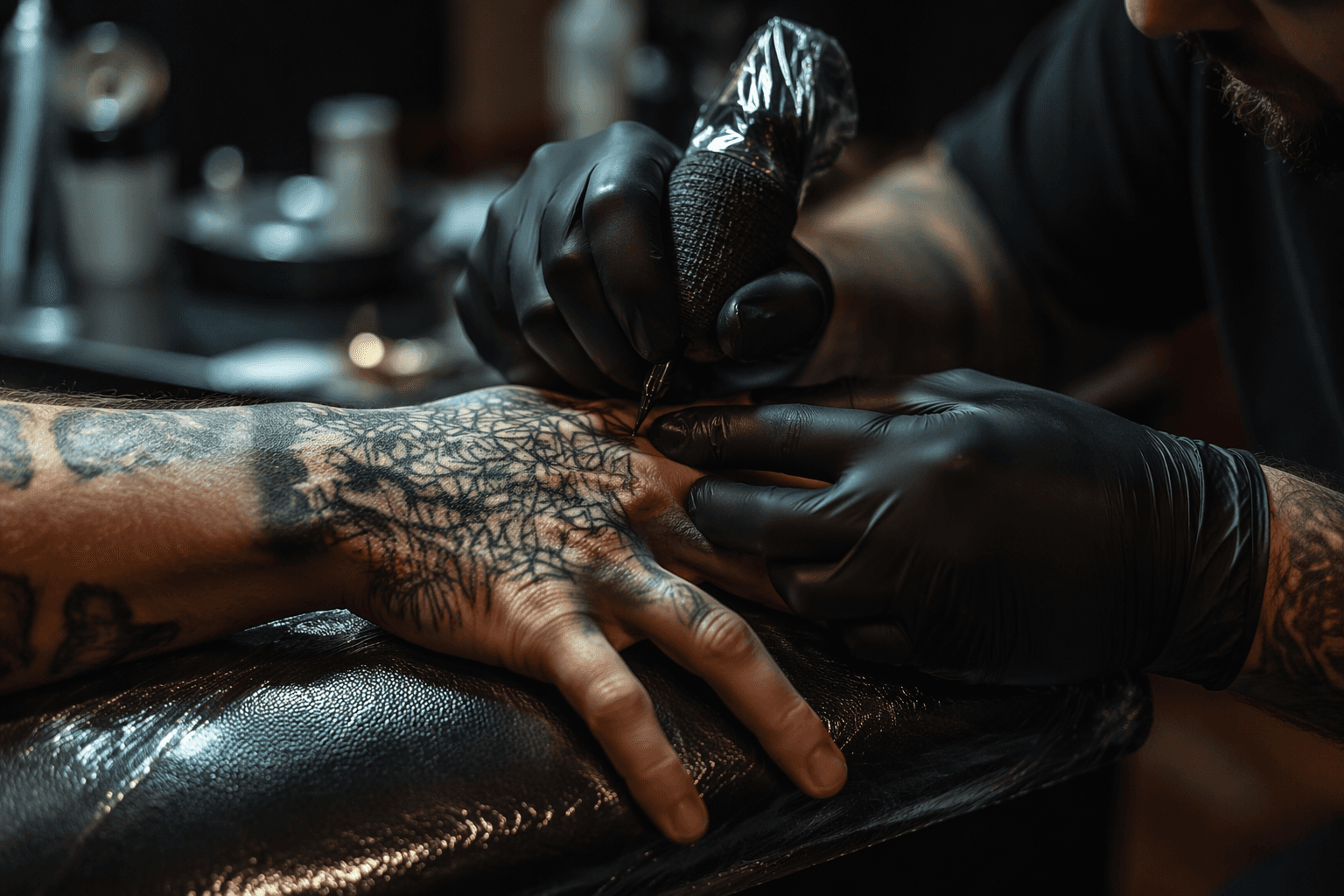
Sacred geometry tattoos turn cosmic balance into spiritual art
Sacred geometry tattoos work best when the pattern carries the meaning, not just the aesthetic. The strongest designs use balance, ritual, and placement as part of the story.
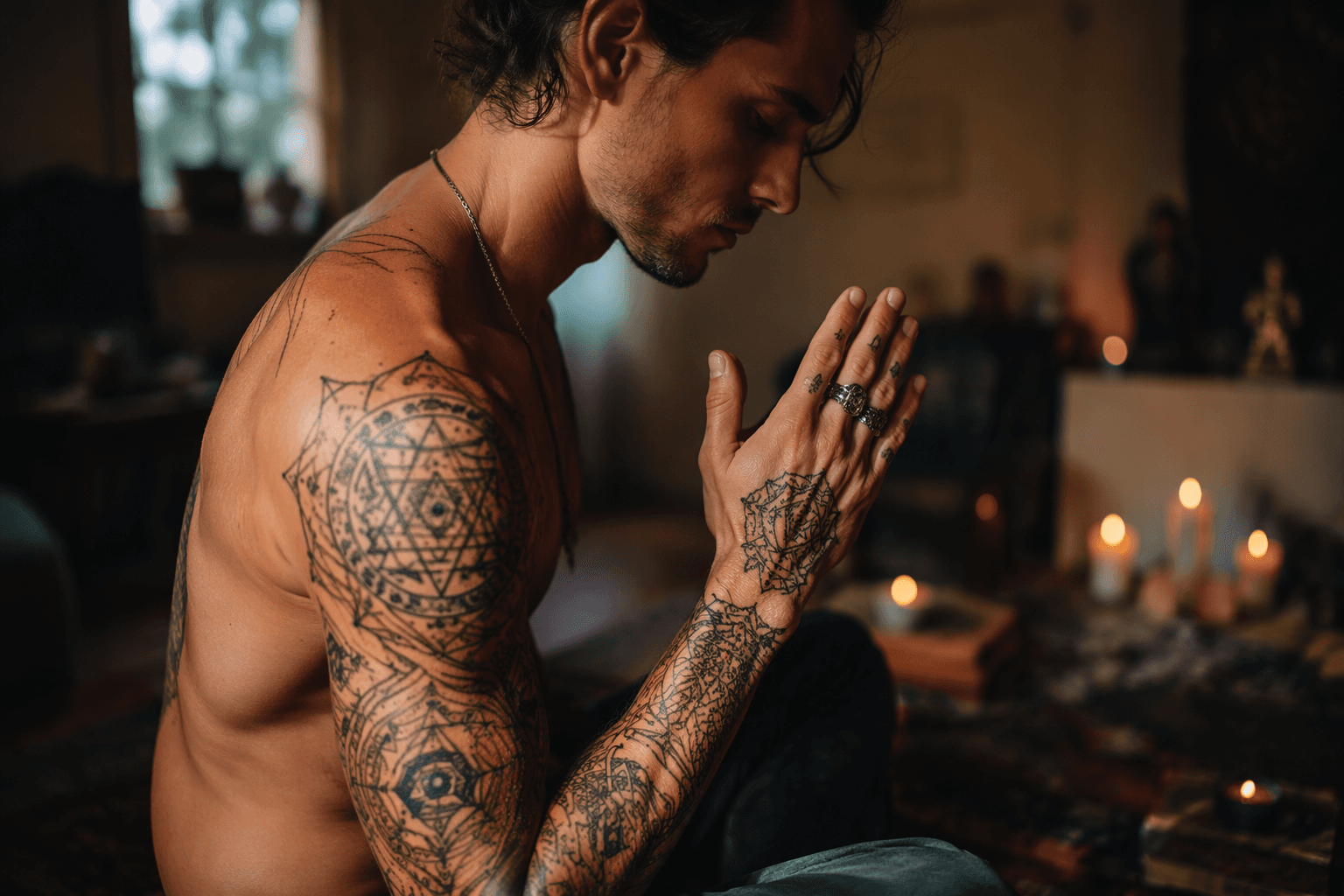
A well-built circle, lattice, or radiating mandala can carry cosmic weight on skin that moves, stretches, and changes. Sacred geometry tattoos work because they solve a problem most spiritual ink runs into: how to make meaning look disciplined. When the structure is right, the tattoo reads as intention rather than trend.
Why sacred geometry keeps showing up in tattoo work
Sacred geometry uses geometric forms and proportions believed to carry spiritual meaning and reflect order or harmony in the universe. That idea gives tattoo artists a useful language: dots, lines, circles, and repeating shapes can suggest hidden order without needing a literal scene. In practice, these tattoos often feel calmer and more resolved than purely illustrative spiritual pieces.
The style also has a deep visual pedigree. Interpretations of sacred geometry connect it to ancient architecture, Renaissance proportion studies, and meditation practice, and artists such as Leonardo da Vinci are often cited in that lineage for trying to uncover mathematical structure in beauty.
The motifs that actually carry weight
The motifs that matter most are the ones that do more than fill space. The Flower of Life, Metatron’s Cube, Vesica Piscis, and the Golden Ratio spiral show up again and again because each one combines visual precision with a specific idea: harmony, creation, interconnection, or ordered growth. When those symbols are used well, the geometry becomes the subject.
Mandala-like radiance and balance-based compositions earn their keep. A centered circle with measured repetition can suggest meditation, wholeness, or a stable inner core, while layered symmetry can imply the universe as something legible and held together by pattern. The strongest sacred-geometry tattoos do not overload the design with every popular motif at once. They pick one structure and let it carry the meaning.
The weakest versions are easy to spot. If a design is only a cluster of triangles, rings, and ornamental dots with no internal logic, it starts to feel like interchangeable Pinterest aesthetics. A Vesica Piscis can speak to overlap and creation; a Golden Ratio spiral can suggest growth; a mandala can build a sense of stillness.
Cosmic symbolism works when the body placement supports it
One of the clearest examples in the current wave of designs is the Sacred Geometry and Cosmic Balance tattoo, which uses celestial symbols, flowing patterns, and a radiant circle to represent harmony between the spiritual and physical worlds. The dots, lines, and shapes inside that composition suggest hidden order in the universe.
The placement problem matters just as much as the drawing. A design that looks sharp in a digital mockup can fall apart when it wraps over a shoulder, crosses ribs, or stretches across a forearm that bends all day. Sacred geometry is unforgiving in that way. If the symmetry breaks at the wrong point, the whole piece loses its calm.
These tattoos often work best when the structure matches the body’s own geometry. Circles settle naturally on shoulders, sternums, and calves. Vertical symmetry can ride the spine. Wider, balance-based compositions can breathe across the chest or back without feeling crowded.
Where faith imagery sharpens the meaning
The spiritual collections that include sacred geometry tend to work best when geometry supports a recognizably devotional image instead of replacing it. One piece pairs a cosmic chariot with a divine hand and prayer beads to suggest destiny and higher guidance. Another uses the Virgin Mary and a Sacred Heart to communicate compassion, suffering, and redemption. A meditating Buddha and Bodhi tree design centers inner peace, enlightenment, and disciplined growth. The Buddha-and-Believe composition with moon phases and sacred geometry adds change, cycles, and faith to that mix.
Those pairings work because the symbols already carry emotional weight. Catholic tradition traces Sacred Heart devotion back to meditation on the Five Wounds of Christ in the eleventh century, and St. John Eudes later promoted the devotion, with a first feast celebrated in Rennes, France, on August 31, 1670. Mary has long been one of the major subjects of Western art.
Respect changes the reading, especially with Buddha imagery
Buddhist tattoo imagery carries a different kind of responsibility. Buddha tattoos can be culturally sensitive, especially when placed below the waist or on feet in traditions where those areas are considered disrespectful. Thailand’s sak yant tradition is sacred and sometimes controversial, and signage in that debate has stated, “Buddha is not for decoration / Respect is common sense.”
The useful rule for choosing the right design
The simplest filter is this: the geometry should deepen the symbol, not compete with it. If the piece uses a Flower of Life grid to frame a central devotional image, or a radiant circle to suggest cosmic balance, the structure is doing real work.
This article was produced by Prism’s automated news system from verified source data, official records, and press releases, then run through automated quality and moderation checks before publishing. The system is built and supervised by the people who set the standards it runs under. Read our full AI policy.
Know something we missed? Have a correction or additional information?
Submit a Tip