Oregon Bans Numbing Creams for Tattoo Artists, Sparking Client Cancellations
Oregon ruled tattoo artists can't apply numbing creams, with violators risking license revocation and Portland studios already canceling cosmetic-tattoo appointments.
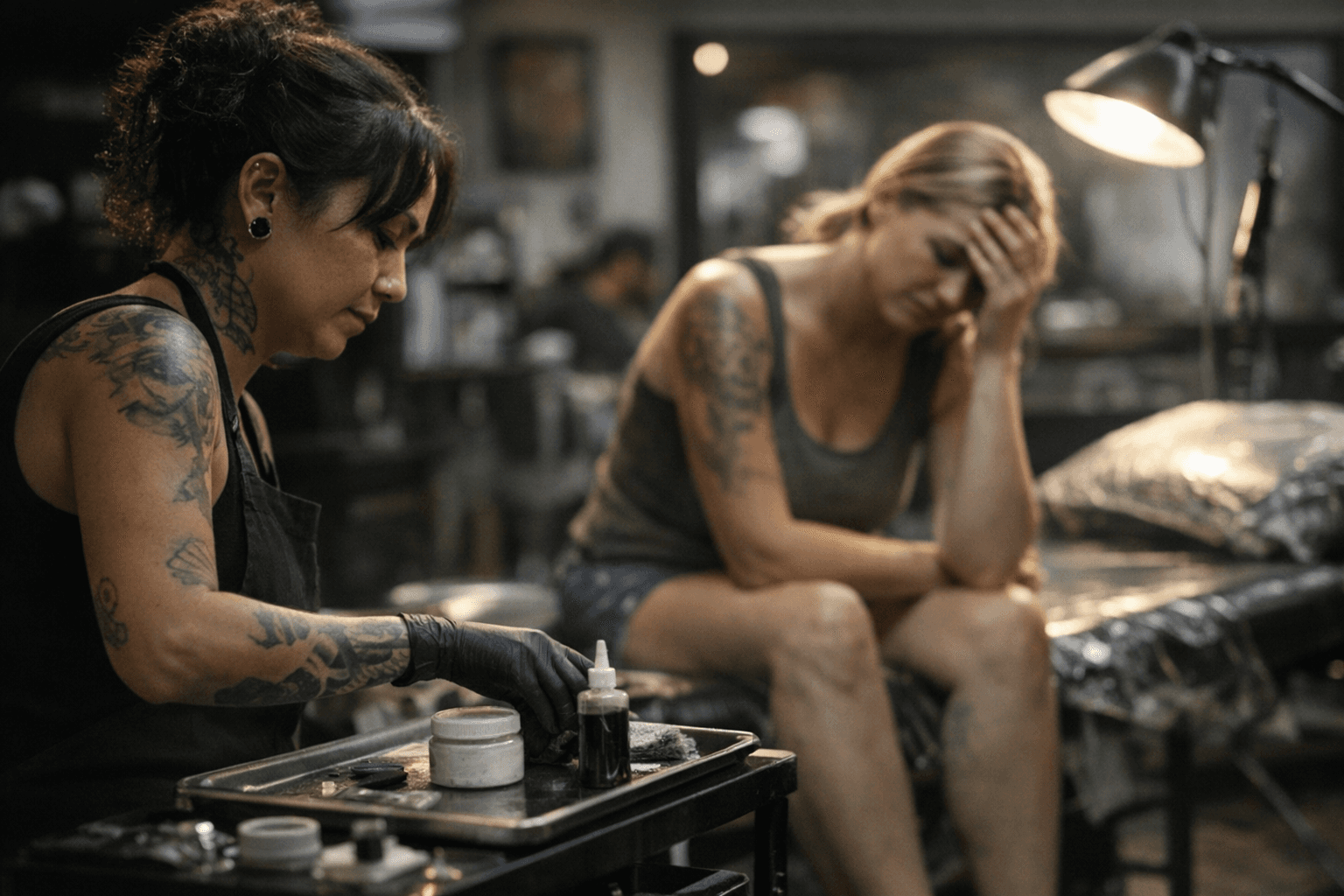
Appointment cancellations started hitting Portland studios almost immediately after a March 25 practice clarification from Oregon's Health Licensing Office ruled that licensed tattoo artists cannot apply nonprescription topical anesthetics, including Bactine spray and over-the-counter lidocaine products, to clients during any tattoo or cosmetic procedure.
The consequences landed fastest on cosmetic tattoo artists handling lip blushing, permanent eyeliner, and microblading-adjacent work, where client comfort during sensitive procedures has long depended on topical numbing. Portland-area practitioners said they began rescheduling appointments immediately after the clarification circulated, and many now worry the restriction will send clients across the Columbia River to Washington, where no equivalent ban currently applies.
The Health Licensing Office's position is rooted in Oregon Revised Statutes and the statutory scope of practice for licensed tattoo artists. Derek Fultz, a qualification analyst at the office, explained that because Oregon law does not explicitly authorize tattoo artists to administer topical anesthetics, the practice falls outside their allowable scope. The clarification warned that applying drugs to other people "may constitute the practice of medicine," and it put real teeth behind that language: a licensed artist found using numbing agents could face civil penalties, suspension or revocation of their license, or potential criminal charges.
For traditional tattooers, the practical impact is more modest. Sean Lanusse, an artistic tattooer at Thunderbird Tattoo in Portland's St. Johns neighborhood, said numbing creams were never central to his process. "It makes the skin kind of weird in my opinion," he said. "Almost like tattooing a Nerf football." Even so, Lanusse acknowledged that most artists keep Bactine on hand for extended sessions, and that the ban carries considerably more weight for those working painful placements or sensitive cosmetic procedures.
The disruption cuts deepest for cosmetic tattoo educators, who depend on volunteer models willing to sit for eyeliner and lip work. Without numbing, securing those models gets harder, and student practice hours suffer. One apparent workaround, having clients self-apply numbing before arriving, introduces its own problems. Artist Parish said self-application risks inferior product selection and incorrect technique. "I buy from a reputable company, a permanent makeup products LLC," she said, adding that pushing the cost onto clients makes services more expensive overall.
Oregon is not entirely alone in this position. Michigan enacted a similar ban previously, making both states outliers in a patchwork of state-level approaches that now creates a direct competitive disadvantage for Oregon studios near state lines. Trade groups and individual practitioners are expected to push for legislative or administrative rulemaking to expressly authorize topical anesthetic use under safe-use protocols, or to allow on-site medical collaborations where credentialed clinicians could administer numbing. Until then, Oregon cosmetic tattoo artists are left managing each appointment on its own terms, deciding procedure by procedure whether the work can proceed comfortably or whether restructuring the booking is the only honest option left.
Know something we missed? Have a correction or additional information?
Submit a Tip