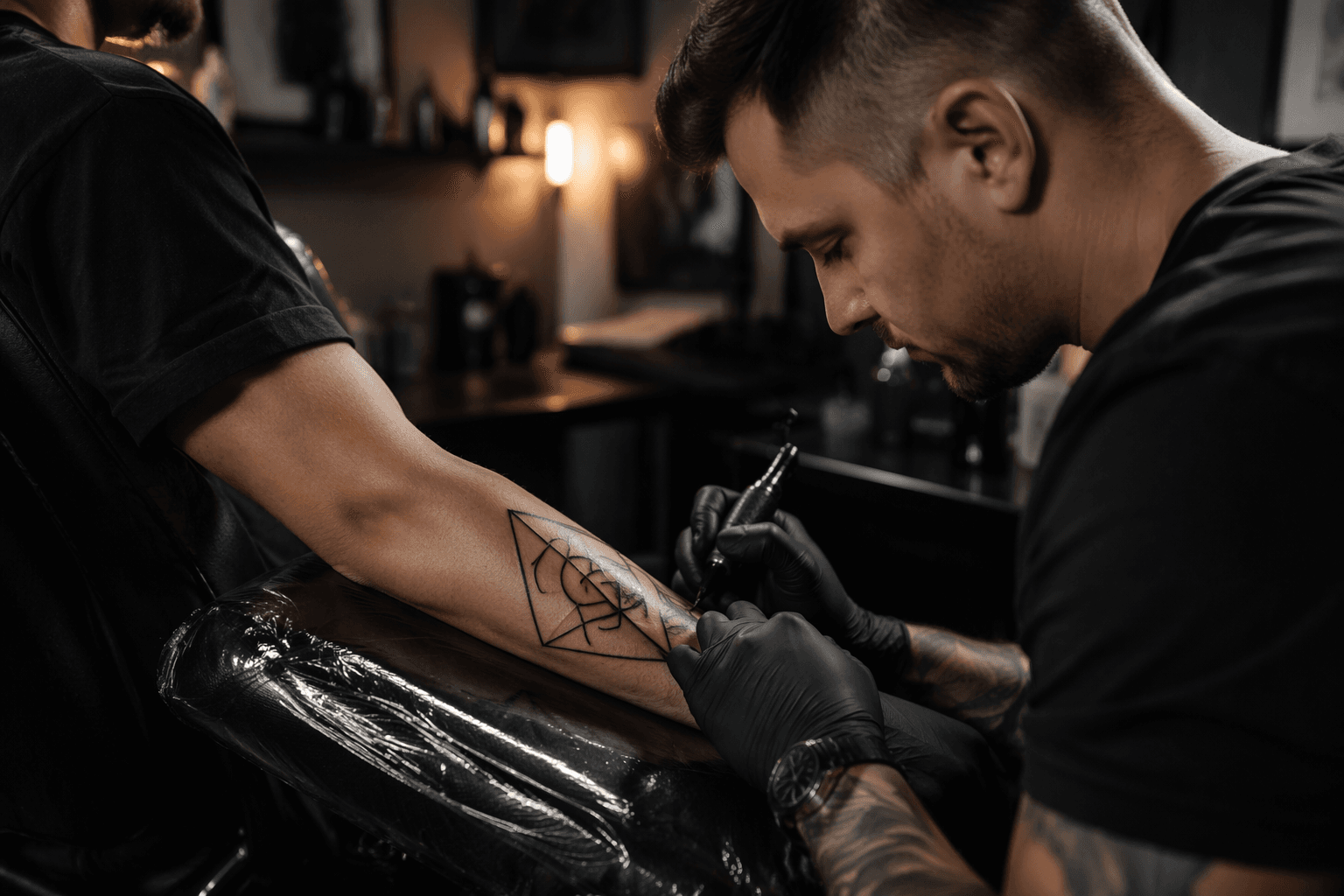
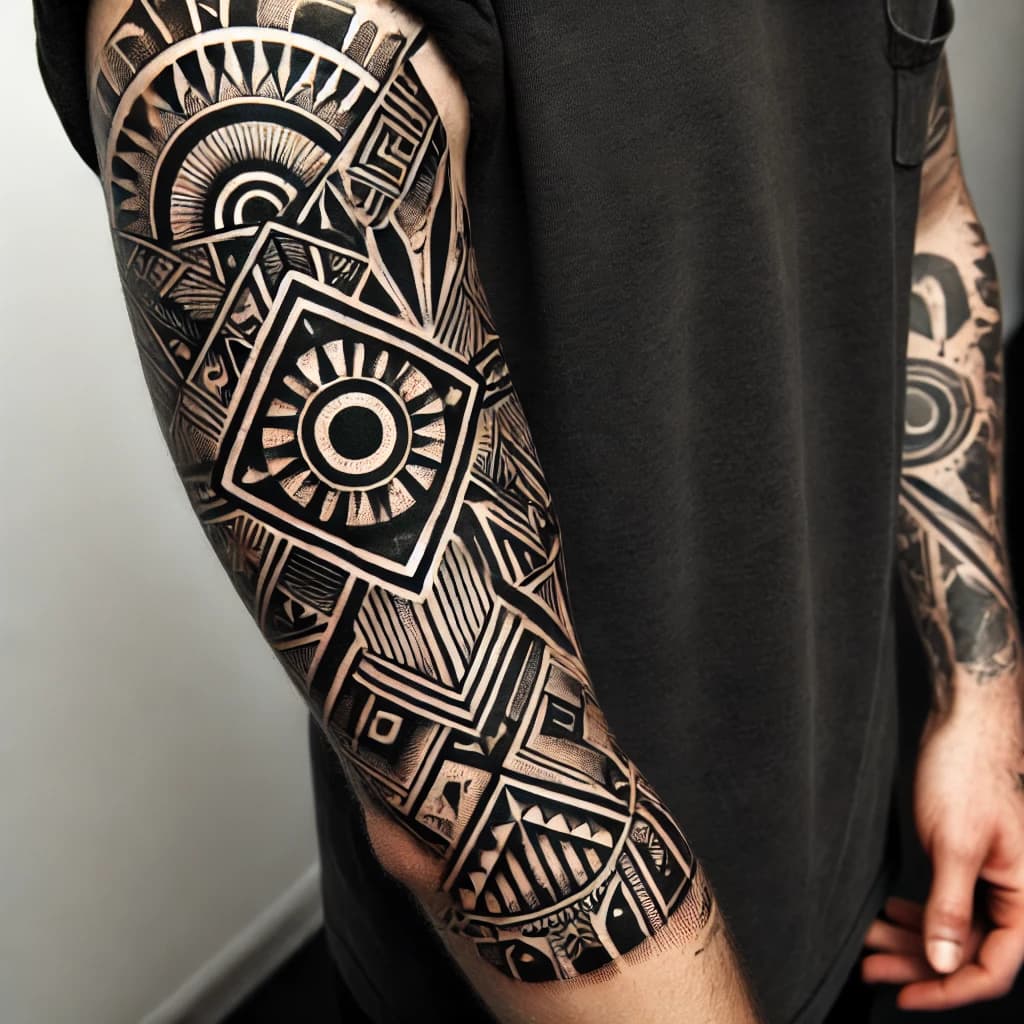
Peachy Tattoos guide explains dotwork tattoos, cost, and aging benefits
Dotwork geometry stays crisp longest when placement, density, and aftercare are chosen carefully. Pure dotwork costs more and heals differently, but it can age more gracefully than heavy linework.

If you want a mandala, sacred geometry, or another pattern-heavy piece to still read clean years from now, the first decision is not the motif. It is the canvas. Dotwork shines on broader, steadier areas where the geometry can breathe, while cramped or highly mobile placement can make precision harder to preserve as the skin moves and ages.
Why dotwork changes the geometry conversation
Peachy Tattoos treats dotwork as its own tattoo language, not a decorative effect layered on top of something else. The style is built from stippled points rather than solid outlines or packed black fields, so the tattoo can look soft and atmospheric from a distance and reveal thousands of individual marks up close. That makes it especially useful for sacred geometry, mandalas, ornamental patterning, religious iconography, botanical work, and even surreal imagery, where the artist needs finesse more than brute contrast.
The key split is between pure dotwork and hybrid dotwork. In pure dotwork, even the outlines are made of dots. In hybrid work, fine linework carries the structure and dotted shading fills the spaces around it. That difference is not just aesthetic. It changes how long the tattoo takes, how much it costs, and how the piece is likely to age.
Where the style earns its keep
Dotwork is the right choice when you want precision without the visual weight of solid blackwork. It can make geometric tattoos feel airy instead of blocked in, and that is a real advantage when the design depends on symmetry, negative space, and layered texture. If you are drawn to a softer finish, or you want a piece that feels meditative rather than loud, dotwork can land exactly where linework or heavy black packing would feel too blunt.
It also makes sense when the tattoo needs gradual shading rather than a hard edge. Because the style is built point by point, the artist can build density slowly and create transitions that read as texture instead of fill. That is one reason hand-poked dotwork stays popular in ornamental work. It takes longer per square inch, but it can produce a very refined surface that suits sacred and decorative geometry.
Placement matters as much as the pattern
Dotwork geometry tends to stay crisp best where the skin is broad and relatively stable. Flat, even surfaces give the eye a better read on symmetry, and they give the artist more control over the spacing between each point. Once the canvas curves sharply or flexes constantly, the design has more opportunities to distort, and tiny variations in spacing become easier to notice.
That is where aging becomes part of the booking decision. Pure dotwork has no heavy lines to break up as the tattoo settles, and Peachy Tattoos argues that gives it a longer runway before blur starts to creep in. Hybrid dotwork can be the smarter choice if you want a clearer structure from the start, but the linework will also change the way the piece softens over time. If your design depends on immaculate geometry, ask whether the placement will keep those angles readable when your body moves.
Cost follows density, technique, and time
Dotwork usually costs more than people expect because it is labor-intensive. A dense mandala or sacred geometry piece can take far longer than a comparable tattoo built with bolder lines and broad black fill, especially if the artist is building the image point by point with a single needle or a tight three-round configuration at lower voltage. More dots mean more passes, more time in the chair, and more careful healing afterward.
That is why the style is often a better fit when the client wants delicacy and longevity instead of the fastest possible session. Pure dotwork is slower and pricier, but the finish can age more gracefully because the image is not relying on a packed outline to hold the whole design together. Hybrid dotwork can lower the time commitment, but the tradeoff is that the piece will behave more like a line-based tattoo once it starts settling into the skin.
Healing is part of the design
Tattooed skin should be treated like a wound, and that matters even more when the design depends on tiny marks staying legible. The American Academy of Dermatology notes that tattooed skin can react in unexpected ways even after work by a licensed artist, and that infection can show up right away or even days to months later. Cleveland Clinic also says larger tattoos can take a few months to fully heal, so a sprawling geometric piece is never just a one-day appointment.

Aftercare is not optional cosmetic advice. A peer-reviewed study says proper aftercare includes cleansing, moisturizing, and sun protection, and a case report found that scented lotion caused allergic contact dermatitis, scarring, and premature fading in a new tattoo. For dotwork, where every point contributes to the final image, that kind of damage can be especially obvious. The lighter and more intricate the design, the less room there is for sloppy healing.
The hygiene questions worth asking before you book
Because dotwork often depends on fine needles, precise spacing, and long sessions, hygiene questions matter just as much as style questions. The Centers for Disease Control and Prevention has documented tattoo-associated nontuberculous mycobacterial infections linked to nonsterile water used to dilute ink, and it investigated a tattoo-associated Mycobacterium chelonae outbreak in Rochester, New York, in January 2012. Harvard Health Publishing also emphasizes the use of sterile needles and autoclaves, which is exactly the standard you want to hear discussed plainly in consultation.
- Are you planning pure dotwork or a hybrid with linework?
- What needle setup do you use for this kind of piece?
- Do you work by machine, hand-poke, or both?
- How will the density affect the price and the session length?
- Which placement do you recommend to keep the geometry crisp as it heals?
- How do you sterilize equipment, and do you use an autoclave?
- What aftercare do you want me to follow for cleansing, moisturizing, and sun protection?
Before you commit, ask:
That conversation tells you whether the artist understands dotwork as a technical discipline, not just a visual trend.
Dotwork is at its best when the design, the placement, and the aftercare are all pulling in the same direction. Put the right geometry on the right skin, and those thousands of points stay elegant instead of muddy, which is exactly why the style keeps winning over people who want their tattoo to age with structure instead of simply wearing out.
This article was produced by Prism’s automated news system from verified source data, official records, and press releases, then run through automated quality and moderation checks before publishing. The system is built and supervised by the people who set the standards it runs under. Read our full AI policy.
Did this article answer your question?